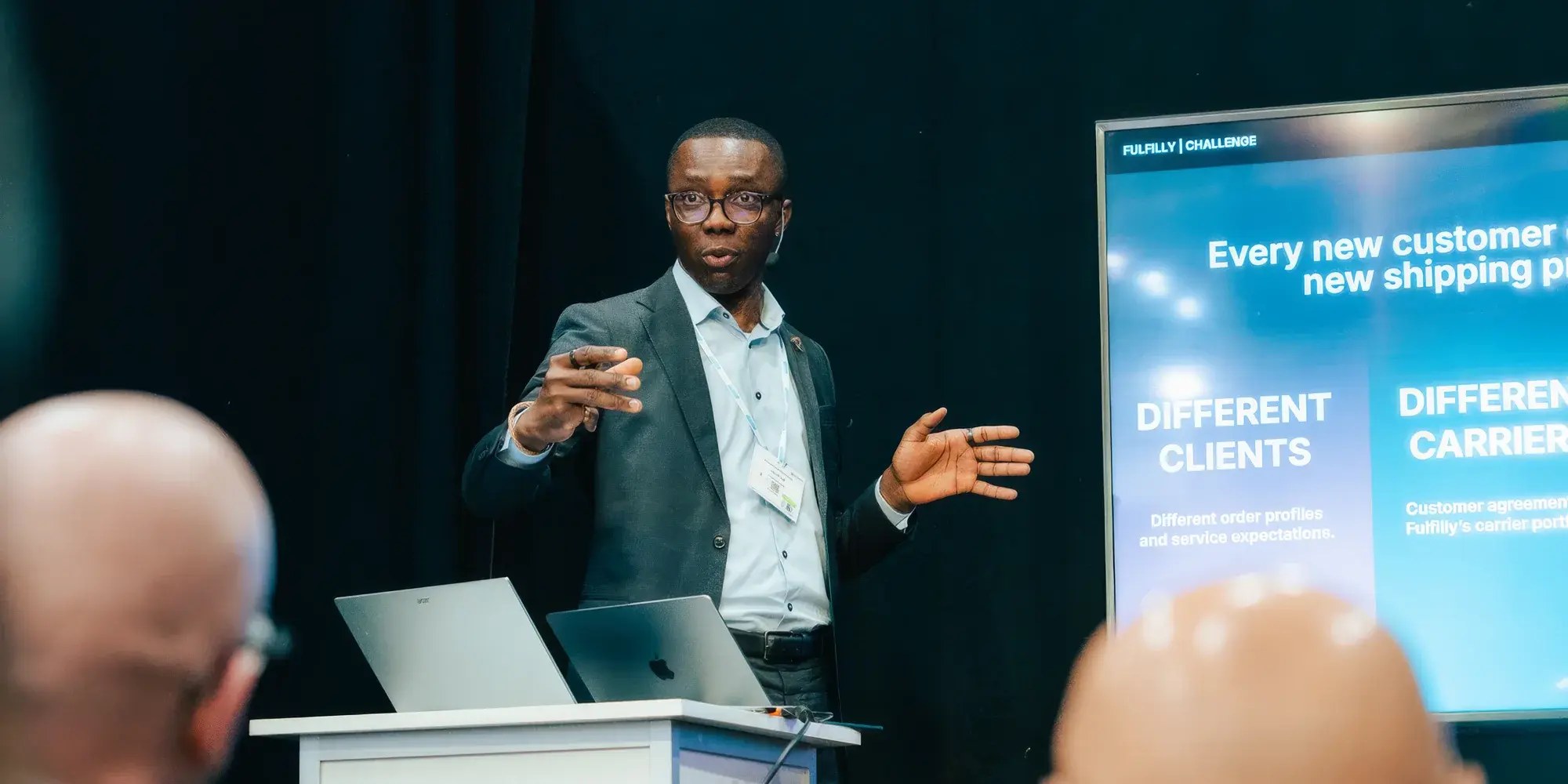
During 4-6 November, our team attended the ICT & Logistics event in Utrecht in the Netherlands, a key gathering for our industry. It was a full couple of days filled with sessions, conversations, and technology showcases. The main purpose was to listen, talk to people on the ground, and bring back learnings that help shape how we at nShift create value for our customers.
Unlike sprawling expos, the real value came from the focused discussions happening across the event floor. The sessions painted a clear picture of an industry rapidly evolving, driven by the need for greater efficiency and intelligence. The key takeaway? The conversation has moved from if technology can help to how it can be implemented for maximum impact.
The big picture: Key themes from the floor
Several clear themes emerged from the sessions and conversations. The industry is doubling down on technology not just to cut costs, but to build more resilient and responsive supply chains.
AI moves from concept to reality
Artificial intelligence was a dominant topic, but the conversation felt different this year. It has moved beyond buzzwords and into practical application. Many sessions showcased how AI is already being used to drive real efficiency gains within logistics. The focus was less on futuristic concepts and more on using AI to automate core processes, optimize workflows, and bring a new layer of intelligence to everyday operations. This shift signals a maturing market where AI is becoming an essential tool, not just an interesting idea.
The warehouse tech stack is evolving
Another significant trend is the growing sophistication of warehouse management technology. For a long time, the Warehouse Management System (WMS) was the central brain of the operation. Now, the discussion has expanded.
We are seeing more businesses adopt a layered approach, integrating a Warehouse Control System (WCS) and a Warehouse Execution System (WES).
- A WMS continues to manage inventory, orders, and labor.
- A WCS takes on the real-time control of automated equipment like conveyors and sorters.
- A WES acts as the intelligent orchestration layer, bridging the WMS and WCS to optimize all tasks and resources dynamically.
This evolution from a single system to an integrated ecosystem shows how companies are retooling to handle greater complexity and meet rising customer expectations for speed and accuracy.
Robotics and packaging take center stage
Automation remains a primary focus, particularly with advancements in robotics and packaging. Sessions highlighted how robotics for picking, packing, and sorting is becoming more accessible and effective, helping companies scale operations to meet fluctuating demand.
Simultaneously, innovation in packaging is addressing the dual challenge of cost-efficiency and sustainability. As e-commerce continues to grow, getting packaging right is no longer just an operational detail - it is a critical part of the brand experience and a key factor in managing costs.
Reflections from the nShift booth
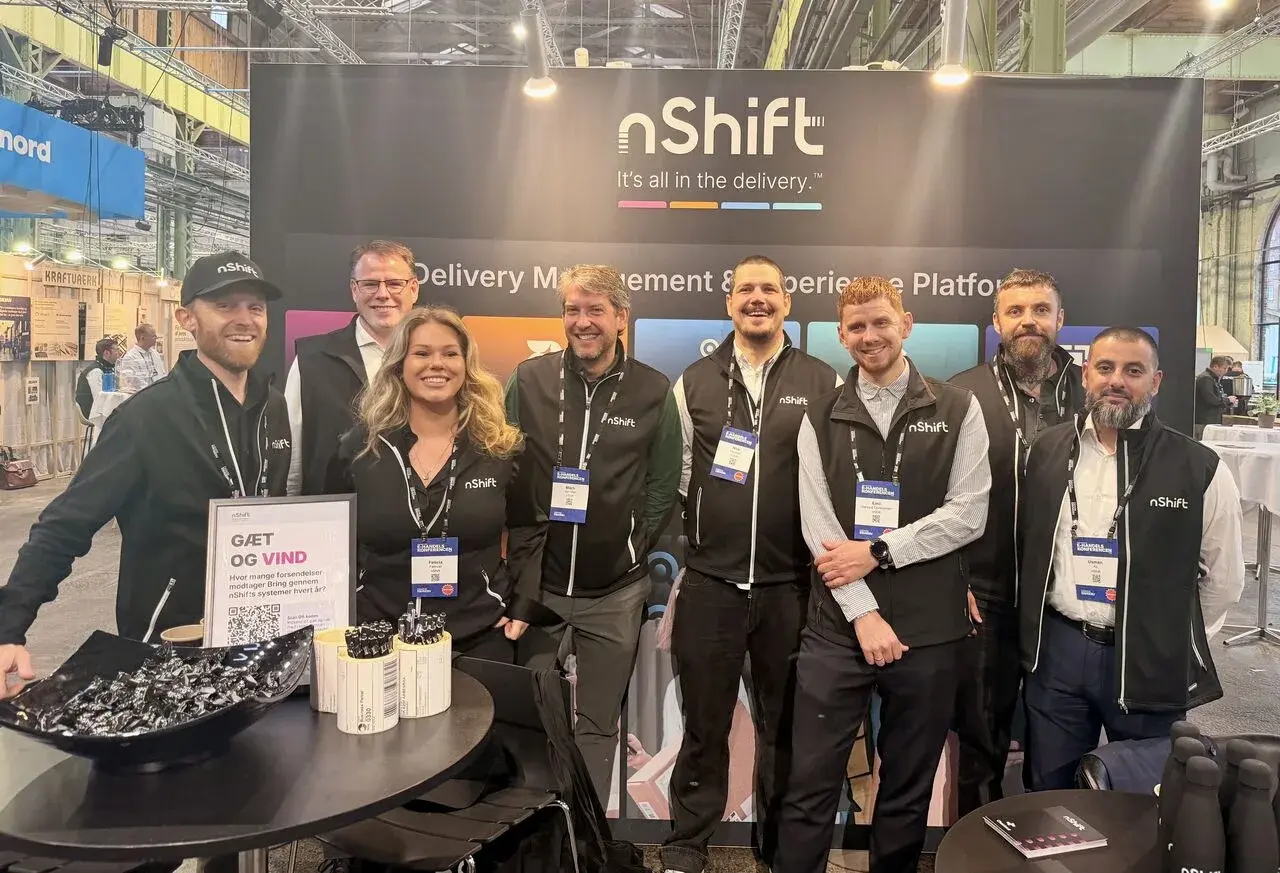
While the sessions provided valuable industry context, the most insightful moments for us came from the conversations at our own booth. Hearing directly from customers, prospects, and partners is invaluable. It is where theory meets reality.
The energy at our stand was a frequent topic of conversation. The feedback that "you can feel the energy from a distance" was a testament to the collaborative spirit of the nShift team. It was a unified effort, with marketing, customer management, and product teams all working together. This year also marked the full arrival of our new, unified branding, and hearing "you guys are everywhere" confirmed that the nShift name has firmly landed in the market.
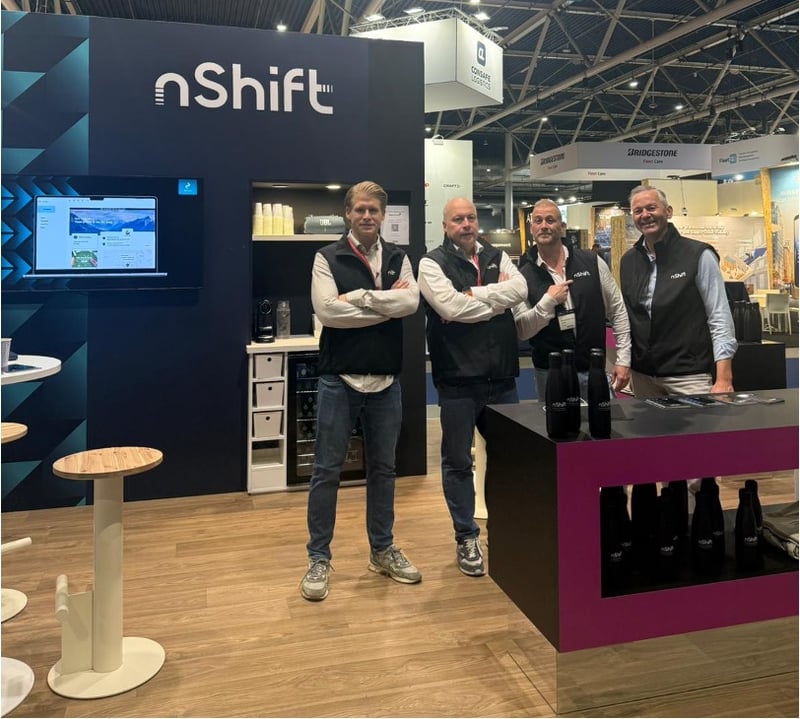
These interactions reinforced a simple truth: even as technology accelerates, logistics is still a people-driven business. Building relationships and understanding real-world challenges is just as important as developing the right software. The combination of our team’s efforts and strong partner collaborations resulted in a 25% increase in opportunities from the event compared to the previous year, validating that our customer-centric approach is working.
What this means for nShift and the industry
My biggest takeaway from ICT & Logistics is that the industry is in a phase of practical transformation. The focus has sharpened on the warehouse and internal logistics, with companies investing heavily in automation and intelligence to create a more efficient foundation.
While our primary focus at nShift is on the transport and delivery part of the journey, these trends are deeply connected to what we do. A perfectly optimized warehouse is only effective if the final-mile delivery is seamless. The data, efficiency, and customer expectations that start in the warehouse flow directly into the shipping process.
Our role is to bridge that gap. We help ensure that the investment made inside the warehouse pays off with a delivery experience that is smooth, reliable, and keeps the customer’s trust. The conversations at the event confirmed that while warehousing is a critical piece of the puzzle, delivery management is where the brand promise is ultimately kept or broken. It is the direct driver of customer perception and loyalty.
The momentum from ICT & Logistics is just the beginning. In March, we will be back at the same venue for the Webwinkel Vakdagen event, and we look forward to continuing these important conversations.