
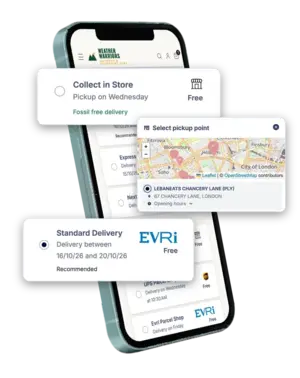







Intelligent carrier selection and rate shopping
Multi-carrier shipping software evaluates real-time carrier rates and service levels to select the most appropriate shipping option per order. Selection rules can include cost thresholds, delivery promises, geographic coverage, or carbon impact.
Use case: An online retailer dynamically routes domestic shipments to regional carriers for cost efficiency while reserving premium carriers for express delivery.
Business impact: Reduced shipping spend, improved on-time delivery performance, and greater flexibility during peak demand.
Unified labeling, documentation, and compliance
The platform generates compliant shipping labels, customs documentation, and commercial invoices across multiple carriers and countries. It maintains regulatory standards such as HS codes and electronic customs submissions.
Use case: A B2B distributor automates export documentation across European and cross-border shipments.
Business impact: Lower manual processing time, reduced compliance risk, faster international clearance.
End-to-end shipment visibility and tracking
Multi-carrier systems consolidate tracking events into a single dashboard or API feed. This provides operational teams and customers with consistent shipment status regardless of carrier. Platforms with multimodal coverage can also normalize events across parcel, freight, and ocean services, even though how delivery companies track packages differs by carrier and mode.
Use case: An e-commerce brand integrates real-time tracking updates into its post-purchase communication.
Business impact: Fewer customer service inquiries, improved delivery transparency, enhanced customer satisfaction.
Carrier performance analytics and optimization
The platform collects data across carriers to analyze delivery times, cost per shipment, service level adherence, and claims frequency. Insights inform carrier negotiation and routing strategies.
Use case: A logistics manager evaluates lane performance and adjusts allocation to improve SLA compliance.
Business impact: Data-driven carrier management, stronger procurement leverage, measurable logistics ROI.