
The high stakes of peak season
Black Friday can make or break an e-commerce year. It brings record-breaking order volumes that push websites, warehouses, and carriers to their limits. When logistics systems fail under pressure, the result is lost revenue, frustrated customers, and damaged reputations. Understanding where things go wrong is the first step toward building resilience.
When volume meets weak infrastructure
In 2024, European parcel volumes surged by over 90% during Black Friday week. Systems designed for steady flows suddenly faced weeks’ worth of traffic compressed into days. Websites slowed or crashed, warehouse management systems froze, and real-time inventory visibility vanished. Each small delay rippled across the supply chain, turning operational strain into customer dissatisfaction.
Many retailers discover too late that their infrastructure can’t withstand the load. Stress-testing, system audits, and cross-team rehearsals often fall by the wayside in the rush to prepare promotions. But once peak season begins, there’s no time to recover from a system failure.
Early testing and preparation remain the most effective defense. Retailers who plan for pressure by coordinating supplier capacity, running load simulations, and securing backup options are less likely to face fulfillment chaos. For instance, with nShift TMS, businesses gain the visibility and control to maintain performance across multiple sites, even during extreme surges.
Checkout challenges: friction at the finish line
A marketing campaign may drive thousands of visitors to a site, but conversions depend on the checkout experience. Around 80% of Black Friday carts are abandoned, with many shoppers leaving because delivery options are unclear or limited. Slow load times and surprise fees only make matters worse.
Shoppers expect convenience. Offering multiple shipping speeds, local pickup, or parcel lockers can lift conversion rates by double digits. Flying Tiger Copenhagen, for instance, saw a 20% increase in conversions after enabling store pickup through nShift Checkout. Flexibility transforms hesitation into confidence.
Retailers can protect sales by keeping checkout simple, transparent, and adaptable. Integrating flexible delivery modules ensures customers see realistic delivery dates, costs, and carrier options before they click “buy.” It also reduces downstream issues by collecting accurate delivery data upfront.
Delivery delays and carrier bottlenecks
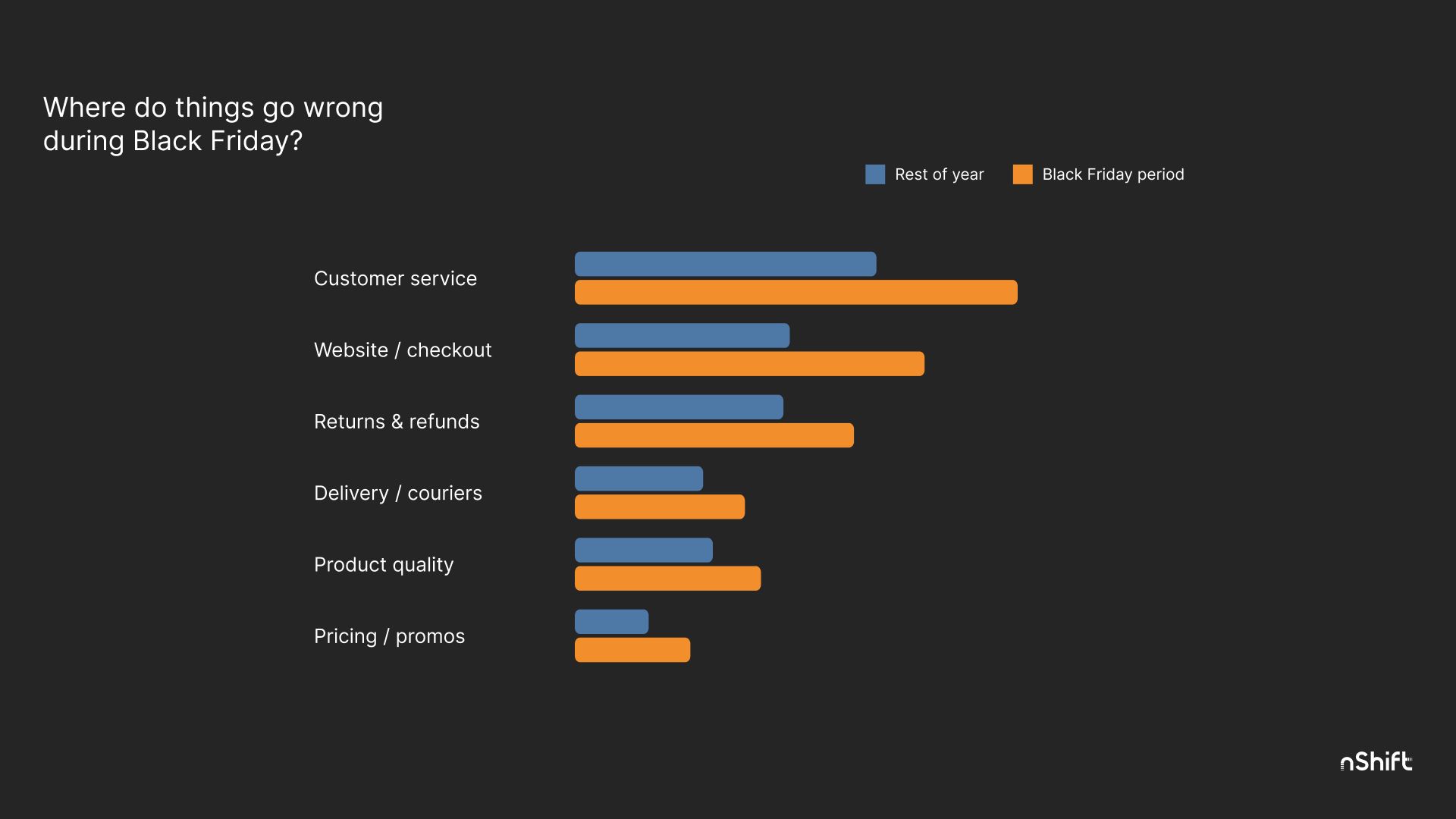
Late or failed deliveries accounted for about 6% of all issues during Black Friday, and nearly 5% of packages got lost or untracked. Even the best carriers can be overwhelmed when orders triple overnight. Late or failed deliveries consistently rank among the top customer complaints during Black Friday. Over-reliance on a single courier leaves businesses vulnerable to network overloads.
Retailers who use multiple carriers spread the risk. Diversification provides backup capacity when one network slows down. Platforms like nShift Ship automate carrier selection based on speed, rates, or geography, ensuring the right carrier handles each order. During Black Friday 2024, retailers using three to five carriers with automated allocation reported the fewest delivery delays.
Adding carrier redundancy also helps control costs. When shipment allocation is dynamic, businesses can instantly switch to available routes and negotiate better rates. The result is faster, more reliable delivery without sacrificing margins.
When silence costs loyalty
A successful sale can still turn sour if customers are left in the dark after purchase. Nearly one in five Black Friday issues stem from poor communication. When tracking updates stop or emails are delayed, customers assume the worst and flood support channels.
Regular, proactive communication builds trust. Sending real-time updates across multiple channels like email, SMS, or branded tracking pages keeps customers informed and reassured. With nShift Track, retailers can customize these updates and create branded experiences that maintain engagement even after checkout. Shoppers who track their orders themselves are far less likely to contact support, cutting WISMO calls by as much as 60%.
Transparency also drives repeat business. Customers who feel informed throughout the delivery journey are more patient when problems occur and more likely to buy again. During peak season, every status update is a chance to strengthen loyalty.
The post–Black Friday avalanche
The shopping surge is followed by a second wave: returns. In sectors such as fashion and electronics, online return rates can reach three times those of physical stores. A slow or confusing returns process quickly erodes goodwill, and 84% of customers won’t buy again after a poor returns experience.
Retailers that manage returns well turn problems into opportunities. A digital self-service portal reduces pressure on customer service while giving shoppers clear visibility into their return status. nShift Returns automates the entire process, from return requests to refunds or exchanges. Retailers using the platform convert up to 30% of returns into exchanges, directly protecting revenue.
Efficient returns also speed up resale. Digitizing label creation and warehouse handling helps stock move back to shelves faster, shortening the refund cycle and improving inventory accuracy. During the 2024 season, brands that optimized returns reported faster restocking and higher post-sale satisfaction.
To stay ahead of the returns wave, prepare early: pre-print labels, train warehouse teams, and make the returns policy easy to find. Customers notice when a brand makes returning items simple, and reward that effort with trust.
Five ways to prevent peak-season chaos
1. Test and prepare early
Simulate peak traffic across systems and ensure suppliers, warehouses, and couriers can scale together. Use data from previous years to forecast accurately.2. Offer delivery choice at checkout
Provide multiple delivery speeds and pickup options. A diverse checkout menu reduces abandonment and boosts satisfaction.3. Diversify carriers
Don’t rely on one courier. Use technology to allocate shipments dynamically based on cost, speed, or location.4. Communicate proactively
Send updates at every milestone and make tracking information accessible from any device. Branded notifications reinforce trust and reduce inbound support.5. Simplify returns
Deploy a digital returns solution to automate requests, speed up refunds, and capture insights on return reasons.
Turning risk into opportunity
Black Friday exposes every weakness in an e-commerce operation, but it also highlights what works. Retailers who plan, automate, and communicate clearly not only avoid disruption but strengthen their reputation. Success comes from controlling what happens after the click: how orders are fulfilled, tracked, and returned.
Ultimately, the retailers who thrive are those who see Black Friday as more than one frantic day – they see it as a chance to win lifelong customers through operational excellence. Every on-time delivery, every proactive update, every easy return is an investment in your brand’s reputation. Peak season doesn’t reward those who merely survive; it rewards those who excel. Get in touch and we'll show you how to turn the year’s biggest challenges into your biggest wins.