Quick links
- A brand built for the long term tends to invest in systems early
- When you ship globally, you’re not shipping parcels. You’re shipping certainty
- The cross-border problem is rarely the fee. It’s the surprise
- The founder inflection point. When humans are doing machine work
- What changed with nShift: from effort to system
- The hidden benefit. Resilience under peak pressure
- Premium expectations extend beyond the product
- AI will reward the brands with clean systems
- When scale increases complexity, reliability protects trust
Most ecommerce teams talk about the delivery experience as if it’s mainly an operations question: speed, cost, carriers.
Customers don’t really experience it that way.
They experience it as the moment the purchase becomes real. The second they commit, the mindset shifts from browsing to risk. Not dramatic risk, everyday risk: Will this be straightforward? Will anything surprise me? If something changes, will I know what to do?
That feeling isn’t a “nice-to-have”. It behaves like a commercial variable. When lack of clarity arises, customers hesitate, support volume tends to climb, and brand confidence gets quietly chipped away.
Premium brands feel this more sharply. Not because their customers are fussier, but because the promise is larger. The higher the price point, the more the customer expects the whole journey to feel handled, from checkout through delivery.
Maya Delorez is a clear example of what it looks like when a brand designs operations around that reality, instead of letting it become a reactive problem.
A brand built for the long term tends to invest in systems early
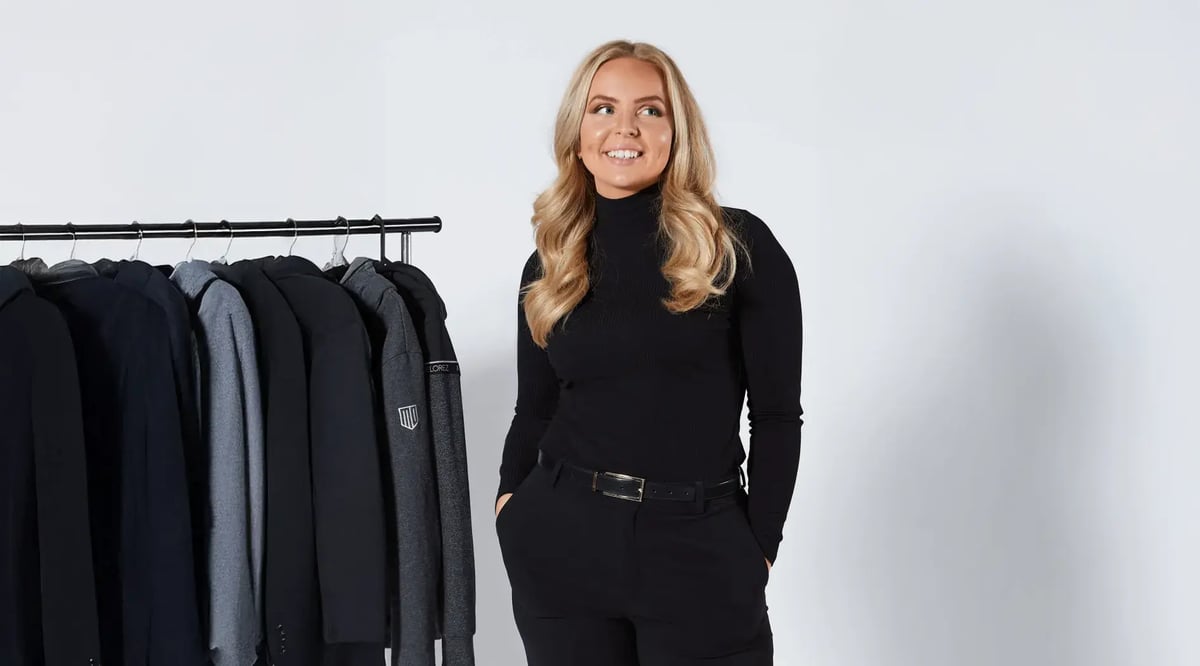
Maya Delorez was co-founded by Madelene Törnblom, recognised on Forbes 30 Under 30 Europe, when she was still very young. At 20, she made the first meaningful deal that funded the business: selling a horse for 120,000 SEK. Her father owned half the horse and reinvested his share alongside her, and that became the seed funding that got the company moving. They still own the business 50/50, and they have no external investors.
That context matters because it shapes how you build. When growth is funded from inside the business, you tend to be more deliberate about what you rely on. “We’ll fix it later” isn’t a strategy; it’s a cost, paid in attention, mistakes, and brand experience.
You can see that mindset in an operational decision many brands delay: Maya Delorez has run its own warehouse since day one.
When you ship globally, you’re not shipping parcels. You’re shipping certainty
Maya Delorez ships worldwide. Its largest market is Germany, and it also sells into the US. The business sells into around 80 markets in a month.
At that scale, logistics stops being a fulfilment task and becomes part of the customer experience, one of the places where trust is either reinforced or quietly weakened.
Because global growth doesn’t mainly add distance. It adds variance: different local expectations, different rules and thresholds, different norms around duties and fees, and different interpretations of silence when something changes. And variance tends to produce one consistent customer response: uncertainty.
The cross-border problem is rarely the fee. It’s the surprise
Cross-border customers often respond in a way that can look irrational, until you remember what they’re really reacting to: ambiguity. People generally tolerate a known cost better than an unknown one. It’s not the size of the fee that unsettles them; it’s not knowing whether a fee will appear later, how it will be collected, or what they’ll need to do next.
That’s why cross-border complexity matters even for strong brands. Duties, paperwork, and country-specific thresholds don’t just create operational steps; they create the conditions for confusion. And confusion is what turns a purchase from “exciting” into “risky”.
So the goal shifts. It’s not only about running fulfilment efficiently behind the scenes. It’s about making the experience feel predictable to the customer, because predictability is what customers interpret as being taken care of.
The founder inflection point. When humans are doing machine work
Early on, Maya Delorez had the classic founder reality: the founder is the system.
For a while, shipping was handled manually, entering shipment details by hand, including repetitive fields like phone numbers. It worked, until it became clear it wouldn’t scale. Manual work takes time, costs money, and increases the risk of small errors simply because people are doing work that should be handled by a system. Growing teams fix this by moving freight and checkout off manual steps and into systems they control.
It’s easy to label that as “admin”. But the impact shows up downstream: manual processes create variation; variation creates exceptions; exceptions create customer contact. And that customer contact is often the first sign the experience isn’t as predictable as it should be.
That’s the point where Maya Delorez moved to automation using nShift Delivery, to remove the manual steps that were starting to limit growth.
What changed with nShift: from effort to system
The point of shipping software isn’t that it does impressive things.
It’s that it makes the repetitive parts predictable.
For Maya Delorez, the value is described in deliberately practical terms: disconnect hours of manual work, reduce human error, reduce direct customer contacts, and make tracking and delivery flow more smoothly for the customer
Notice what that is, in plain language:
-
fewer places for uncertainty to leak in
-
fewer opportunities for small mistakes to become customer moments
-
less need for the customer to ask “what’s happening?”
Madelene emphasises the “eternal” target: moving toward zero delivery questions and zero delivery problems.“
Our goal is zero delivery questions and zero delivery problems.
CEO and co-founder Madelene Törnblom.
It's a practical metric: fewer questions usually mean fewer surprises.
The hidden benefit. Resilience under peak pressure
Peak periods don’t just bring more orders. They compress time, attention, and cash flow. For brands like Maya Delorez, the pressure shows up in two places at once: liquidity and operational load, even when the season is commercially exciting.
This is where automation earns its keep. Not because it’s glamorous, but because it reduces the manual steps that consume attention precisely when attention is scarce.
When fulfilment still relies on a lot of hands-on work, peak periods tend to surface the weak points, more exceptions, more corrections, more “just get it out” moments. Systemising shipping is a straightforward way to make the operation more resilient without needing to scale headcount at the same rate.
Premium expectations extend beyond the product
There’s a broader lesson in how Maya Delorez thinks about delivery, and it applies well beyond fulfilment.
As price points rise, expectations rise with them—not only for the product, but for the overall experience. Brand strength changes how delivery details are interpreted: when customers actively want a brand, small frictions are less likely to disrupt the decision. When that pull is weaker, those same frictions carry more weight.
That’s why delivery shouldn’t be filed away as a pure retention topic. It can be commercially decisive at the exact moment you’re still earning the purchase, when someone is close, but not fully convinced.
Put simply: brand gets you into consideration. Delivery helps the customer feel confident saying yes.
AI will reward the brands with clean systems
Madelene’s view on AI is practical, not performative. She expects AI to change how ecommerce teams run day to day, and how customers buy. And in her view, that doesn’t make operations less important, it makes them more decisive.
As buying becomes more mediated through assistants and automation, brands with clean, structured systems will simply be easier to transact with. Not because AI is magic, but because automated decision-making tends to avoid ambiguity and route around friction.
So “future-proofing” isn’t a keynote topic. In Madelene’s terms, it’s operational: make the backend legible, predictable, and robust enough that growth doesn’t create avoidable exceptions.
When scale increases complexity, reliability protects trust
Maya Delorez didn’t treat logistics as something to ‘handle’. They treated it as part of the brand promise, especially as price points and expectations rose. When the operation started to depend on manual steps, Madelene made the kind of decision that rarely looks dramatic from the outside, but changes everything at scale: she turned effort into a system.
The ambition behind that decision is what makes the story instructive. Not growth for its own sake, but growth that stays calm for the customer, fewer mistakes, fewer surprises, fewer reasons to ask what’s happening. Because when you’re selling into dozens of markets, reliability isn’t a feature. It’s the thing that protects trust when complexity increases. And that’s the quiet hallmark of a premium business: customers don’t just like what you sell, they feel confident buying it. Visit the Maya Delorez store.
About the author
Thomas Bailey
Thomas Bailey was Product Innovation Lead at nShift. The role focused on making new features and platform improvements deliver real value to customers. With a background in product, tech and go-to-market strategy, Thomas wrote about checkout, returns and delivery experience from a practical angle. The articles reflect nShift's thinking when they were published.