A calmer peak season? It’s possible
“We’re heading into peak season, and let’s be honest: it’s not getting any easier.”
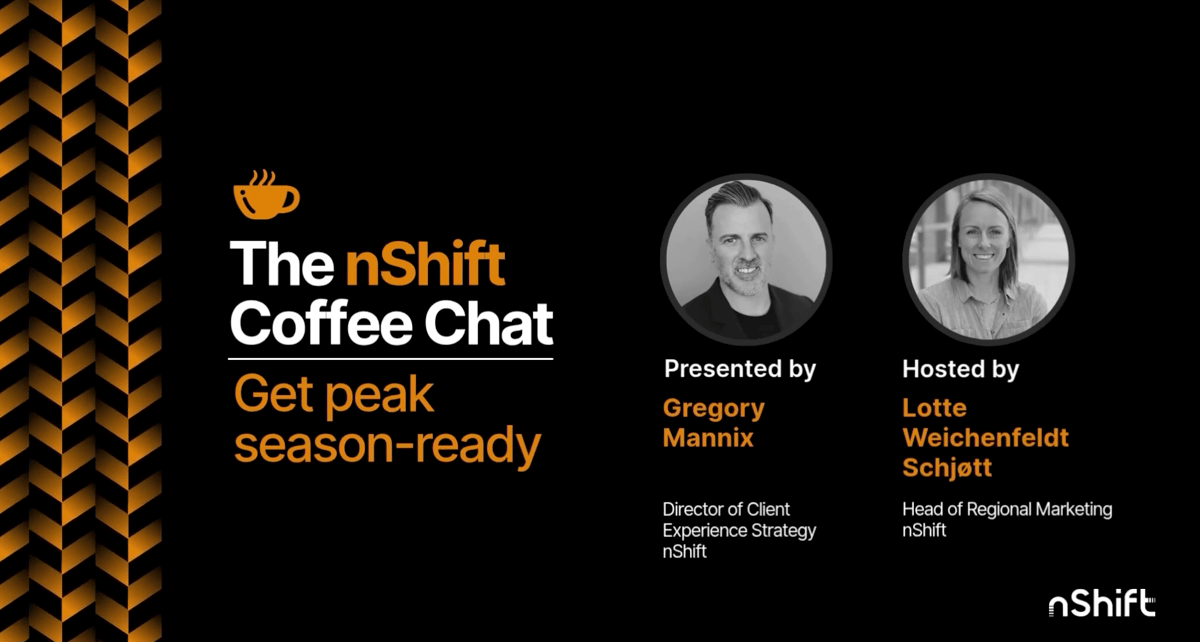
That’s how we opened our latest Coffee Chat before introducing Greg Mannix, one of our top delivery experts. We sat down to talk about what it really takes to stay in control through the busiest shopping weeks of the year, and to introduce our new webinar series, Peak season performance: Master delivery & fulfilment during Black Friday & beyond.
Greg smiled: “We’ve got four really short, punchy sessions. Each one gives people real-world strategies and practical tips you can put into action straight away. You’ll only get useful insights to make this year’s peak season a little less stressful and a lot more successful.”
Rethinking when ‘peak’ really starts
The first session, From data to decisions, focuses on timing and data - because, as Greg pointed out, most people still assume peak season runs from November through Christmas.
“That makes sense,” he said, “but if you include the spike in January for returns, the picture starts to look a little bit different.”
In other words, the delivery crunch doesn’t end when the wrapping paper hits the bin. For many retailers, January brings its own pressure wave. Greg explained that his team will dive into data showing where those surges actually happen - both outbound to customers and inbound as returns - so brands can plan capacity more intelligently.
“And we’ll show the regional differences,” he added. “Peak doesn’t look the same in every market. The patterns in the UK are very different from Germany or the Nordics. Having that data in your back pocket helps you prepare, rather than just assuming peak is the same everywhere.”
Delivery certainty keeps sales flowing
Session #2 of our upcoming series will tackle one of retailers’ biggest pain points: late cut-offs and flexibility. Greg called it delivery certainty.
“Basket abandonments during peak are often about uncertainty,” he said. “Customers want to know, right at checkout, will this item actually arrive on time?”
The solution, he explains, lies in carrier flexibility and smarter cut-offs.
“Retailers who can work with multiple carriers and take advantage of later cut-off times can really keep the selling window open for longer. That means more sales without risking late deliveries and unhappy customers.”
This session will show practical ways to build that certainty at checkout, so shoppers know exactly what their options are, whether it’s next-day, weekend, or something even more flexible. And again, the advice comes with local context:
“What works in London may not apply in Stockholm. Flexibility really is the key.”
Innovation that matters: lockers and greener delivery
By the time we get to session #3, the discussion turns to innovation. Two trends top the list: lockers and sustainability.
“Lockers are booming across Europe,” Greg noted. “It’s not hard to see why. They cut down on failed deliveries and give customers flexibility to pick up parcels at a time that suits them. At peak, that’s like gold.”
He pointed out that growth is especially strong in the Nordics & DACH, where lockers are fast becoming the norm rather than the exception.
At the same time, shoppers are asking for greener delivery options. “It’s not just about being sustainable for sustainability’s sake,” Greg said. “When green options are presented clearly, and when customers understand the convenience, like consolidated deliveries or locker pick-ups - they can actually boost conversion. People want to feel like they’re making better choices without sacrificing speed or certainty.”
Quick wins and cross-border growth
The final session in the series will look at Quick wins and cross-border opportunities. Greg explained that the goal is to help retailers find small changes that make a big difference.
“Some examples would be adopting a multi-carrier strategy - which we know helps you avoid delays if one network’s overloaded - and extending delivery windows where it makes sense. These are relatively simple moves that can make a big difference when capacity is tight.”
But the session will also explore how those same tactics open doors internationally.
“For retailers looking to grow cross-border, the secret is localization,” Greg said. “Your website, payment options, and delivery choices all need to feel native in each market. Add in convenience and local return options, and you instantly reduce friction for new customers.”
The team will highlight specific insights for the UK, DACH, Benelux, and Nordics, giving retailers practical growth hacks ahead of the busiest shopping period.
“With the right strategy, you can not only survive peak season, but use it as a launchpad for cross-border growth.”
Prepared, not panicked
As the chat wrapped up, we agreed that calm is the real competitive edge.
“Peak season, as we all know, it’s tough,” Greg said. “But if you get the right mix of data and strategy, you can make a huge difference. Our goal is to make sure retailers and brands feel prepared (not panicked) in that peak period.”
Watch the full Coffee Chat now →
Join the conversation
If you’re gearing up for Q4, this series sounds like a no-brainer. The Peak season performance live sessions will bring together nShift experts to share data, regional trends, and quick wins that help you handle pressure with confidence. Save your seat before the rush starts →

Win Black Friday & beyond
Browse expert insights, stats, and resources curated to help you win peak season.
Get the insights