
GUIDE

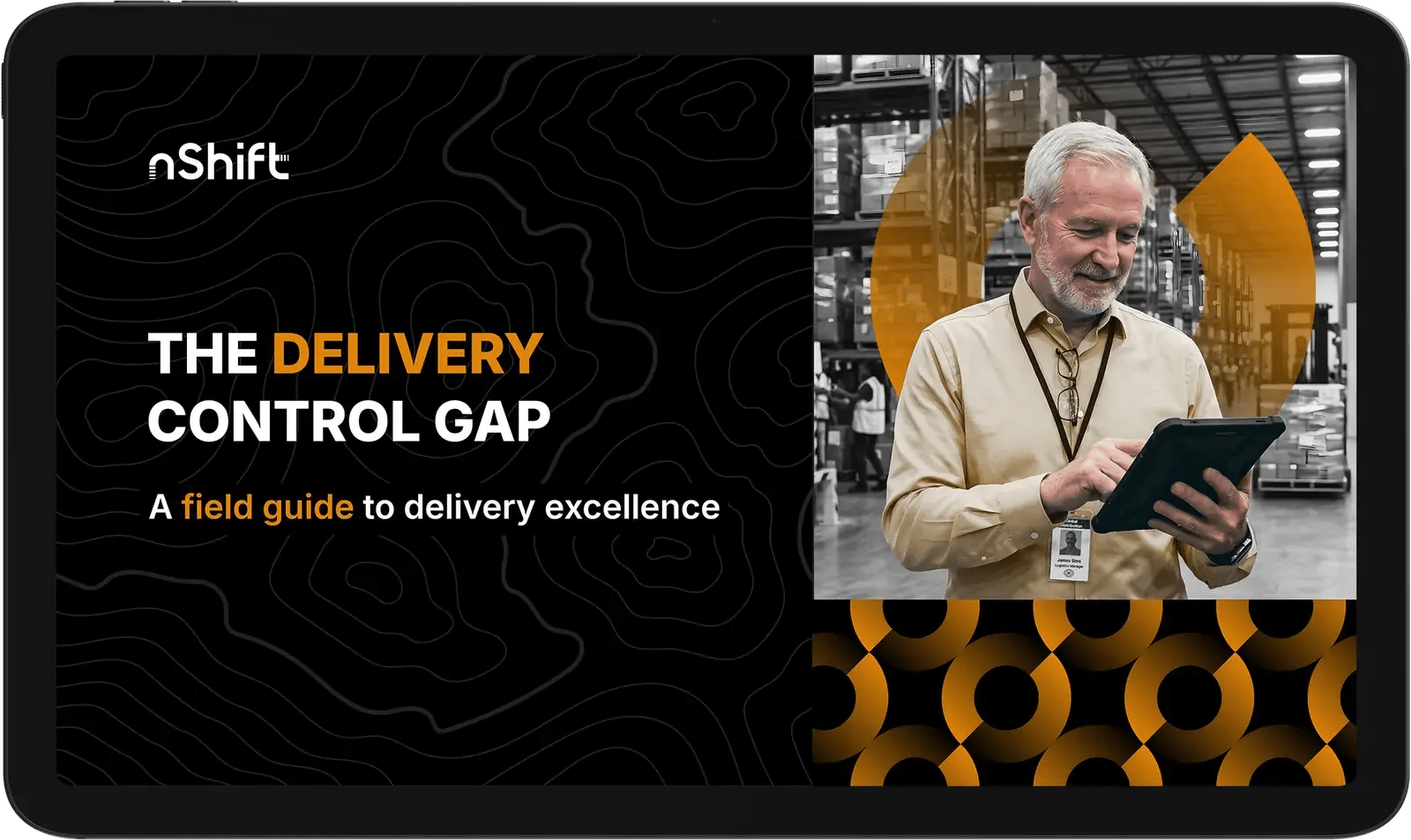
The delivery control gap

A field guide to delivery excellence


Do you know where your delivery operation is actually losing control?

  • Checkout promises your carriers cannot fulfill

  • Cost leakage in surcharges, invoices, and shipment data

  • Post-purchase silence that floods your support queue

Written by Gary Carlile, nShift's EVP of Customer Growth, this guide maps the operational areas where delivery control breaks down and how the strongest teams close the gap.

Where should we email you
a free copy of the guide?

39%


of cart abandonment traces back to unexpected costs at checkout

(Baymard Institute 2025)

53%


of total shipping cost sits in the last mile, where data errors compound

(Capgemini Research Institute)

68%


of UK consumers experienced a parcel delivery issue in the last six months

(Ofcom 2025)

50%


fewer WISMO contacts through proactive post-purchase communication

(nShift customer data)

What's inside the guide

icon-verified-partnerships

Why listing carrier names at checkout instead of delivery options suppresses conversion, and the redesign that lifted Flying Tiger Copenhagen by 20%

icon-verified-partnerships

How to engineer multi-carrier routing so a missed collection or depot issue never breaks a customer promise

icon-verified-partnerships

The carrier evaluation sequence most teams run backwards: service fit, operational alignment, reliability, then cost

icon-verified-partnerships

Where freight cost actually leaks: surcharge errors, misclassified shipment data, unreconciled invoices

icon-verified-partnerships

Treating first-time delivery failure as a data problem and feeding failure reasons back into checkout, address validation, and carrier selection

icon-verified-partnerships

Proactive delivery dates, branded tracking, and the notification strategy behind a 50% drop in WISMO contacts 

flying-tiger-copenhagen-logo-400x200-inverted

20% more conversions

for Flying Tiger Copenhagen once they redesigned their checkout delivery options around pick-up preferences instead of carrier names. 

Six areas where the guide helps you take back control

The guide goes deeper into each of these areas, with frameworks, real examples, and patterns drawn from Gary's 30 years working with enterprise delivery teams. Here's a preview of what you'll find.
icon-webshipper-black
Start with the customer promise
Design delivery as service outcomes, not carrier names. Backed by accurate estimated delivery dates and clear upfront communication.
icon-logistics2-black
Build multi-carrier resilience
Engineer failover logic so a missed collection or depot disruption never breaks the promise you made at checkout.
icon-parcel-list-black
Evaluate carriers the right way
Service fit first, then operational alignment, then performance reliability. Cost enters the equation last.
delivery-terms
Control cost through visibility
Capture surcharge errors, reconcile invoices against booked shipments, and close the data accuracy gaps where money leaks.
icon-last-mile-black
Close the post-purchase gap
Accurate delivery dates, proactive updates, and branded tracking cut support volume and build trust between dispatch and doorstep.
icon-network-black
Govern globally, execute locally
Set the standards and scorecards centrally. Give regional teams the carrier mix and routing flexibility to perform against them.
Gary-guide

ABOUT THE AUTHOR

Gary Carlile

EVP, Customer Growth, nShift | Connect on LinkedIn →

Gary has spent 30 years in logistics, supply chain, and ecommerce fulfilment, including a decade leading international customer relationships at Consignor and nShift.

He works directly with enterprise delivery teams across Europe, helping them close the gap between the promises they make at checkout and what their operations can actually deliver.

This guide draws on patterns he sees repeated across thousands of those conversations.