
Returns reasons data fails in a predictable way: it gets collected, then ignored.
Not because teams don’t care, but because the reasons are too broad to act on. When “not as expected” and “changed mind” carry half the volume, you can’t route returns faster, fix upstream issues, or tailor outcomes without manual effort.
Actionable reasons data works differently. It captures just enough structured information at the moment a return is initiated to drive decisions later: a clear reason, a usable condition, and optional context only when it changes what happens next.
In 2026, the scale makes this worth doing properly. The National Retail Federation estimates total retail returns will reach $849.9B in 2025, with 19.3% of online sales expected to be returned.
This guide shows how to capture returns reasons data you can act on across ecommerce, customer experience, warehouse operations, and finance, without turning your returns experience into a form-filling exercise.
Want to see it live? Save your seat for Solved Episode 1: Returns, rewritten. Also, explore nShift Returns here.
Quick definition: What “actionable returns reasons data” actually means
Actionable returns reasons data is structured information captured at the moment a return is initiated that is:
- consistent enough to trend over time
- specific enough to trigger action
- connected to the return journey so it can be used operationally, not just reported
In practice, it usually means you capture three things together:
- Reason (why the item is coming back)
- Condition (the state of the item)
- Context (optional evidence or details when it changes the outcome)
This is the kind of data that supports the “smarter returns” goal: prevent avoidable returns, automate flows, and restock faster.
Why most returns reasons data becomes useless
Most retailers don’t lack returns data but they do lack signal. And when reasons data has low signal, it quietly causes three problems:
1) It doesn’t change decisions
If the reason list is vague, your team ends up treating returns the same way regardless of cause. That means you miss the chance to route faster, recover faster, and fix upstream issues.
2) It creates false confidence
Dashboards look “complete,” but the underlying categories are too broad to guide action. “Not as expected” is not a reason you can operationalize. It’s a shrug.
3) It increases workload instead of reducing it
If customers can’t pick a clear reason, they add comments, open support tickets, or get stuck in back-and-forth. Teams spend time interpreting the return rather than moving it forward.
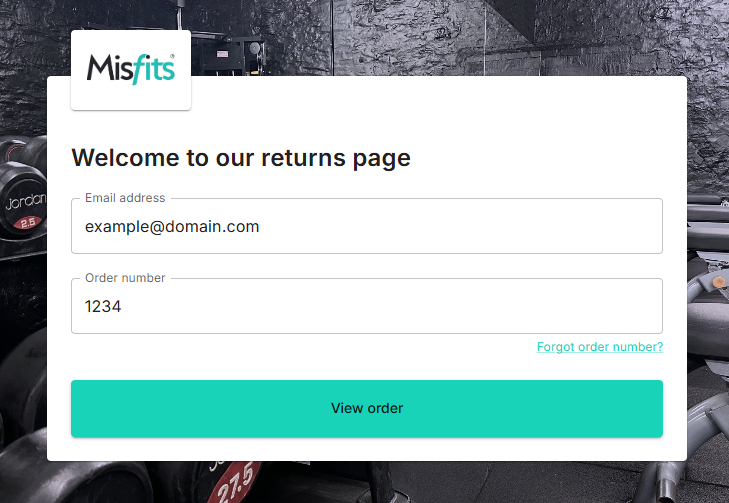
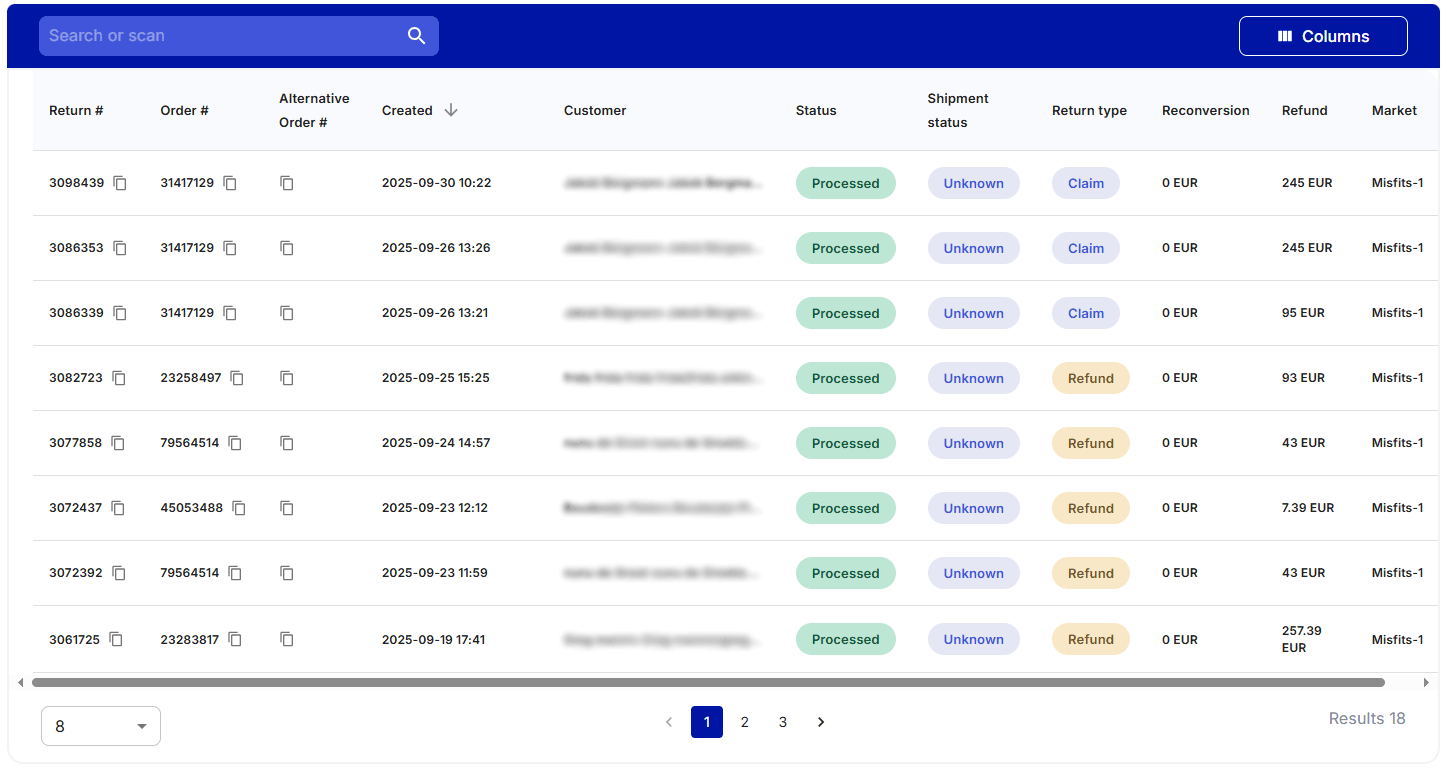
A returns portal that gives customers a clean experience is only half the story. The other half is what the business can learn and do with the data behind it.
The “so what” test: What should reasons data enable?
Before you touch your taxonomy, anchor on outcomes. Ask one simple question:
What should we be able to do differently when we trust this data?
For most retailers, actionable returns data should enable decisions like:
- Reduce avoidable returns by fixing product content, sizing guidance, QA, or fulfillment patterns
- Speed up inventory recovery by routing items based on condition and method
- Improve customer clarity by aligning reasons, messages, and status milestones
- Tailor outcomes (refund, exchange, credit, store return) without turning policies into a maze
- Spot product and process issues that are creating repeat returns and cost-to-serve drag
If your captured data doesn’t power at least two of those, it’s probably too broad, too inconsistent, or too hard to use.
How to capture returns reasons data you can act on
This is the practical method. It’s designed to work across ecommerce ops, CX, warehouse, and finance without over-engineering.
1) Keep the reasons list short enough for customers to answer quickly
Customers are not filling in a survey. They want to complete a task and move on.
So your reasons list needs to be:
- short enough to scan
- written in customer language
- specific enough to map to action
A reliable starting point is a short core list you keep stable, then you refine quarterly based on what you learn.
The goal is not “perfect categorization.” The goal is fewer “catch-all” choices and less guessing.
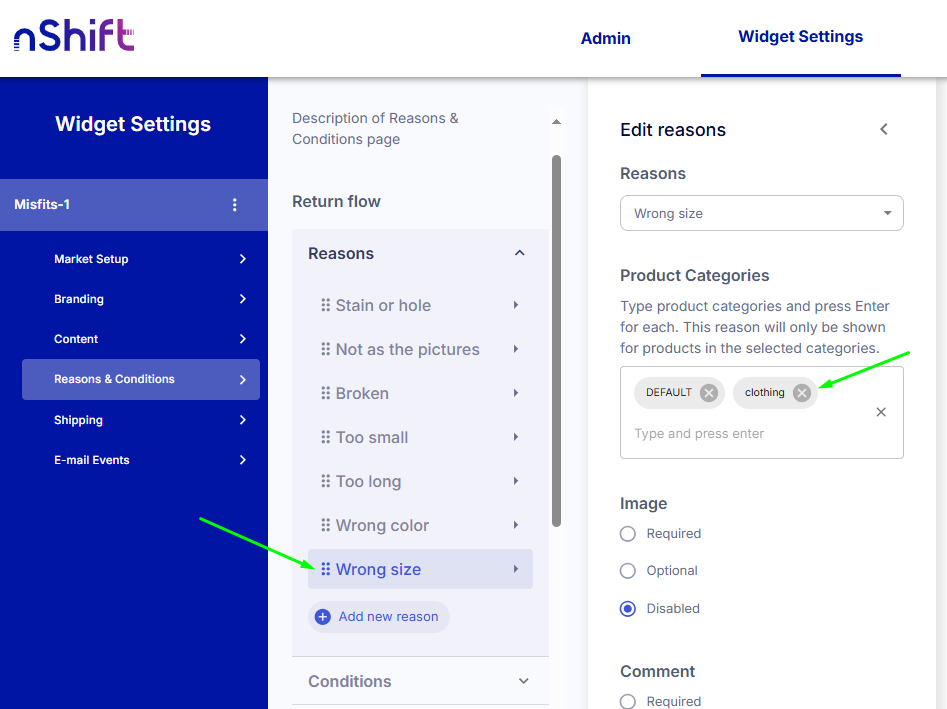
2) Make reasons category-specific so they stay relevant
One master list for every product type usually breaks instantly. What’s meaningful for apparel is nonsense for electronics. What’s meaningful for cosmetics is not the same as homeware.
Category-specific reasons improve accuracy because customers see options that actually apply. And accuracy matters because the quality of the reason you capture determines whether the business can act without interpretation.
3) Treat “condition” as first-class data, not a nice-to-have
Reason tells you why the return happened. Condition tells you what you can do next.
If you capture condition properly, you unlock operational decisions that directly affect recovery speed and cost.
Keep condition choices simple and operationally meaningful, such as:
- Unopened / unused
- Tried on / lightly used
- Used
- Damaged / faulty
That alone can change how fast items get back into sellable stock, and how predictable warehouse work becomes.
4) Ask for context only when it changes the outcome
Photos and comments can make your data dramatically better. They can also add friction if used everywhere.
The practical rule is:
- Don’t require extra input for preference-based reasons (fit, changed mind)
- Do require it for ambiguity-heavy reasons (damage, fault, wrong item) where it changes the next step
This keeps the experience clean for most customers, while still giving you higher-quality data where you need it.
5) Add only a few extra fields and make each one earn its place
Every additional field is a trade.
If you add too many, customers rush, abandon, or choose random options. If you add too few, your team is back to guessing.
So only add a field if you can answer:
- Who uses this field?
- What decision does it unlock?
- What action will we take when it changes?
Examples of fields that tend to earn their keep:
- “Where did the issue show up?” (delivery, unboxing, first use)
- “What outcome do you prefer?” (refund, exchange, credit)
- “Replacement preference” when exchange is a common path
6) Standardize your reasons so analytics survives real life
If you want reasons data to be useful across systems, teams, and time, you need standardization.
That doesn’t mean the customer sees codes. It means your business logic and reporting do.
Standardization is what lets you move from:
“We think fit is an issue.”
to:
“Fit-related returns are concentrated in these categories and markets, so we fix those first.”
7) Governance: keep it boring so it stays usable
Actionable data depends on stability.
If your reasons taxonomy changes constantly, you can’t trend. If it never changes, it drifts out of relevance.
A lightweight cadence works best:
- one owner (ops, ecommerce ops, or CX ops)
- quarterly review
- avoid renaming categories unless you map old to new
The goal is consistency you can build on, not constant reinvention.
A practical starter set you can adapt
If you want a compact base that works for most retailers, start here and refine by category:
Fit and preference
- Too small
- Too large
- Changed mind
Product and quality
- Different from description/photos
- Poor quality / not as expected
- Faulty / not working
Fulfilment and delivery
- Arrived damaged
- Wrong item sent
- Arrived too late
Then add category-specific reasons where needed. The most important thing is that each reason maps to a business action.
What changes when you get this right
When reasons data becomes reliable, several things happen at once:
- E-commerce teams stop debating anecdotes and start prioritizing fixes based on patterns
- Support teams spend less time translating vague returns into operational work
- Warehouse teams get more predictable flows because condition and context reduce ambiguity
- Finance sees less leakage because recovery improves and costs are less hidden
- Customer experience improves because communication becomes clearer and outcomes feel consistent
And that’s the deeper “so what.” Actionable reasons data is not reporting, it’s control.
If you’re aiming for smarter returns that improve products and protect margin, this is one of the highest-leverage starting points.
Definitions
Returns reasons data
Structured data captured when a return is initiated that explains why the item is being returned.
Actionable returns reasons data
Reasons data that is consistent, specific, and connected to operational decisions, enabling prevention, routing, recovery, and better outcomes.
Return reason taxonomy
A defined list of return reasons designed for consistency over time and mapped to business actions.
Category-specific reasons
Return reasons that are shown only for relevant product categories to improve accuracy and reduce customer guesswork.
Product condition (returns condition data)
The state of the item at return initiation (e.g., unused, lightly used, damaged) used to inform routing and recovery decisions.
Additional fields
Extra structured questions asked during return initiation to capture context that unlocks decisions (kept limited to avoid friction).
Reason codes
Internal standardized identifiers attached to reasons so reporting and automation remain consistent across systems and time.
Connected returns journey
An end-to-end returns flow where initiation, updates, and data (including reasons and condition) are managed in one consistent journey so teams and customers have clear visibility.
See it live: Solved Episode 1

 Join Solved Episode 1: Returns, rewritten for a fast walkthrough of the 2026 shifts shaping returns expectations and operating costs, plus a live demo focused on a connected returns journey where visibility and reasons data drive better outcomes.
Bonus: register and we will send you the Fix the Returns guide.