
Returns are already a structural tax on retail, compounded by shipping, handling, restocking, markdowns, and write-offs. What changes the size of that tax is not just how many returns you get. It is how well you can see and manage the journey end to end.
In 2025, the National Retail Federation estimated 19.3% of online sales would be returned. And early-January data for holiday purchases shows returns at 12.2% of online orders globally between 1 January 1 and 14 January 2026, based on Salesforce data reported by Digital Commerce 360.
When visibility is fragmented across carriers, inboxes, warehouses, store operations, and customer support, the same return creates repeated questions, slow handoffs, and delayed recovery. Customers feel the uncertainty. Teams feel the workload. Finance feels the leakage.
A connected returns journey is the practical fix. This guide explains what connected returns means, why returns visibility matters, and how to build it with a returns portal, structured reasons data, and segmentation that keeps customer experience strong while improving operational control.
Want to see it live? Save your seat for Solved Episode 1: Returns, rewritten. Also, explore nShift Returns here.
Quick answer: What is a connected returns journey?
A connected returns journey is a returns process where customers and internal teams share a single, real-time view of what is happening and what happens next, from return registration through drop-off, in-transit, receipt, assessment, restock, and resolution.
In practice, it means:
- Customers register and manage returns in a self-service returns portal
- Return status is visible to the customer and the retailer in one place
- Return events, labels, and updates flow automatically through the journey
- Every return captures structured return reasons and condition data
- That data is usable for segmentation and better recovery decisions
Why connected returns matter more in 2026
1) Returns volumes are high, and the cost compounds fast
Returns costs do not show up as a single line item. They compound through shipping, handling, restocking, markdowns, and write-offs. That is why returns become a structural tax.
This is not a rounding error. When returns approach one in five online purchases, the difference between a connected journey and a patchwork shows up fast: higher cost-to-serve, slower recovery, and weaker loyalty.
2) Returns visibility is now a service expectation
Refund and return anxiety shows up as “Where is my return?” and “Where is my refund?” contacts. The fastest way to reduce that pressure is shared visibility: customers can see status and next steps, and internal teams can see the same truth without chasing updates.
3) Recovery speed drives margin
If a returned item is resellable, time is money. The longer an item sits in limbo, the higher the chance of markdowns and missed resale windows. DeliveryX highlights that returns routed through third-party locations can leave retailers with limited real-time visibility into when items return and whether they are resellable.
4) Return policy affects conversion before the purchase
Returns are not only post-purchase. They influence purchase decisions. Rithum’s 2025 report found 47% of consumers have stopped shopping with a retailer because of an unfavorable return policy. Baymard’s checkout research lists “return policy wasn’t satisfactory” as a reason for abandonment (15%).
5) Sustainability is becoming operational
For UK fashion, DeliveryX cites British Fashion Council data: returns generated 750,000 tonnes of CO2 in 2022, with 23 million garments sent to landfill or incinerated. Operational choices in returns routing and recovery influence that outcome.
The three symptoms of a fragmented returns journey
Most returns challenges show up as three symptoms. If you recognize them, you have a visibility and management problem, not just a process problem.
Symptom #1: Customers keep asking “what happens now?”
Fix: make the journey visible. Provide a portal status view and automatic stage updates from “return registered” to “received” to “refund processed.”
Symptom #2: Stock comes back slowly, in unknown condition
Fix: share return events across teams and capture condition data. DeliveryX notes that third-party returns routes can reduce retailers’ real-time visibility into timing and resellability.
Symptom #3: Every return is treated the same
Fix: capture structured reasons and use them to segment outcomes. Segmentation only works when the journey is visible and the data is consistent.
What a modern e-commerce returns portal needs to do
A returns portal is not just a form. Done well, it becomes the control layer for the connected returns journey: customer entry point, policy logic, reasons capture, status visibility, and downstream workflow.
At a minimum, a modern returns portal should help you:
A practical returns portal flow you can use
Here is a clean end-to-end flow that covers what most retail teams need:
-
Customer clicks a return link
-
Customer logs in with email + order number, or via a secure email login link
-
Customer selects item to return
-
Customer selects return type: return, exchange, or claim
-
Customer selects reason and condition, with optional comments or image upload
-
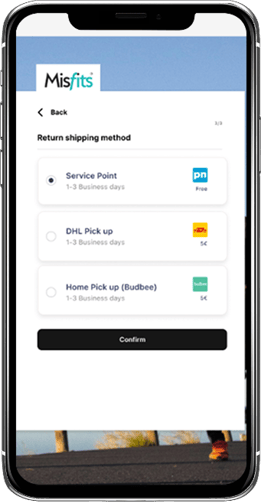
Customer selects shipping or drop-off method
-
Customer selects refund method
-
Return is registered and status tracking begins
This flow matters because it standardizes inputs and creates a single source of truth teams can use.
How to build a connected returns journey in 5 steps
Step 1: Define the outcomes you want to enable
Pick 2 to 3 outcomes so you stay focused. Common outcomes include faster recovery and resale, fewer WISMR contacts (Where is my refund?), better exchanges and store returns, better visibility across teams, and better product insights from reasons data.
Define WISMR once: WISMR means “Where is my refund?” It is a category of customer contacts driven by refund uncertainty.
Step 2: Make return events visible to both customer and retailer
A journey is only connected if both sides see the same status. Aim for one customer view and one internal view, both driven by the same events and timestamps.
Step 3: Standardize return reasons and condition data
Reasons data is only useful when it is structured. Keep reasons short, relevant, and stable enough to trend over time. Use category-specific reasons when needed so customers do not wade through irrelevant options.
If you want an implementation cue, your help centre model uses structured fields like returnReasonCode and returnConditionCode to keep data consistent across systems.
Step 4: Use reasons data to segment outcomes
Once status is visible and reasons are consistent, segmentation becomes practical. The goal is to treat different scenarios differently without making the experience messy.
Step 5: Connect returns back into operations and analytics
Connected returns is not complete until internal teams can act on the signals. This includes operational views for managing workload and analytics that identify high-impact products and reasons patterns.
A simple example is prioritization logic: your analytics approach uses a priority score that combines return rate and return volume to surface the products most worth fixing first.
Typical return-rate ranges by category
Benchmarks vary by market and brand, but category ranges help set expectations. Use these as directional ranges, not absolutes.
| Category | Typical online return-rate range |
|
Apparel |
30–40% |
|
Electronics |
8–10% |
|
Beauty & skincare |
4–10% |
|
Home goods & furniture |
15–20% |
Source for the ranges above: Red Stag Fulfillment’s category benchmark summary.
Examples: what connected returns looks like in practice
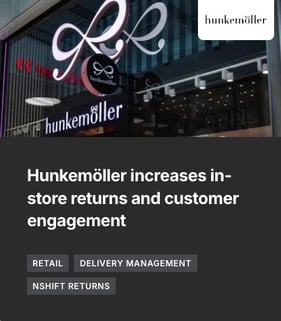
Hunkemöller: Shift returns into stores
Store returns can reduce paid parcel movements and speed recovery. Hunkemöller saw a 15% shift toward in-store drop-offs after enabling store returns for online purchases.
Quiz: Reduce service load with a clearer post-purchase journey
Quiz’s story emphasizes reducing customer service calls and improving the post-purchase experience through a more connected journey.
Checklist: Do you have a connected returns journey?
Use this as a quick self-audit: tick what is true today.
Customer experience:
• Customers can register a return in a self-service portal
• Customers receive a label or QR code without contacting support
• Customers can see return status and next steps
• Customers receive automatic stage updatesRetailer operations:
• Return events are visible in one place, not scattered
• Reasons and condition are structured and reportable
• Warehouse updates and restocking are integrated
• You can segment outcomes using customer and journey data
If you tick fewer than half, your “returns problem” is likely a visibility problem in disguise.
See it live: Solved Episode 1

 Join Solved Episode 1: Returns, rewritten for a fast walkthrough of the 2026 shifts shaping returns expectations and operating costs, plus a live demo focused on a connected returns journey where visibility and reasons data drive better outcomes.
Bonus: register and we will send you the Fix the Returns guide.