Our Solved webinar series is built around a simple promise: we focus on practical delivery improvements and we solve real scenarios in real time.
In Episode 1, we started with the returns trends shaping 2026, then moved into a live scenario and built a connected returns experience on screen, step by step.
“The emphasis of this session is to do some solving. We’re going to look at real problems and actually solve them in real time.”
Missed the live session? Watch it on demand here: Solved Episode 1: Returns, rewritten.
Key takeaways in one glance
- Returns strategy is becoming more intentional and configurable
- Self-service reduces manual work and improves customer ease
- In-store returns can create a reconversion moment
- Shared visibility supports better planning and decisions
- Category-based reasons data creates an actionable feedback loop
- Brand continuity and cross-border support are part of modern returns control
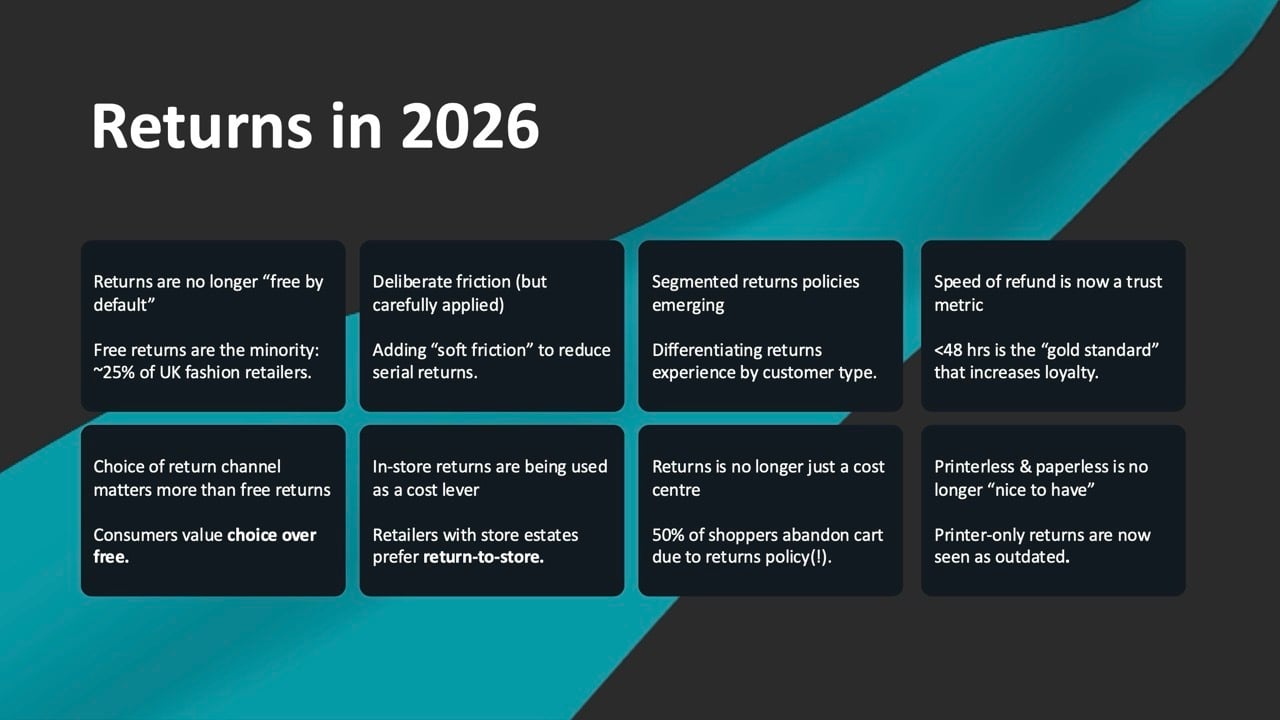
1) Returns strategy is becoming more intentional
The session explored how retailers are evolving the way they design returns. More brands are moving from one fixed approach to something more configurable and easier to sustain, without losing customer trust.
“Customers are getting used to returns not being free by default. It’s becoming more normal to be charged for returns, as long as the experience stays clear and fair.”
So what: This is an opportunity to design a returns experience that feels clear for customers and gives the business more control.
2) Self-service is becoming the default experience
One of the most practical points was how much time and cost sits in manual returns workflows. Email forms, back-and-forth, and agents creating labels still exist in far too many setups. Self-service is the simplest way to remove that friction.
“A lot of returns still start with an email form and a long manual process. When customers can create their own return, choose the item, choose the return method, and get the label, you remove a huge amount of internal work.”
So what: A returns portal can improve customer ease and make the workflow lighter for teams, with a consistent journey from start to finish.
3) In-store returns can create a second shopping moment
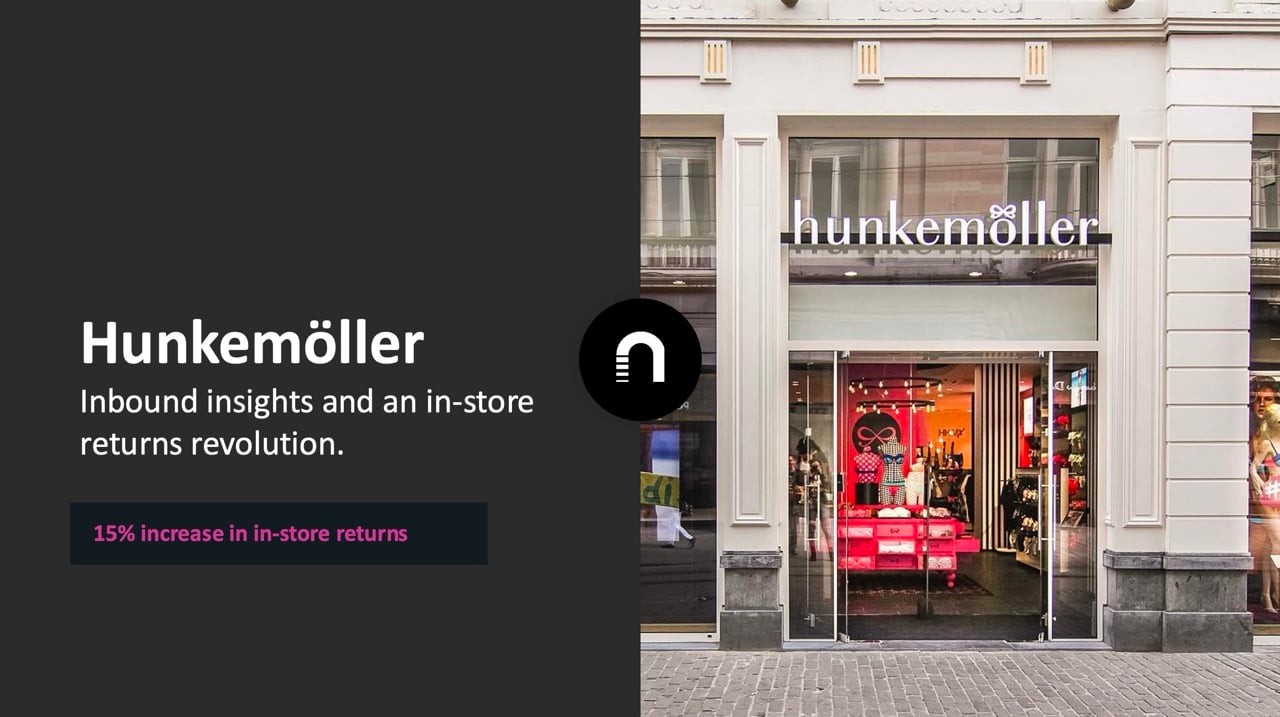
In-store returns came through as a strong convenience option and a commercial opportunity. If customers return in store, they re-enter your brand environment, and that opens the door to reconversion.
“If you bring customers back to store to return, they spend time with your brand again. They look around, and many end up buying something else. You spend a lot to win a customer, so why lose that moment?”
So what: For omnichannel retailers, store returns can support loyalty, revenue, and returns efficiency at the same time.
4) Visibility is what turns returns into a controllable journey
A major theme was shared visibility. Without it, teams cannot plan, customers chase updates, and the journey becomes harder to manage than it needs to be. When visibility is connected end to end, decisions become faster and clearer.
“One of the biggest improvements comes from knowing what is coming back and why. When you can see inbound returns early and understand the reasons behind them, you can act much faster.”
So what: Visibility is the foundation that makes segmentation, decision-making, and recovery speed possible.
5) Reasons data becomes useful when it’s structured by product category
A key takeaway was that reasons data is only valuable when it is actionable. And the easiest way to make it actionable is to tailor reasons to product categories, so customers select relevant reasons and the retailer gets cleaner insight.
“We enabled category-based return reasons so customers choose reasons that actually fit the product they’re returning. That gives much better data on what needs to change, whether that’s in product quality, product information, or the logistics setup.”
So what: This creates a feedback loop. Returns becomes an input you can use to improve products and operations.
6) The live solve showed what “control” looks like in practice
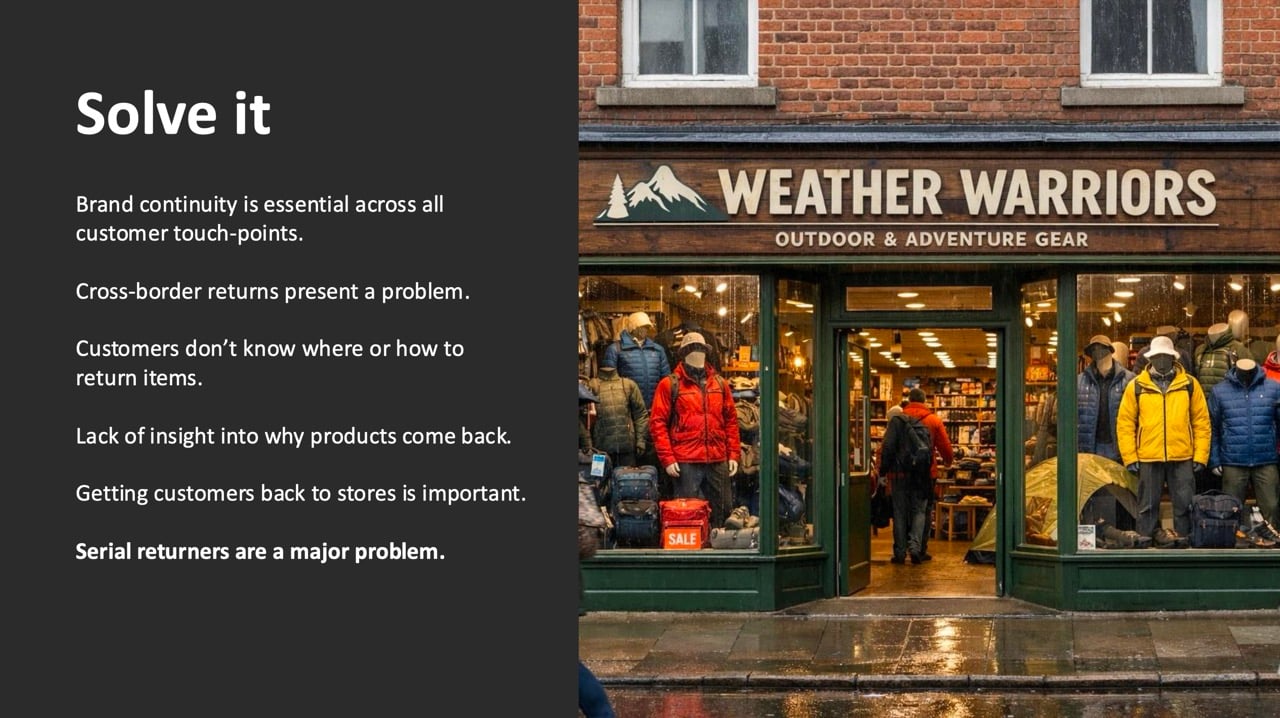
The second half of the session shifted into a live scenario: a fictitious retailer with cross-border complexity, brand continuity needs, unclear returns instructions, limited insight into why products come back, and a desire to drive customers into stores. The goal was to show the operational thinking behind a connected setup.
“We created a realistic retailer scenario and worked through it live. The point was to show how you build a connected returns experience that keeps the journey consistent for customers and controllable for the business.”
7) A connected portal supports global scale and brand continuity
Once the on-screen demo started, the session walked through practical configuration areas: markets, languages, branding, return fees, refund methods, communications, and reasons. Cross-border returns was also framed through documentation requirements such as proforma invoices.
“The portal can be configured by market and language, while keeping the brand experience consistent. For cross-border returns, documentation like a proforma invoice helps ensure the return is processed correctly as a return, not a new shipment.”
So what: Control means the ability to tailor the experience by market, keep the brand consistent, and support cross-border returns with the right operational setup.
Watch the on-demand session
 If you missed the live session, you can watch it on-demand here. You'll get a fast walkthrough of the 2026 shifts shaping returns expectations and operating costs, plus a demo focused on a connected returns journey where visibility and reasons data drive better outcomes.
Bonus: register and we will send you the Fix the Returns guide.