In this blog: Learn how to set up free shipping (free delivery) for your e-commerce store with our ultimate guide. We cover why free shipping matters, practical steps to configure free shipping rules using delivery management software, examples of successful strategies, and tips to leverage free delivery during Black Friday and ecommerce peak seasons, all while protecting your margins and delighting customers.
Why free shipping is essential for e-commerce
Offering free shipping (also known as free delivery) is no longer a luxury – it’s an expectation. Multiple surveys show that the majority of consumers demand free shipping on their online orders. In fact, 64% of consumers want their orders shipped for free, and 82% of European online shoppers cite free delivery as a top priority when choosing where to buy. It’s no surprise that free delivery has become the norm in many markets, with 96% of retailers offering it in some form.
Free shipping directly impacts your bottom line. High shipping costs or lack of affordable options are a leading cause of cart abandonment. Up to 50% of shoppers will abandon their basket if they find the delivery options lacking. According to Baymard Institute, 22% of abandoned carts are due to poor or expensive delivery options. Conversely, when you provide attractive shipping choices (like a free delivery option or clear delivery timeframes), shoppers are much more likely to complete the purchase. For example, one retailer using nShift Checkout saw a 25% increase in conversion for first-time customers after optimizing delivery options at checkout. Free shipping can thus significantly boost checkout conversion and reduce cart abandonment by eliminating an extra cost barrier and building trust with your customers.
Free shipping can also increase average order value (AOV). Shoppers often add more items to their cart to qualify for a free delivery promotion. 58% of online shoppers have added additional items to their basket specifically to reach a free shipping threshold. In other words, a well-designed free shipping offer doesn’t just make customers happy – it can also encourage them to spend more on your site, offsetting the cost of shipping. 65% of consumers now check the free shipping threshold before adding anything to their cart[6], so setting a clear minimum spend for free delivery can both reduce shipping-related abandonment and nudge customers to buy a little extra to meet that target. It’s a win-win when done right.
How to offer free shipping
You offer free shipping by not charging the customer a separate delivery fee and deciding how to absorb or recover the carrier cost: through a minimum order value that lifts the basket, a margin built into product prices or a membership fee that helps support it, and by limiting the offer to a promotion, a customer group or a product range where the economics work. The seven strategies below set out how each one works and the conditions that make it viable, and the step-by-step section after them shows how to configure the free-shipping rules in your shipping software.
Free shipping strategies that work (and keep you profitable)
There are many ways to offer free shipping or delivery, and it’s important to choose a strategy that fits your business margins. You want to delight customers without eroding your profits. Here are proven free shipping strategies used by successful e-commerce retailers in the UK, Nordics, Benelux, DACH and beyond:
Free shipping with a minimum threshold
The most common approach is to set a free shipping threshold – e.g. “Free delivery on orders over €50.” This encourages higher spend and ensures you cover the shipping cost with the order value[7][8]. Many retailers use this strategy; conditional free standard delivery (with a spend threshold) is the most popular option in ecommerce. Make sure to calculate a threshold that makes financial sense (e.g. slightly above your average order value or at a point that maintains a healthy margin). Shoppers love these deals – as noted, over half will add items to meet the minimum, and they actively look for the threshold upfront. Clearly advertise the free shipping cutoff on your site (e.g. “Free UK delivery over £40”) so customers know the target.
Build shipping into product prices
Another approach is to bake the shipping cost into your product pricing so that delivery appears “free” to the customer. In this model, you aren’t waiving the cost, but distributing it across product prices. This works best if your prices can be adjusted slightly upward without hurting competitiveness. The benefit is psychological: customers feel like they’re getting free delivery, improving conversion, even though they’ve essentially pre-paid it. Use this carefully for high-margin products or market-wide free shipping expectations.
Limited-time free shipping promotions
Free shipping can be a powerful marketing tool during promotions or peak shopping periods. For example, you might offer free shipping for a weekend sale, Black Friday/Cyber Monday, or other holiday events. This creates urgency and can sharply boost conversions during those promos. Ensure you communicate the offer clearly (banner across the site, countdown timers, etc.). Black Friday in particular is a key time to consider a free delivery deal to stand out – surprisingly, in 2022 only about 1 in 12 retailers (8%) included free delivery in their Black Friday promotions, so doing so can differentiate your store. Just plan accordingly for the surge in orders (we’ll cover peak season tips below). Free shipping campaigns are great for customer acquisition – one survey found 38% of retailers highly value free delivery as an acquisition and retention tool.
Free shipping for first-time or VIP customers
Consider offering free delivery on the first order for new customers. This lowers the barrier for someone to try your store over a competitor. You can promote it as a welcome offer (“Get free first-time shipping when you sign up” or a one-time free delivery code for new signups). Once they’ve purchased, you can focus on retention through great service and perhaps loyalty programs. Similarly, you might grant free shipping to your loyalty program members or VIP customers as a perk. For instance, some brands offer free delivery once a customer spends over a certain amount annually or as part of a VIP tier – rewarding your best customers with this benefit can increase their lifetime value.
Membership or subscription models
Take inspiration from Amazon Prime: free shipping in exchange for a membership fee. If you have a strong brand following, you could create a shipping subscription (e.g. pay £XX per year for unlimited free deliveries). This locks in loyalty and encourages members to shop more to make the most of their subscription. It can also provide you with upfront revenue. Ensure the math works out – typically only heavy shoppers will subscribe, so set a price that covers average usage. The convenience and perceived savings of “already paid for itself” free shipping can keep subscribers buying from you vs. competitors.
Selective free shipping (by product or region)
You don’t have to offer free delivery on everything. Some retailers make specific products or categories ship free – for example, high-margin items, or items over a certain price. Others limit free shipping to certain regions (like domestic orders) if international shipping is too costly. For instance, you might do “Free delivery within the UK, flat rate shipping worldwide.” In Europe, you could offer free home delivery in core markets where costs are manageable, and charge for far-flung destinations. Always communicate any conditions clearly to avoid surprise fees at checkout.
Free returns to complement free delivery
While not exactly “free shipping,” offering free returns can amplify the appeal of free outbound shipping. Customers in fashion and other verticals value hassle-free returns. During promotions, some retailers coupled free shipping with free returns or extended return windows (in one study, 26.5% of retailers offered perks like free returns alongside delivery offers during Black Friday). A smooth returns process (using tools like nShift Returns for automated, self-service returns) will give customers confidence to buy, knowing they won’t pay a penalty if something needs to go back.
How do you choose?
Consider your margins, average order size, and what your competitors do. Many mid-market and SMB e-commerce companies in Europe find free shipping with a threshold to be the sweet spot – it’s financially sustainable and expected by customers. You can always mix strategies too: e.g. free standard shipping over €50 year-round, plus free expedited shipping for VIP members, plus a few free-delivery flash sales annually. The key is to plan for the cost (raise thresholds or prices if needed, as nShift suggests) so that free shipping “pays for itself” via larger orders or customer loyalty.
How to set up free shipping step-by-step (using delivery management software)
Now let’s get practical. How do you actually set up free shipping on your website or app? Whether you use an e-commerce platform like Shopify/Magento or a delivery management system like nShift, the process typically involves configuring rules for when shipping is free and ensuring those options show up at checkout for customers. Below is a step-by-step guide:
1. Define your free shipping rules and criteria
Start by clearly defining when and how you will offer free shipping. Answer questions like:
- Is it based on order value (threshold)?
- Which locations get free delivery (domestic only, EU only, etc.)?
- Does it apply to all products or only certain categories?
- Which shipping service will be free (standard delivery only, or also express)?
If using a threshold, set the amount and currency. If it’s a limited promotion, decide the time frame and any promo code needed. Nail down these criteria first, as you’ll need them for configuration. For example, you might decide “Orders over €75 ship free with standard ground delivery within the EU; orders under €75 or express shipping will incur normal rates.” Having this policy in writing helps ensure you configure it correctly in the next steps.
2. Configure the free shipping option in your shipping software
Next, implement the rule in your e-commerce or shipping management system. Many platforms allow you to create a shipping rate that becomes $0 when conditions are met. If you’re using delivery management software like nShift Checkout, the interface makes this straightforward. For instance, in nShift Checkout you can simply activate a “Threshold for free shipping” on a delivery option and enter the minimum cart value for free delivery.
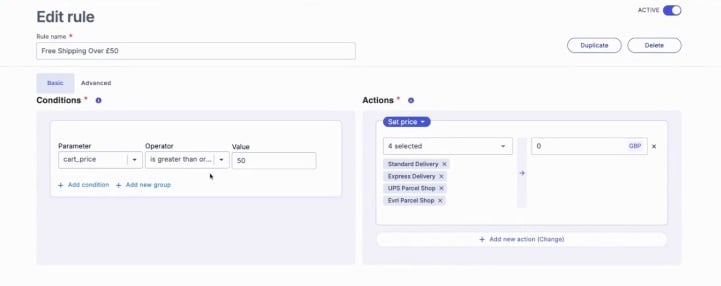
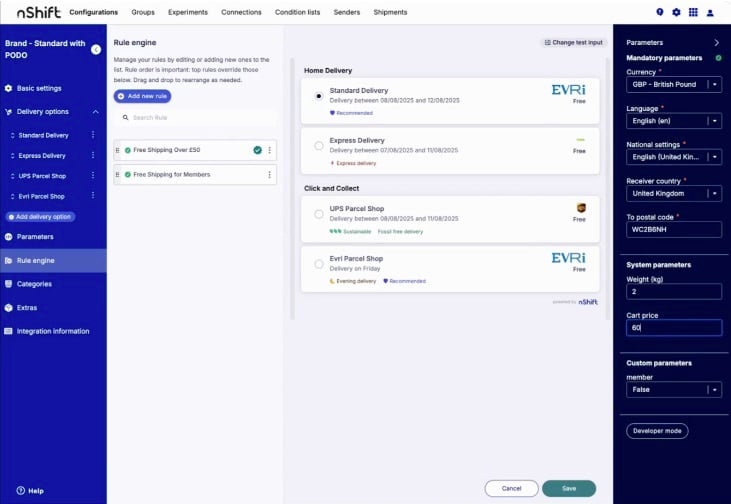
For more advanced scenarios (or higher subscription tiers of nShift), you can use a Rules Engine to fine-tune your free shipping logic. This allows complex conditions beyond just cart value. Using nShift’s rule builder, you could, for example, activate a rule: “IF cart_price ≥ €75 AND (shipping_country is UK or DE) THEN set shipping cost = €0 for Standard Delivery service.” In nShift Checkout’s rule engine, you’d first enable the cart_price parameter and then create a new rule with conditions like “cart_price >= 75” and an action that sets the selected carrier service price to 0 (free). The rule can then be toggled on to go live. (See image in nShift’s help article for an example of a free shipping rule setup.) This code-free rules approach gives you flexibility to tweak free shipping criteria without needing a developer – a huge plus when running promotions or adapting to market changes.
Most importantly, make sure the free shipping option is visible at checkout when the conditions are met. In your delivery management software or e-com platform, that typically means defining a shipping method (e.g. “Free Standard Shipping”) that only appears (or becomes $0) if the cart qualifies. With nShift Checkout, this is seamless – it will dynamically display “free” next to the eligible delivery option once the threshold is reached. You can even configure dynamic messaging like “Spend €10 more to get free shipping!” to show below the shipping options, nudging the customer to add a bit more to their cart. This kind of personalized message (often enabled via the rule engine or a plugin) is highly effective – it reminds the shopper of the benefit and how close they are to earning it.
3. Test the setup
Before unleashing free shipping on all your customers, run thorough tests. Most platforms have a testing sandbox or at least you can simulate orders. Add items to the cart that are below and above your free shipping threshold and go to checkout: do you see the correct shipping options and prices? nShift’s Checkout admin, for example, provides a Test input tool where you can input different cart values to see if your rule triggers the free shipping as intended. Ensure that for qualifying orders, the free delivery shows up (and is $0), and for non-qualifying orders, normal shipping rates apply. Also verify edge cases – e.g., exactly €75 should probably count as free if you said “orders over €75” vs “orders €75 and up”. Adjust the rule if needed (e.g., use ≥ or > appropriately). Testing now prevents surprises later (like accidentally giving free shipping to everyone because a rule was misconfigured!).
4. Communicate the free shipping offer to customers
A free shipping option won’t have any impact if customers don’t realize it exists. So the next “step” is more of an ongoing best practice: make your free delivery conditions highly visible and clear. Display a site-wide banner (“Free Delivery on orders over €75 within Europe”), mention it on product pages, and remind users in the cart (“You’re just €10 away from free shipping!”). If you have international audiences, localize the messaging (free “delivery” vs “shipping” depending on what term is common, show amounts in local currency, etc.). During checkout, highlight the free option – for instance, nShift Checkout allows you to show a “FREE” label or badge next to the shipping service name, and even carrier logos and estimated delivery dates to build trust. These visual cues (FREE, fast delivery, etc.) can significantly increase conversion by reassuring shoppers. The goal is to ensure customers know they are getting a deal (so they feel good about completing the purchase) and to prevent any confusion about costs.
5. Monitor, optimize, iterate
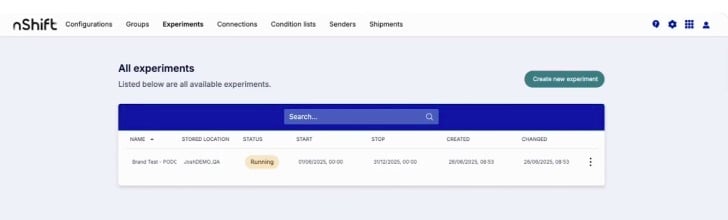
After implementing free shipping, keep an eye on your metrics. Did your conversion rate improve? What about average order value and profit margins? Ideally, you’ll see more orders or higher AOV offsetting the shipping costs. If you’re using nShift or a similar platform, you might take advantage of analytics and even A/B testing features.
For example, nShift’s Checkout solution allows you to run experiments (A/B tests) on different delivery setups. You could test a lower threshold vs. higher threshold, or test showing the “free shipping if you add €X” message vs. not showing it, to measure the impact on conversion. Continually optimizing will help find the sweet spot. Also monitor operational effects: if free shipping volume is straining your logistics, you might need to refine rules (e.g. limit to certain shipping methods) or ensure your warehouse and carriers can handle the load (see next section on peak season).
Solicit feedback from customers too – do they value the free shipping option, is the delivery speed acceptable, etc.? Use that feedback to adjust your service or add carriers if needed.
Leveraging nShift to streamline free shipping
Implementing free delivery at scale can be challenging, but modern delivery management software makes it much easier. Throughout the process above, we power an end-to-end platform (from checkout experience to label printing to tracking and returns) that is critical for managing free shipping strategies. Here’s how we help mid-market and growing e-commerce businesses in Europe offer free shipping smoothly:
nShift Checkout
This is the module that integrates into your online checkout to present flexible delivery options to customers. It’s essentially the control center for your free shipping rules and display.
With nShift Checkout, you can configure multiple shipping options (standard, express, pickup points, lockers, etc.) and set conditions for each – including free shipping thresholds, geo-specific options, and more – without writing code. It updates in real-time based on the cart, showing accurate options and delivery estimates.
By giving shoppers the delivery choices they want (like a free option for those who qualify), nShift Checkout helps turn delivery choice into a conversion driver. It’s proven to reduce friction and cart abandonment by aligning the checkout experience with customer expectations (fast, free, convenient delivery).
Bonus: nShift Checkout’s interface allows those persuasive messages like “Add €X for free shipping” and displays trust symbols (carrier logos, promised delivery dates) which can boost conversion by up to 12% as seen in case studies.
nShift Ship
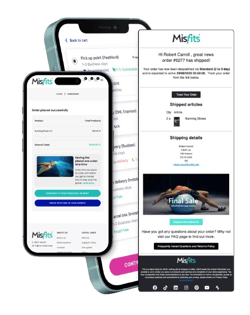 Once the order is placed, nShift Ship handles the fulfillment side. Free shipping often means more orders to ship and possibly using the most cost-effective carrier service.
nShift connects you to 1,000+ carriers out-of-the-box, including local and international delivery companies across UK, Nordics, Benelux, DACH, and beyond. This means you can easily choose the best carrier service for free shipments (e.g. the cheapest ground service for domestic free delivery, or a consolidated courier for Nordics).
You can set up automation so that when an order qualifies for free shipping, it’s automatically assigned to a particular service or carrier. Automation and integration are key here – nShift Ship can automatically generate labels, customs docs, and handle tracking numbers for each free shipment, saving your ops team a ton of time.
Even with high volume (think Black Friday rush when your free shipping promo floods in orders), the platform scales with you, ensuring every order is shipped with speed, accuracy, and confidence. The result is that you keep your free delivery promise without logistical chaos.
nShift Track
Offering free shipping is not just about the moment of purchase – it’s also about the post-purchase experience. Customers might be okay with a slightly slower free delivery, but they definitely want to know where their package is.
This is where nShift Track comes in. It provides proactive, branded tracking updates across email, SMS, and web, replacing the dreaded “Where Is My Order?” (WISMO) calls. When a customer chooses free shipping, which is often a standard delivery, nShift Track will keep them informed at every step – from dispatch to out-for-delivery – with your branding in the notifications. This reduces anxiety and improves satisfaction, ensuring the customer’s experience remains positive even if free shipping takes a day longer.
It also reduces the burden on your customer service (fewer “Where’s my package?” inquiries), saving you money – WISMO calls can cost about €12 each. By turning tracking into a marketing touchpoint (updates that can include product recommendations or thank-you messages), you keep customers engaged after the sale, which can lead to repeat business.
In short, nShift Track helps maintain trust and transparency for your free-shipping orders, which is crucial for customer retention.
nShift Returns
Lastly, consider the returns process as part of your free shipping strategy. If you’ve attracted a lot of new customers with a free delivery offer, a seamless returns experience will help convert them into loyal customers. nShift Returns enables a branded, self-service returns portal for your store. Customers can initiate a return online, get a return shipping label, and track the return progress.
You can even choose to offer free return shipping for certain cases (like exchanging for store credit or for VIPs), and nShift Returns will handle the logistics while giving you full visibility. The system also automates refunds or exchanges in your backend (ERP/WMS) to speed up the process.
All of this means that offering free delivery up front won’t come back to bite you with a messy return process. Instead, you’ll deliver a smooth end-to-end experience: free delivery, easy returns – two things customers absolutely love and remember you for.
Pro tip: If you’re already using an e-commerce platform or another shipping system, nShift can integrate with it (we support 450+ integrations) so you don’t have to overhaul your tech stack. You can add nShift Checkout for the front-end experience while still using your platform’s cart and payment, and use nShift Deliver/Track in the backend to manage the carriers and updates. This modular approach lets you introduce advanced free shipping capabilities without starting from scratch.

Amplifying free shipping during Black Friday & ecommerce peak seasons
Free shipping can be especially potent during peak shopping seasons like Black Friday, Cyber Monday, and the holiday rush. Shoppers are hunting for the best deals, and free delivery can be the deciding factor that makes them choose your site over another. However, peak season also brings higher order volumes and potential margin pressures, so you need to be strategic.
Here’s how to amplify your free shipping strategy during peaks (while keeping it sustainable):
Plan a specific Black Friday free shipping offer
Decide in advance what free shipping deal you’ll run for Black Friday/Cyber Monday. Many retailers either lower their free shipping threshold or offer free shipping site-wide for a limited time during this period.
For example, if your standard policy is “Free delivery over €75,” you might drop it to “over €50” for Black Friday weekend only. Or you could offer “Free standard delivery on all orders Nov 24-27”. Promote this heavily in your Black Friday marketing emails, ads, and banners. The goal is to remove any hesitation for customers to check out, knowing they won’t pay shipping on that big sales weekend.
Keep in mind the data point earlier: only ~8% of retailers included free shipping in BF promos in 2022 – so doing so in 2025 can really give you a competitive edge in consumers’ eyes. It’s a chance to differentiate your Black Friday deal (“50% off + free delivery” is more enticing than “50% off + £5 shipping”).
Use free delivery to boost conversion, but mind your margins
During peak season, conversion is king. Free shipping can reduce cart abandonment dramatically when shoppers are skittish about extra costs. That said, the volume of orders is much higher, so the total cost of offering free shipping also spikes. To keep it profitable, consider tactics like:
(a) Offer free shipping on slower services only (e.g. economy post instead of express courier) during the promo – this lowers your cost per shipment;
(b) Set a reasonable cutoff date – e.g. free shipping until Dec 18, after that you might charge for expedited to ensure delivery by Christmas;
(c) If needed, build the cost into product discounts (slightly reduce the discount percentage to cover shipping – customers often perceive free shipping as an extra discount anyway).
Also, coordinate with finance on how free shipping will impact margins and ensure everyone is on board because peak season revenue is crucial.
Scale your operations and carriers
More orders mean more shipping labels and more packages to get out the door on time. Start planning with your carriers early. If you’re using nShift for delivery management, reach out to your carrier reps to ensure capacity – e.g., arrange extra pickups if needed, verify that your account can handle volume spikes, and have backup carriers in place.
One advantage of nShift’s multi-carrier network is you can quickly switch or split volume between carriers if one gets overwhelmed. Use the system’s rules to perhaps route some free shipping orders to alternate carriers if primary ones face delays.
Internally, make sure your warehouse is prepared – schedule additional staff or shifts around Black Friday and Christmas peaks, and pre-pack popular items if possible. Free shipping might increase order counts, so efficient packing and label printing (automated by your software) is key to meeting promised delivery times.
Peak season success with free shipping is all about fulfillment efficiency – the good news is that by using an integrated shipping platform, you’ll be printing labels and booking shipments in bulk with minimal clicks, even when orders pour in.
Communicate delivery cut-offs and expectations
During holiday peak, customers care when they’ll receive items (gifts, etc.). If you offer free shipping, clarify the expected delivery window. For instance: “Free standard delivery (3-5 days) – order by Dec 18 for Christmas delivery.”
Use nShift Checkout to display a promise date alongside the free shipping option (e.g. “Delivered by Dec 24”).
Also, be transparent if any delays are expected due to volume or known carrier issues. It’s better to set a slightly longer expectation and then delight by delivering early, than to face angry inquiries. During Black Friday week, monitor carrier performance – if mail strikes or weather issues pop up (as happened in some regions with strikes in 2022), communicate proactively on your site and via email. Trust is crucial: customers will remember how you handled shipping during the frenzy.
Leverage peak season as a customer acquisition opportunity
If you win a sale thanks to free shipping in November, aim to retain that customer long-term. Encourage account creation or newsletter signups by perhaps extending their free shipping perk (“sign up for an account and enjoy free delivery on your next order too!”). After the peak, follow up with these new customers – thank them for their purchase and perhaps give them a next purchase incentive (doesn’t have to be free shipping again; could be a small discount or exclusive offer). The idea is to turn the influx of holiday shoppers into repeat buyers. Free shipping got them in the door; great service and smart follow-up will keep them coming back.
Conclusion: Turn free shipping into your competitive advantage
In the modern e-commerce landscape across Europe, knowing how to set up free shipping effectively is a must-have skill. When done right, free delivery can increase your conversions, boost average order values, and build customer loyalty – all while keeping your business profitable. The key takeaways from this guide:
Plan a sustainable free shipping strategy
Choose the free delivery model (threshold, membership, promo, etc.) that aligns with your customers’ expectations and your financial reality. Use data (like the stats we cited – e.g. 65% check thresholds, 58% will add items) to inform your decisions. Free shipping should never be an afterthought; make it a core part of your pricing and marketing strategy.
Leverage technology to implement with ease
Save yourself the headache and use a delivery management platform such as nShift to configure and automate your free shipping rules. This not only makes the setup easier (no code, quick adjustments) but also ensures your operations can handle the volume and complexity (multiple carriers, tracking, etc.). With nShift Checkout, you can add or change free shipping rules in minutes instead of weeks, and that agility is crucial in today’s market.
Focus on customer experience
Offering free shipping is about removing friction for your shoppers. So optimize the entire experience around it – highlight the savings, deliver on time, keep customers informed (with tracking via nShift Track or similar), and make returns painless. This creates a positive impression that goes beyond just a single transaction. Shoppers will remember that your store was easy and stress-free to buy from, and that encourages repeat business and word-of-mouth recommendations.
Adapt during peaks, but keep it evergreen
We’ve discussed Black Friday and holiday peaks – use those moments to shine (free shipping can be your secret weapon to out-convert competitors during sales events). But also maintain consistency year-round with an evergreen free shipping offer that makes sense. Customers in regions like UK/Ireland, the Nordics, Benelux, DACH have come to expect certain standards for delivery – meeting those expectations year-round (and exceeding them during special events) will set you apart in the market. Remember, free shipping is essentially an investment in customer satisfaction.
In summary, free shipping or free delivery is one of the ultimate conversion boosters in e-commerce. By following this guide – from strategy formulation to software setup and seasonal scaling – you can implement free shipping in a way that delights your customers and drives growth for your business.
Ready to take the next step? Book a demo with our team today and put your delivery strategy on the fast track to success.