
Solved is our short, practical webinar series where we turn delivery theory into a live walkthrough.
In Episode 2, I co-hosted a live Track walkthrough along with two nShift experts who spend their days deep in the details of delivery communication: Jyo Saikia and Aleksandar Milovanovic. We stayed focused on the customer-facing side of tracking because that is where follow-ups begin, reputations get tested, and small inconsistencies turn into real work for teams. The session was a live walkthrough of critical Track automations that keep updates clear and consistent, without overwhelming customers or your teams.
The single most useful idea from the session was also the most counterintuitive:
A “non-event” is still an event.
Not because something happened, but because nothing happened when it should have. That moment is where delivery chasing begins.
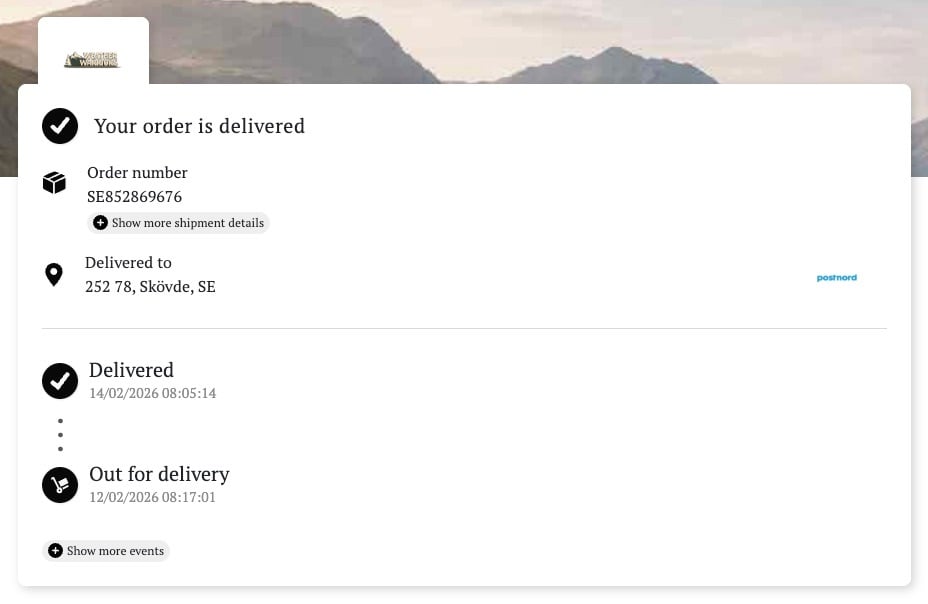
The tracking page we used in the session
If you want to see the exact portal experience we walked through, here’s the link used live.
Key takeaways in one glance
- Tracking is a trust moment: customers open tracking emails because they care, not because you’re marketing to them.
- The “hard part” of tracking is translation: carriers speak different event languages; Track normalizes events so the customer sees clarity, not codes.
- Brand continuity matters: when tracking emails and pages feel “carrier-owned,” customers hesitate, second-guess, and follow up.
- Milestone updates work best when they’re intentional: choose the right channels by market (email vs SMS), and don’t spam.
- Non-events are the unlock: “nothing happened” (no scan, no movement) is often the moment that creates the most delivery chasing.
- The best setups treat tracking as a loop: prevent confusion, recover fast when it happens, then monitor patterns and improve.
The part most teams underestimate: carrier language
Tracking looks simple from the outside. Underneath, it rarely is.
During the webinar we talked about why the “hard part” of tracking is consistency across carriers. As we put it live, “each of those carriers speak a slightly different language in terms of the events.” Even the same code can be interpreted differently depending on the carrier.
That is why we spent time on normalization. Track normalizes over 56 different events, so customers see clarity and your teams have a stable foundation for messaging.
The practical payoff is straightforward. Customers understand what is happening, without needing to decode carrier status terms.
Brand continuity is what makes customers trust the next click
A theme that came up again and again was brand cohesiveness. Teams invest heavily to win the customer. Then the post-purchase experience can quickly drift into something that does not feel like the brand at all.
We described the pattern in plain terms: a tracking email arrives, “that email is from one of the carriers and not the brand.” When that happens, customers hesitate:
- “Is this email really from the brand I ordered from?”
- “Do I trust this link?”
- “What does this status even mean?”
That hesitation is where follow-ups start. In the session, Jyo framed it clearly: “Sending the right message through the right channel and to keep the brand cohesive” is what keeps customers confident after checkout.
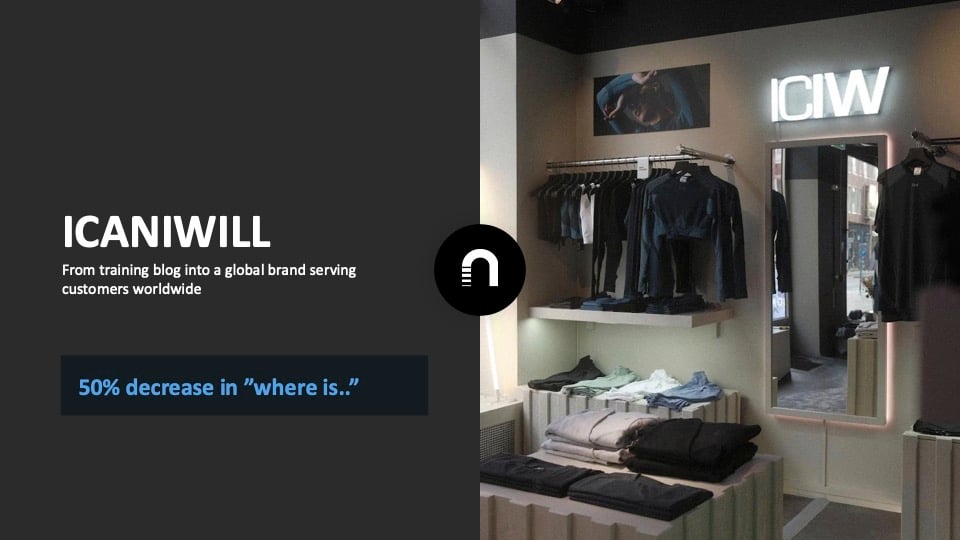
The live walkthrough: three automations, one operating model
We kept the session practical and focused on repeatable configuration. The point was not to add more messages. The point was to send fewer, better ones, with the right triggers behind them.
1) Branded tracking portal with normalized statuses
We started with the tracking destination itself. A single, trusted place to track an order, branded for the retailer experience.
We then showed one simple normalization example so it was easy to connect the dots. The promise was simple: consistent language across carriers so the experience stays clear even when the carrier language changes.
If you want to see the exact profile used live, here it is.
2) Milestone notifications that keep customers informed
Next we moved to milestone messaging. In the session we talked about why the channel matters by market and why over-notifying can backfire.
The goal is to keep the customer informed at key moments, using the channel they are most likely to read. Keeping the customers informed is the main objective.
Here's a simple rhythm customers expect:
- shipped
- out for delivery
- delivered
We also called out the commercial reality: these messages earn attention. They also give brands a chance to stay present after checkout, in a way that adds value. The point was consistency, rather than volume.
3) Event and non-event triggers
This was the part of the session that unlocks the biggest shift in operating model.
We used a tight definition live: “A non-event is also an event.” The meaning is practical: when there is no scan update for a defined period, silence becomes the risk signal. That is where delivery chasing starts.
We talked through setting a threshold, like 24 to 48 hours, and triggering a proactive message when nothing has happened. The benefit is not only the message itself. It is the expectation reset.
- Event trigger: the carrier flags an issue (e.g., delayed) → you proactively message the customer.
- Non-event trigger: there’s no scan or update for a defined window (24–48h was discussed as an example) → you message the customer because silence is the risk signal. In plain English: the system notices when nothing happened, and that’s when you step in.
At least the customer is informed, and then the expectation also changes.
We also discussed internal workflows. When non-events are set up properly, “the system is working for you.” Teams spend less time manually checking logs and carrier pages, and more time handling exceptions that actually need attention.
A real example: how “too generic” communication created doubt
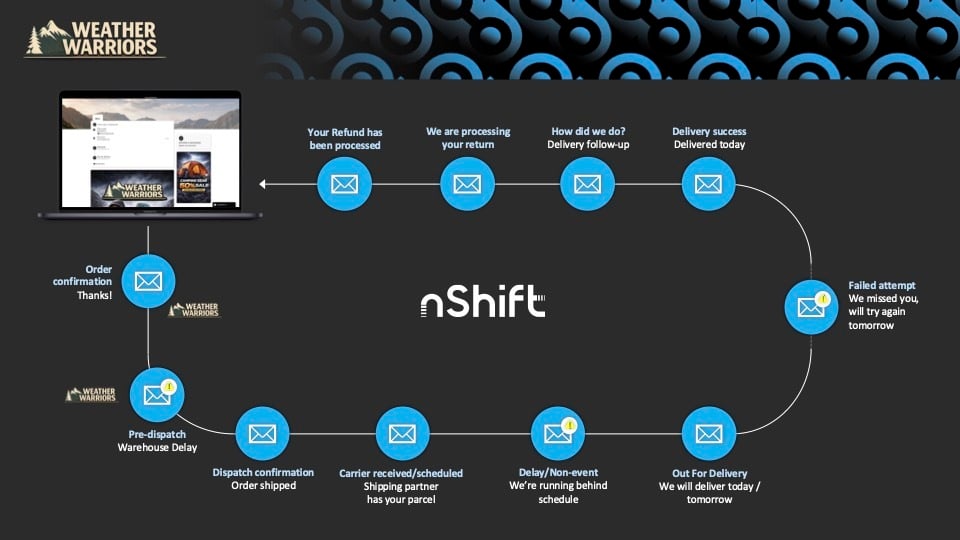
Aleksandar shared a concrete story from ICANIWILL, a Nordic sportswear brand based in Stockholm, scaling quickly across markets.
The issue was not a lack of effort, it was trust. Their shipping confirmation was described as “too generic to be trusted”, which meant customers might open the email but hesitate to click through.
Once they improved the experience with a landing page and stronger tracking communication, the impact was clear. “The WISMO tickets to customer support were decreasing by 50%.”
That is a useful reminder: reducing delivery chasing is often a side effect of improving clarity and confidence.
Closing loop: prevent, recover fast, improve
Near the end we widened the lens beyond delivery itself. Good tracking does not stop at “delivered.” Returns and exchanges are still part of the same trust loop. “You don’t stop as a brand when you have informed the customer that something has been delivered.”
The operating model we kept coming back to:
- Prevent confusion with a trusted destination and clear milestones
- Recover fast when issues happen
- Improve over time with monitoring and patterns
Two questions from the Q&A worth keeping
Two questions came up that were especially relevant for teams operating across customers and channels:
Can a 3PL configure notifications per customer?
A question came up about multi-customer 3PL environments — whether notification setups can be separated by customer. The answer given in the session was yes: configurations can be customer-specific.
What if inboxes block images?
If images don’t render, the experience shouldn’t collapse. The panel pointed to keeping tracking accessible through a web-based tracking experience (so the customer still has a clear place to go, even if email rendering is imperfect).
So what: Even small deliverability and configuration details affect whether tracking reduces follow-ups, or just moves them somewhere else.
If you only do one thing from this session
Set up a non-event trigger for “silence.”
Because customers don’t only chase when they see (and understand) bad news. They chase when they see no news.
Want the full context?
If you've missed the live session or want to revisit the insights, catch up here.
.webp?width=1600&height=800&name=Solved%20-%20Track-title%20copy%20(1).webp)