
AI in logistics is moving from concept to operational practice. In 2026, the teams getting the most out of it are using AI embedded in their delivery platform, grounded in real carrier data, and capable of taking action inside live workflows. Here is what that looks like in practice.
For several years, the AI conversation in logistics centred on prediction: demand forecasting, route optimization, dynamic pricing. Useful at scale, but often distant from the day-to-day decisions shipping and e-commerce teams actually make.
The more recent shift is toward operational AI: assistants that work inside the platforms teams already use, understand the specific configuration in place, and help those teams act on commercial decisions without a specialist in the loop.
A parallel shift is happening at the commercial layer. AI purchasing agents are beginning to make buying decisions autonomously, selecting delivery options based on speed, cost, and returns policy before any human reviews the order. How delivery operations are configured shapes whether those agents choose a retailer or move past it.
nShift Companion is built for that operational layer. It is embedded in the nShift delivery management platform, works in everyday language, and is grounded in the data structures, carrier connections, and business rules that govern real delivery operations.
1. Optimizing checkout delivery options to improve conversion
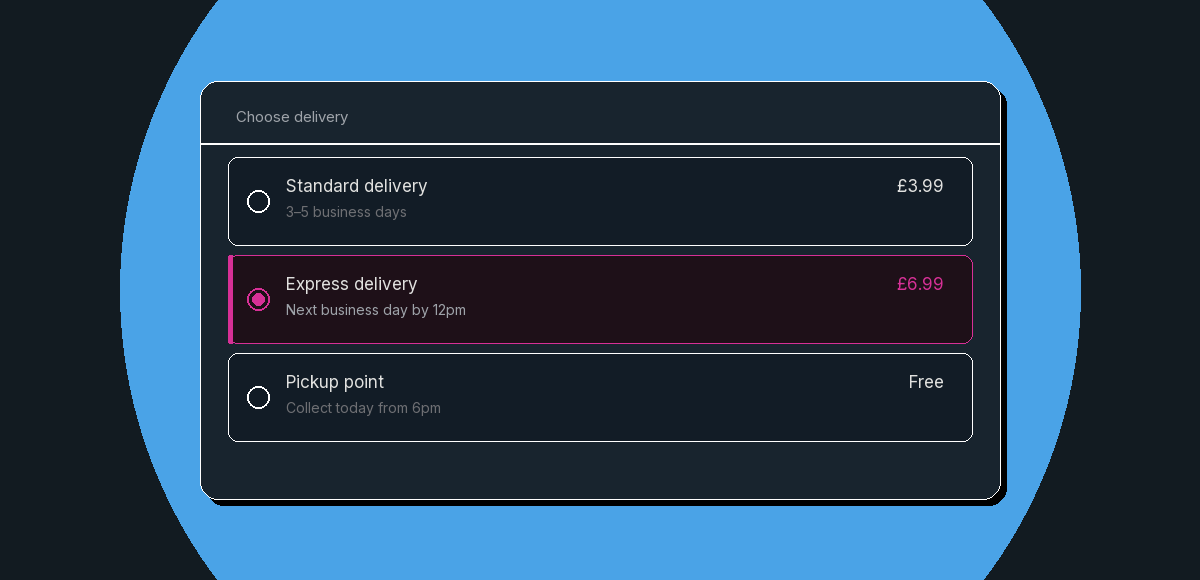
Delivery choice at checkout is a direct conversion variable. When the options match what a shopper needs (the right service type, the right price, the right delivery window), the likelihood of a completed sale rises. When they don't, a proportion of those shoppers leave.
nShift Checkout already increases conversion rates by up to 20% by giving teams control over which delivery options show, how they are priced, and under what conditions. Companion makes that control accessible to anyone on the team.
Adding an express tier for orders above a value threshold, surfacing pickup point options for a new market, adjusting the free shipping threshold for a promotional period: these are changes that previously required specialist platform access. With Companion, an e-commerce manager describes what they want to achieve and gets configuration-specific guidance, with the relevant constraints and rules surfaced.
Early customers using Companion in Checkout are reporting faster configuration cycles and improved conversion rates. A team that can test a new express option, review the results the following week, and extend it to a new market within days builds a stronger checkout delivery position than a team cycling through the same changes over a month.
As AI purchasing agents become part of the commerce layer, checkout configuration functions as a ranking signal. Agents evaluate delivery options programmatically, factoring in cost, speed, and availability before a human ever sees the order. The selection criteria run closer to carrier data and policy than most retailers realise. See how agents choose delivery for a closer look at what that evaluation involves.
2. Automating shipping rule changes without IT handoffs
Every delivery rule change that requires an engineering ticket is a delay in competitive advantage. Carrier cutoff time changes, market-specific configuration updates, new service enablements, promotional pricing adjustments: in most organizations, all of these run through an IT or specialist queue.
The nShift Checkout rule engine handles complex conditional logic: basket value, destination, carrier availability, product type, postcode. The logic is sophisticated, but accessing it has always required specialist knowledge.
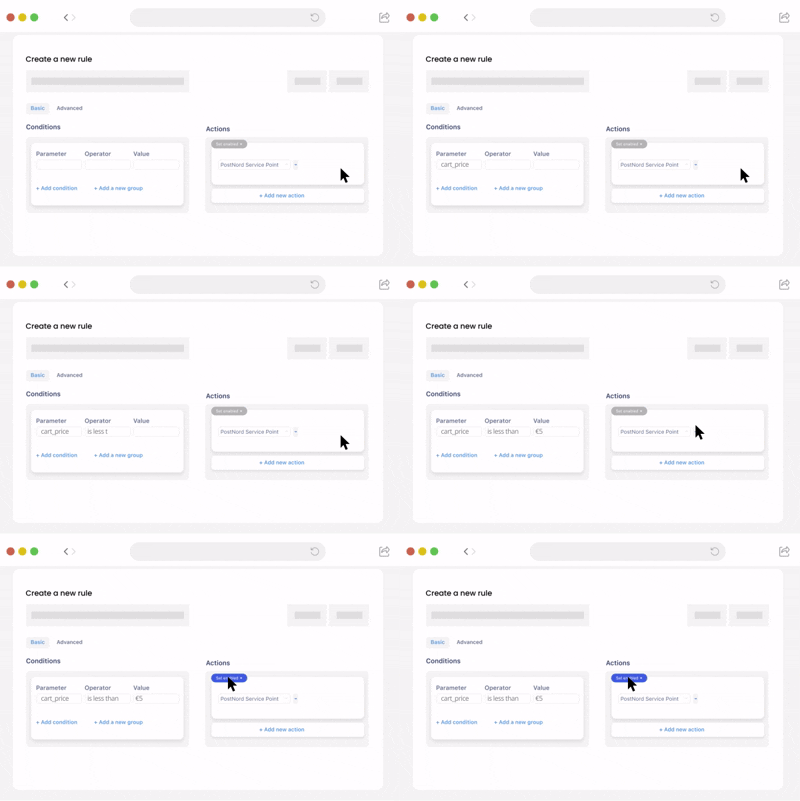
Companion handles the translation. Describe a change you need to make and Companion responds with guidance tied to your real configuration, reflecting the existing rule structure and validation logic rather than bypassing it.
For IT and engineering teams, this means fewer routine delivery configuration requests in the queue. For trading and operations teams, it means acting on commercial decisions at commercial speed.
3. Keeping delivery promises accurate in real time
A broken delivery promise erodes trust and generates support volume. The underlying cause is usually lag: what the checkout shows gets out of sync with what carriers can actually deliver.
Companion is grounded in real carrier data, cutoff times, and operational constraints. When a team asks about adding or adjusting a delivery service, Companion checks whether the network supports it before explaining the configuration approach. Constraints surface before a change goes live, not after a false promise has been made.
The same standard applies when the buyer is an algorithm. AI purchasing agents evaluate delivery windows as part of their selection criteria and filter out retailers that show inaccurate ones. See how real-time delivery accuracy factors into agentic purchasing decisions.
4. Managing delivery operations at peak
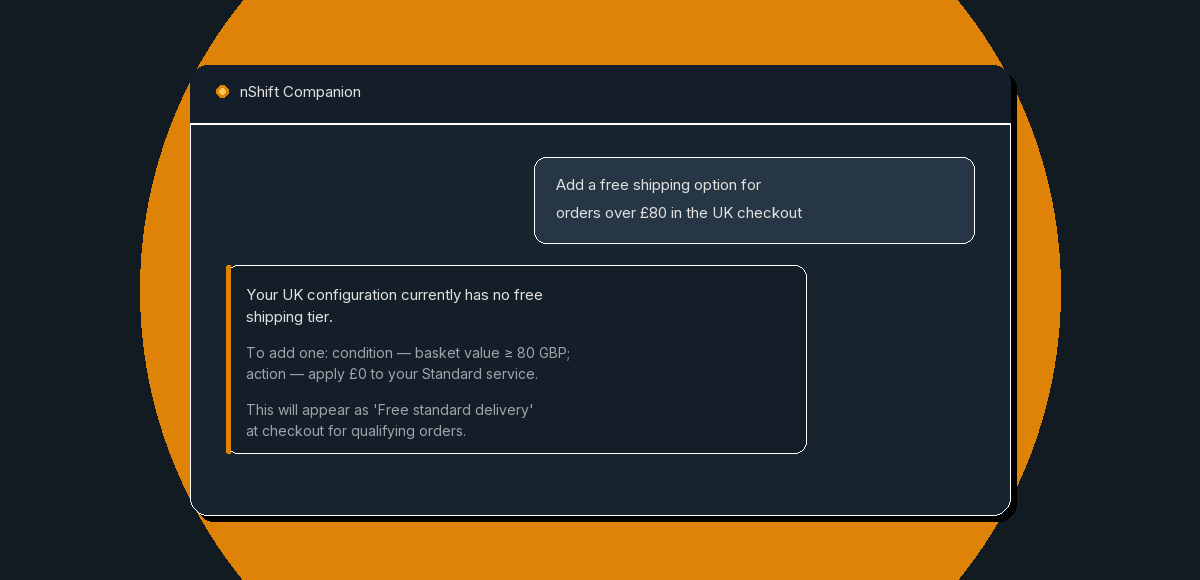
Black Friday and the peak trading period that surrounds it compress every delivery challenge into a short window. Carrier capacity tightens, cutoff schedules shift, and a service that was available last week may not be available this week. The checkout needs to reflect that before the next order is placed.
Peak season has historically required either advance preparation that locks in options weeks ahead of time, or reactive changes that run through the same IT queue, slower than the situation demands.
With Companion, logistics and operations teams can understand their delivery configuration as conditions change. A carrier hits capacity limits in a specific region: the team can ask Companion which options are affected and how to adjust, without waiting for a specialist. A new promotional service needs to go live before a campaign launches: the team understands exactly what to change the same day the campaign is confirmed.
Because Companion's guidance is grounded in real constraints, teams can move faster without sacrificing accuracy.
5. Configuring delivery for new markets
Expanding into a new market requires delivery configuration that reflects local carrier options, local shopper expectations, and often local regulations. That configuration work is not trivial, and it typically requires platform knowledge that sits with a specialist rather than the commercial team driving the expansion.
Companion lowers the barrier to market-specific delivery configuration. A team adding express delivery for a new country, setting up a pickup point network for a market where that adoption is high, or adjusting pricing logic to reflect local fulfillment costs can explore those changes in everyday language, informed by the nShift carrier network of over 1,000 carriers across 190 countries.
The commercial team does not need to become platform experts. They describe what they want the delivery experience to look like in the new market, and Companion helps them reach that configuration through the existing rule structure.
The speed at which market-specific configuration can be completed directly affects how quickly a new market becomes commercially viable. A team that can get the right delivery options live in a new country within days of a commercial decision, rather than weeks, captures earlier revenue and iterates on the configuration based on real shopper behavior sooner.
Agentic commerce extends this further. An AI purchasing agent may be evaluating options across multiple carriers and countries in a single query. Delivery infrastructure that is ready and accurately configured determines whether a retailer appears in that result set at all.
What this means for delivery teams in 2026
Each of these use cases is a point where a commercial decision has traditionally needed a specialist intermediary to become operational. Companion removes that intermediary for the decisions that don't require it, freeing specialist capacity for genuinely complex work and giving commercial, trading, and operations teams direct control over how delivery shows up at checkout.
A delivery operation that can keep pace with its own commercial calendar will outperform one waiting on IT to make the same changes. Over a full year of campaigns, promotions, market expansions, and peak periods, that gap compounds into a difference that shows up in conversion rates and cost.
nShift Companion is available now inside nShift Checkout, built on a platform that connects to over 1,000 carriers across 190 countries. Explore more details or get in touch to see it in action.