
Breaking into a new market should feel like growth, not like rebuilding your shipping setup from scratch.
That is often where expansion gets harder than expected. Demand appears. Orders start coming in. The opportunity is real. Then the pressure shifts to execution: Can you add the right carriers quickly? Can you show delivery options local shoppers will trust? Can you keep checkout, fulfilment, and post-purchase communication aligned as complexity grows?
The brands that scale well are usually the ones that have already solved that part.
Hairlust expanded into 10 markets, increased orders shipped by 615%, and grew revenue by 642%. Stenströms increased international shipments by 153% while localizing delivery experiences in 10 important markets. Maya Delorez supports around 80 markets a month. Superdry highlights fast carrier onboarding as a strategic need in international growth.
Those are growth stories, but they are also stories about operational readiness: expansion gets easier when the shipping framework is already repeatable.
When carrier onboarding, local delivery logic, and customer communication are already connected, a new market feels less like a brand-new project and more like a rollout the team knows how to run.
Direct answer:
How do brands scale global shipping into new markets?
Brands scale global shipping into new markets by keeping carrier access, market-specific delivery setup, and customer communication inside one connected operating model. That helps teams launch faster, adapt more easily to local expectations, and avoid rebuilding the shipping setup every time demand appears in a new region.
At a glance:
Key results from nShift customers
- Hairlust expanded into 10 markets, increased shipped orders by 615%, and grew revenue by 642%.
- Stenströms increased international shipments by 153% and localized delivery experiences in 10 important markets.
- Maya Delorez supports around 80 markets a month.
- Superdry highlights fast carrier onboarding as a strategic need in international growth.
Why shipping sits at the center of expansion
Shipping becomes central to new-market growth because every expansion decision eventually has to work in the real world.
A new market needs the right carrier mix. It needs the right booking data. It needs delivery options that make sense at checkout. It needs customer communication that feels clear and credible after purchase. When those pieces are already connected, expansion gets easier to manage and easier to repeat.

Hairlust shows what that looks like when growth is moving fast. Alexa Kemp, Digital Marketing Manager DACH, Hairlust puts commercial growth and operational flexibility in the same sentence:
"Using nShift and its multi carrier capability has been instrumental to our growth."
nShift Ship supports that engine with carrier activation, carrier-specific booking requirements, and tracking setup support. Strong, reliable carrier connectivity and a broader carrier network support the same goal, because expansion usually brings broader service needs, more local carrier expectations, and a higher bar for operational consistency.
What helps brands add markets without starting over
The brands that add markets well tend to have one thing in common: they are not reinventing the setup every time.
The capabilities that make this possible are the ones that reduce setup time while still allowing for local fit. Fast carrier activation, market-specific delivery rules, estimated delivery times, and localized notifications all help teams stretch an existing framework into the next market without losing control.
Maya Delorez shows the operational side clearly. The brand ships to around 80 markets a month. In their own words: "At some point you realise: this can’t scale."
That is a familiar moment for growing ecommerce teams. What worked when the business was smaller starts to break under volume, variation, and market spread. The answer is not more manual effort. It is a system that can keep labels flowing and carriers working smoothly as growth widens:
"The system is fast and works well with our carriers, so labels can be created smoothly as part of the packing process." - Maja Törnblom, Warehouse & Logistics Manager, Maya Delorez
Superdry adds the all-important carrier-onboarding angle. As Gordon Knox, Business Transformation and Logistics Director at Superdry put it: "A growing international business such as Superdry needs to be able to put carriers onto our platform very quickly."
That is a strong definition of scale. Growth needs a shipping setup that can move at the same speed as the business.
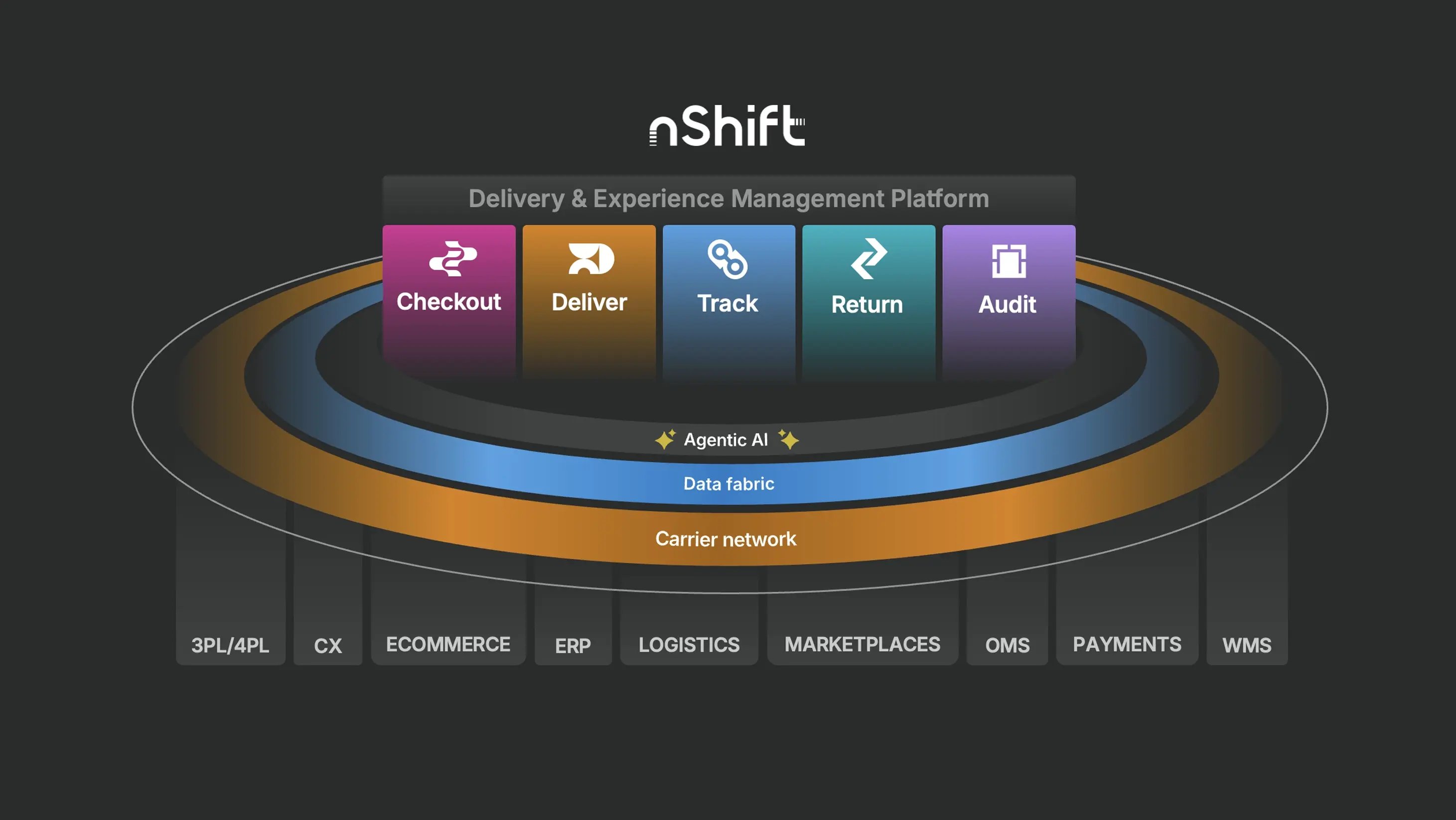
This is where the nShift platform helps make the story coherent. Expansion does not happen in one system. It touches checkout, shipping execution, and post-purchase communication together. Teams move faster when those parts stay aligned.
How do localized delivery experiences support trust in new markets?
Entering a new market is not only an operational challenge. It is also a trust challenge.
Shoppers want the delivery experience to feel familiar. They want to see relevant delivery options, clear promises, and communication that feels right for their market. That local fit shapes confidence long before the parcel arrives.
Stenströms is strong proof. The company increased international shipments by 153% and localized delivery experiences in 10 important markets.
"What makes nShift an ideal partner is that, as we grow, nShift will grow with us." - Yasser Shabbir Sveder, Head of E-Commerce at Stenströms
That quote captures something important: localization is not a one-off exercise. It has to keep working as the business expands. The delivery experience cannot feel local in market one and generic everywhere else.
Millesima adds the premium-growth angle. François D’Hautefeuille, Head of Finance, Millesima, explains: "We needed a solution with the carrier connections and customer experience capabilities to help us successfully engage new customers in new markets." That keeps the customer side visible. Expansion lives in operations, but shoppers feel it too.
nShift Checkout supports market-specific delivery rules, postcode-based conditions, groups, and estimated delivery times. nShift Track supports localized notifications and ETA visibility. Together, those capabilities help the new market feel more native from checkout through delivery follow-up.
How does carrier access accelerate expansion?
Carrier access accelerates expansion because new markets often come with different shopper expectations, different service strengths, and different operating needs. A brand can move much faster when its shipping layer is already designed to work across multiple carriers and service levels.
Hairlust supports the market-growth version of that argument. Superdry supports the carrier-onboarding version. JYSK adds the strategic layer. The company says nShift became "a key strategic partner since day one in our online journey." That is useful proof because it shows shipping as part of long-term growth architecture and daily execution together.
What does a strong cross-border shipping setup put in motion?
|
Capability |
What the shopper gains |
What the business gains |
|
Fast carrier activation |
Delivery options that fit local expectations |
Faster market entry and easier service expansion |
|
Market-specific checkout logic |
More relevant delivery methods and promises |
Stronger control over local rollout without a rebuild |
|
ETA visibility and localized notifications |
Better confidence after purchase |
More consistent customer communication across markets |
|
Multi-carrier execution |
A delivery experience that stays dependable as choice grows |
Greater resilience and flexibility in international operations |
|
Connected platform workflow |
A more coherent journey from checkout to doorstep |
One repeatable operating model for cross-border growth |
What should teams monitor as expansion continues?
As expansion continues, the most useful signals are the ones that show whether shipping is still easy to run at scale.
That includes time to onboard a carrier, time to launch a new market configuration, delivery-option relevance, and customer-service contacts linked to delivery confidence. Teams should also watch how quickly they can refine the setup once local demand starts to take shape.
Those signals show whether the operating model is truly repeatable or whether complexity is starting to build again.
Stenströms puts localization on that scorecard. Hairlust brings growth capacity into view. Superdry makes carrier speed part of the rollout model itself. Together, they point to the same lesson: expansion gets easier when the shipping layer is built to adapt, not rebuilt every time.
Why new-market growth gets easier when shipping stays connected
New-market growth gets easier when shipping is treated as a repeatable system.
Carrier access, local delivery logic, and customer communication stay connected, so each market launch builds on the last one instead of starting over.
That is what separates expansion that feels controlled from expansion that keeps draining the team. The business still adapts to each market, but the operating model holds.
If your team wants to grow into new markets with more shipping control, nShift Ship, nShift Checkout, and nShift Track provide a strong connected foundation. Book a demo to see how nShift helps brands scale cross-border growth with less complexity.