
Working on checkout and delivery logic, we kept seeing the same pattern: merchants were not running out of shipping methods on paper. Instead, they were losing clarity at checkout. The options customers saw were often too generic, too static, or too disconnected from local expectations. At the point where intent should turn into revenue, delivery choice was still creating doubt.
That friction is easy to miss from the outside, because a checkout can look functional and still underperform.
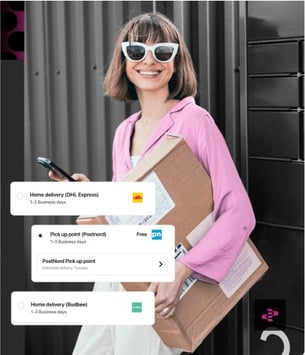 The customer has already browsed, compared, and decided. Then they reach the final step and see a generic delivery line, a broad ETA, and very little sign that the experience fits how they actually want to receive parcels, whether that means a parcel locker, a parcel shop, a preferred pickup option, or simply a clearer promise. Confidence drops late, and that is expensive.
That pattern shaped nShift Checkout for Shopify. We built it to help merchants show more relevant Shopify checkout delivery options inside Shopify’s native checkout, using configured services and rules instead of static shipping methods. The need became even clearer as merchants expanded across Europe, where PUDO preferences, parcel lockers, service points, and local delivery expectations quickly exposed the limits of generic setups.
Flying Tiger Copenhagen saw that clearly. Shoppers could not select their preferred PUDO point at checkout, and the experience felt less customer-led than it should have. After improving delivery choice with nShift Checkout, they reported a 20% increase in conversions, and 70% of customers preferred the new PUDO option.
How delivery doubt shows up in Shopify checkout
The phrase we kept coming back to was delivery doubt.
The customer wants to buy, but the delivery choices do not feel clear or relevant enough to commit to. Sometimes that shows up as a single generic shipping option. Sometimes it is the absence of a parcel locker or parcel shop. Sometimes it is a vague ETA, or a default pickup point that is neither convenient nor preferred.
Coming back to Flying Tiger, they described the issue to us plainly: shoppers were often being shown a pickup or delivery point that was neither convenient nor their preferred choice. That kind of friction does not need to be dramatic to affect conversion. It only needs to create hesitation at the wrong moment.
For Shopify merchants, checkout is where intent becomes revenue. A weak delivery promise lowers confidence at the point of purchase; delivery choice shapes conversion.
Why delivery choice gets harder across European markets
Customers in different countries expect different delivery experiences. In some markets, parcel lockers and service points are a strong preference. In others, home delivery convenience carries more weight. PUDO, meaning Pick-Up Drop-Off delivery options such as parcel shops, lockers, or other collection points, becomes especially important where shoppers expect flexibility and control.
The standard for a good checkout experience shifts quickly once a merchant grows across borders. “Standard delivery, 5 to 7 days” no longer says much. It offers little reassurance about convenience, fit, or control. The customer is still left wondering whether they can receive the parcel in the way they actually prefer.
For sellers expanding across Europe, this becomes structural. One generic setup may work in one market; add several more, and the logic starts to strain. Rules that once felt simple begin to collide with local preferences, carrier mixes, peak constraints, and different service expectations. Checkout starts to bend toward patchwork.
Related reading: Why smarter delivery options at checkout improve conversion
Why patchwork shipping logic breaks at scale
This is where many teams get stuck.
They begin with a shipping setup that works well enough:
- a basic shipping configuration
- a few carrier rules
- maybe an extra app or two
- some manual exceptions
- a developer fix when something urgent breaks
That setup can hold for a while, but growth changes the equation.
As the business expands, new markets, shifting carrier mixes, peak-season pressure, and product-level exceptions all start testing the limits of something that once felt manageable. A different delivery promise by country or cart value can quickly turn into a small project.
We kept seeing the same outcome: more apps, more logic spread across systems, more technical dependency, and less confidence that checkout was showing the right options to the right customers.
The commercial cost builds faster than many teams expect. Hairlust expanded into 10 new markets, increased orders being shipped by 615%, grew revenue by 642%, and saved the equivalent of 430 hours a year through automation. Growth at that pace depends on delivery logic that can keep up.
How that shaped nShift Checkout for Shopify
We wanted nShift Checkout for Shopify to give merchants more control over delivery choice inside Shopify’s native checkout, while keeping the shopper experience familiar and native to the platform. The goal was relevance, control, and a setup that could scale with complexity.
That is how the product works: Shopify connects to nShift Checkout, and nShift returns the delivery options the merchant wants to show at checkout, based on configured services and rules. At launch, the product focuses on delivery choice plus rules in Shopify’s native checkout list. Supported capabilities include home delivery, lockers, parcel shops, express where available, lead times or ETAs where available, rules by market, geography, and cart or product conditions, and a placeholder shipment handoff downstream after selection.
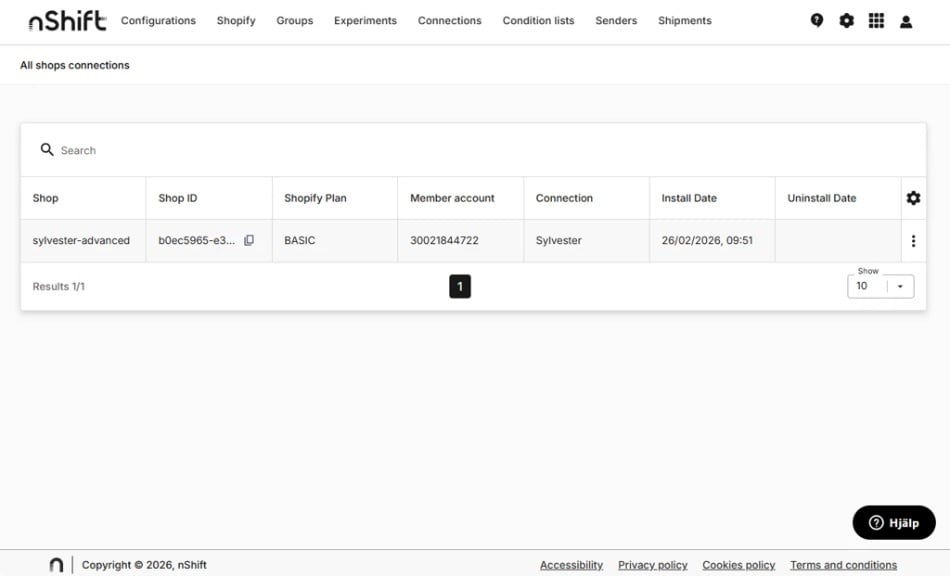
That gives merchants a foundation that can adapt:
- by market
- by geography
- by cart value
- by product conditions
- by configured service availability
Growing retailers need a setup that can absorb more complexity without constant rebuilding.
What better delivery choice looks like in Shopify checkout
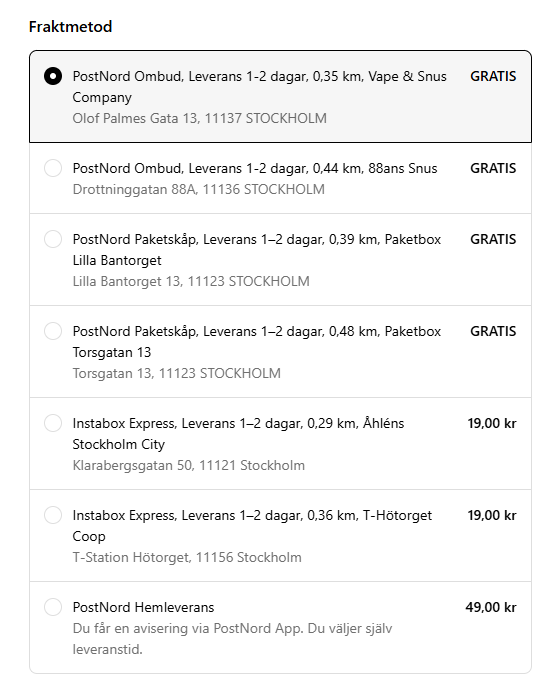
For the shopper, the experience stays native to Shopify. Shopify displays the returned delivery options in its own checkout, while nShift manages the configured logic behind what appears, what it costs, and when it is available.
For the merchant, that opens up more relevant delivery choice:
- home delivery
- parcel lockers
- parcel shops
- PUDO options
- express where supported
- lead times and ETAs where available
The selected option can then be saved on the order and handed off as a placeholder shipment for downstream completion. The delivery choice made at checkout carries forward into the wider flow instead of disappearing after purchase.
Closing the gap between checkout and doorstep
From our side of the product, the delivery gap showed up as a control problem.
Merchants needed a way to make checkout more relevant without turning delivery logic into a permanent build. They needed a way to reflect local expectations, support PUDO and other market-specific methods, apply rules instead of rebuilds, and carry the selected option cleanly into downstream delivery execution.
That is the role nShift Checkout for Shopify is designed to play. It is a guided setup for teams that need more control over delivery choice in Shopify checkout and want a stronger foundation as complexity grows. The merchants who get the most value from it usually already know the cost of generic checkout logic, or are starting to feel it.
For teams scaling across markets, the question becomes: is checkout still helping customers commit, or is it quietly giving them reasons to pause?
Talk to an expert if you want to assess fit, understand the setup requirements, and explore a more scalable approach to Shopify checkout delivery options.