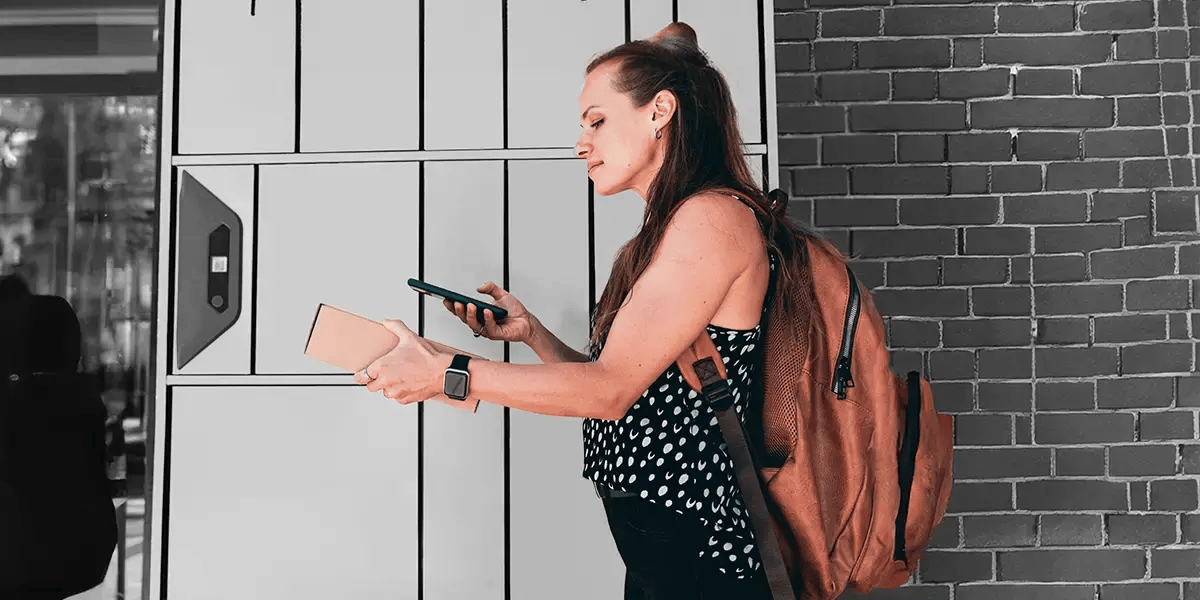
Out-of-home delivery is becoming the default expectation for a growing share of European shoppers, especially in dense areas where home delivery is harder to execute reliably.
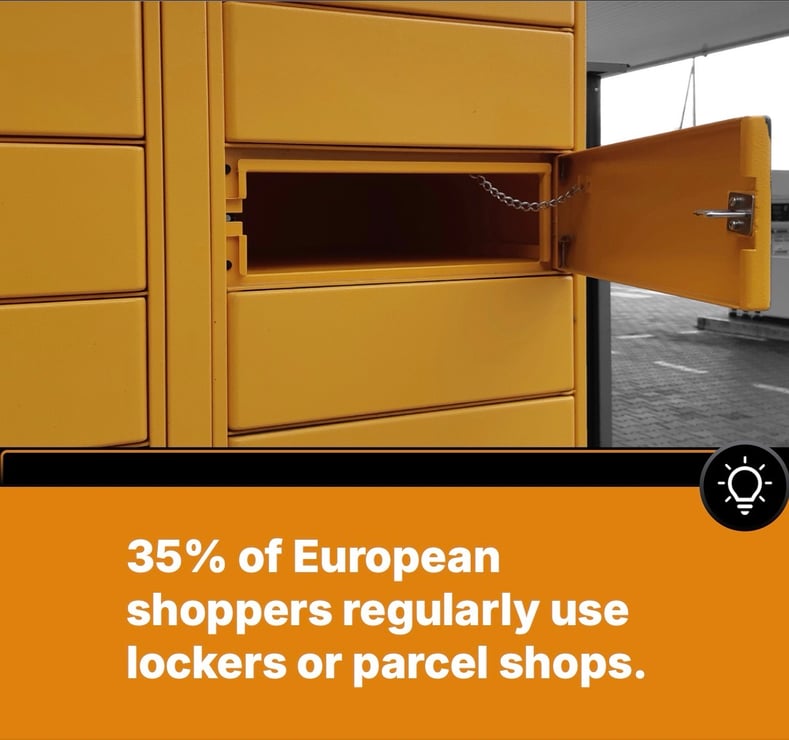
DHL reports that 35% of shoppers across Europe regularly have items delivered to out-of-home locations such as parcel shops or lockers, compared with 25% globally. The “phygital” shift is now operational. Stores, carriers, lockers, and pickup points need to behave like one connected system.
If you want the full picture across the 2026 retail delivery trends, capabilities, constraints, and blueprint, explore our new report: The new retail reality: Trust, proof, and the delivery experience in the AI era.
Quick links
- What out-of-home delivery means in practice
- Why Europe is accelerating faster
- Phygital retail is a logistics operating model
- Returns are moving out-of-home even faster
- What retailers should prioritise now
- The takeaway
- Get the full picture
- Frequently asked questions
What out-of-home delivery means in practice
Out-of-home delivery covers parcel lockers, parcel shops, pickup points, and similar pickup locations. Instead of waiting at home for a courier, customers choose a location and collect when it suits them.
What matters is not the label. It is the promise. Out-of-home delivery offers a more controllable handover, with clearer proof of pickup and fewer failed attempts. In 2026, that control is becoming a deciding factor in where shoppers buy.
For the wider delivery experience blueprint, explore /retail-ecommerce-delivery-strategy-2026.
Why Europe is accelerating faster
Europe has the density, urban patterns, and carrier networks that make out-of-home delivery scale quickly.
The consumer signal is already strong:
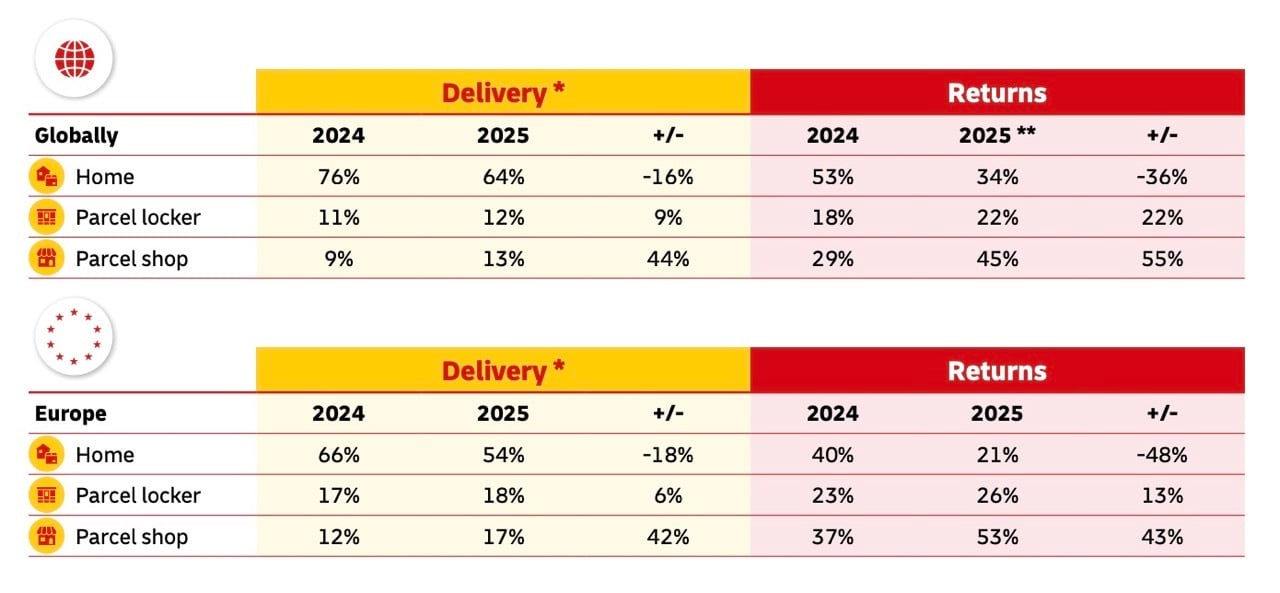
- DHL’s 2025 research shows that nearly 20% of UK shoppers now prefer lockers or parcel shops.
- In the Nordics, PostNord reports that 77% of consumers say the ability to choose a pickup location is the most important factor when deciding where to shop.
This is the core shift: pickup choice is moving from “nice extra” to baseline expectation.
Phygital retail is a logistics operating model
“Phygital” is often used as a marketing term, but in 2026 it's an operating reality.
Customers move fluidly between mobile, store journeys, pickup points, and lockers. Deloitte describes this through the lens of Unified Commerce, where physical locations become distribution nodes that enable faster service. Ecommerce Europe also points to locker and pickup point delivery as a differentiator.
This is why out-of-home delivery cannot be treated as a bolt-on option. It changes:
- how checkout should present choice
- how handover and proof need to work
- how tracking should tell the story
- how returns and refunds should stay visible
 Returns are moving out-of-home even faster
Out-of-home delivery is not only about receiving parcels. It is also becoming the preferred way to return.
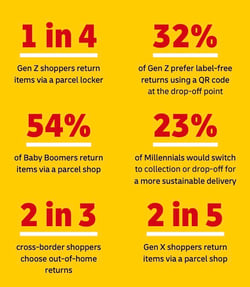
DHL’s data shows that 79% of shoppers in Europe prefer to return unwanted items via a parcel locker or shop. Returns are a trust moment, and out-of-home makes returns feel more controllable and more provable.
What retailers should prioritize now
The goal is not to “add lockers.” The goal is to make out-of-home delivery feel predictable and integrated across the journey.
Four practical priorities matter most:
- Offer pickup choice with confidence at checkout
Show accurate availability by location and service, not a generic “pickup” option. - Keep the handover story consistent
Pickup readiness, handover confirmation, and proof should be clear and repeatable. - Treat lockers and pickup points as part of the tracking narrative
Customers should always know what happens next and what action is required. - Make returns visible end-to-end
Drop-off confirmation and refund status visibility reduce uncertainty and contacts.
For the wider delivery experience blueprint, explore /retail-ecommerce-delivery-strategy-2026.
The takeaway
Out-of-home delivery is becoming customer behaviour infrastructure in Europe. Once the habit forms, it is hard to dislodge. The retail winners in 2026 will be the ones who treat lockers and pickup points as a core part of delivery experience, not an edge case.
Get the full picture
 This article is part of our research on “The new retail reality: Trust, proof, and the delivery experience in the AI era”, which covers what’s changing in retail delivery, the shifts in customer expectations, and what to do to make your delivery strategy hold up at scale.
For the complete picture, download the full report: The new retail reality 2026.