AI is moving into delivery decisions, not just customer conversations. In 2026, automation is increasingly triggering real actions across refunds, claims, reroutes, and exceptions.
This is powerful when it is grounded in evidence. When it is not, small data gaps scale into disputes, higher support load, and lost repeat purchase. This post breaks down the four foundations that make automation reliable in delivery and returns.
If you want the full 2026 blueprint across retail shifts, capabilities, constraints, and what to do next, explore The new retail reality: Trust, proof, and the delivery experience in the AI era.

Quick links
- Why automation breaks trust
- What must be true
- The next constraint: fraud meets automation
- Where nShift fits
- Get the full picture
- Frequently asked questions
Why automation breaks trust
Automation breaks trust when decisions cannot be explained later. Delivery and returns are full of moments where proof matters: a delay dispute, a failed delivery claim, a return drop-off confirmation, a refund status update.
When the underlying facts are inconsistent, the failure shows up as escalations, disputes, and avoidable manual work. When the facts are consistent, automation resolves routine cases and routes exceptions with evidence.
For more insights, including external references, explore /retail-ecommerce-delivery-strategy-2026.
What must be true
In our report, four foundations keep showing up as requirements for trustworthy automation across delivery and returns.
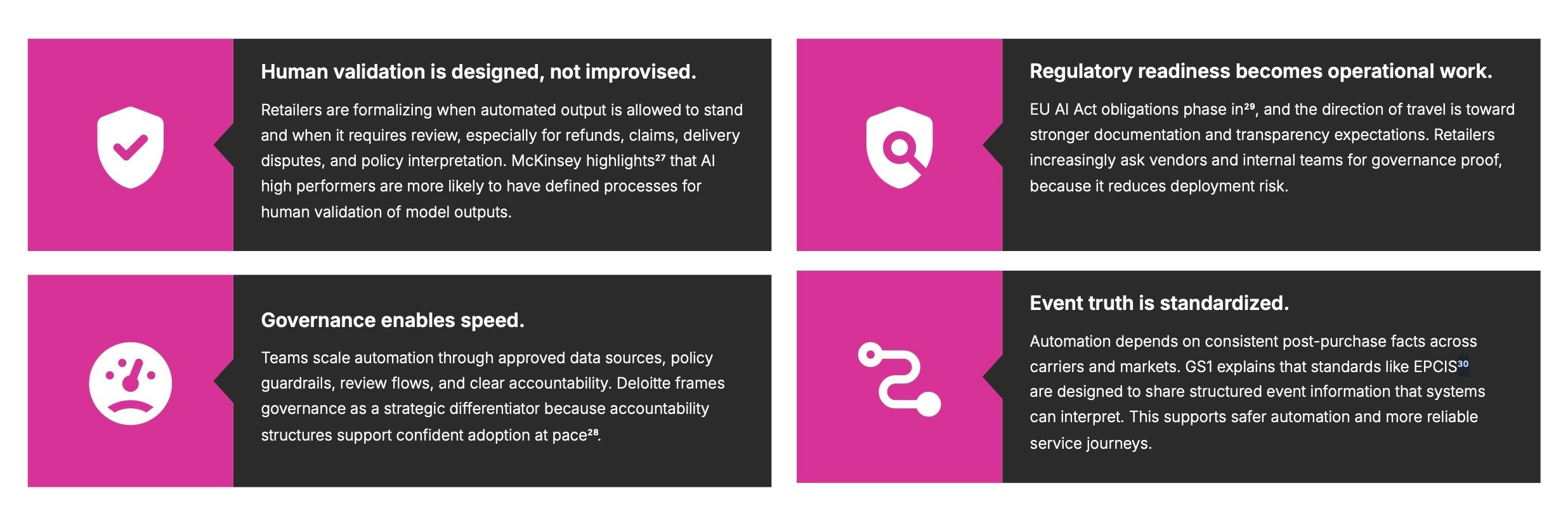
What must be true for automation to earn trust
1) Human validation is designed, not improvised
Retailers are formalising when automated output is allowed to stand and when it requires review, especially for refunds, claims, delivery disputes, and policy interpretation.
The practical goal is consistency. Define which decisions require approval, what evidence must be present, and what happens when evidence is missing. When validation is designed up front, automation can scale without creating a new dispute backlog.
2) Governance enables speed
Teams scale automation through approved data sources, policy guardrails, review flows, and clear accountability.
Governance does not need to be heavy. It needs to be operational. Everyone should know which data is trusted, which policies are in force, and who owns the exception paths.
3) Regulatory readiness becomes operational work
EU AI Act obligations phase in, and the direction of travel is toward stronger documentation and transparency expectations. Retailers increasingly ask vendors and internal teams for governance proof, because it reduces deployment risk.
The practical implication is auditability. If a system triggers a refund or reroute, teams need to show what happened, what rule applied, and what evidence supports the outcome.
4) Event truth is standardized
Automation depends on consistent post-purchase facts across carriers and markets. GS1 explains that standards like EPCIS are designed to share structured event information that systems can interpret. This supports safer automation and more reliable service journeys.
If you want the technical deep dive on EPCIS and event normalization across carriers, read:
GS1 EPCIS and real-time delivery visibility in 2026
The next constraint: fraud meets automation
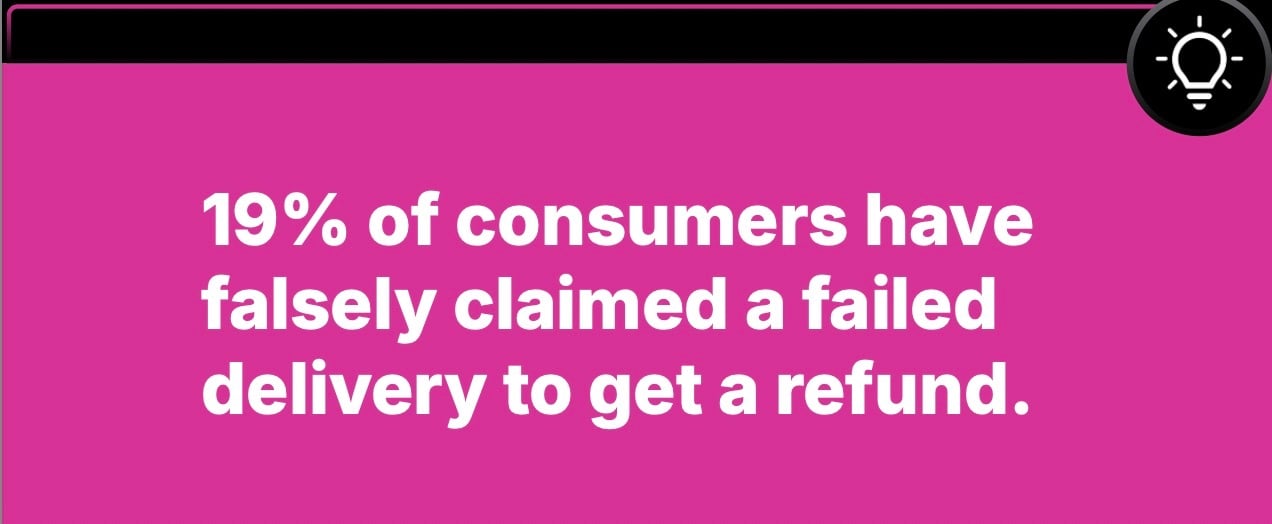
As automation expands, disputes become easier to generate and harder to resolve manually. In the UK, Cifas reports that 19% of consumers have falsely claimed a failed delivery to get a refund. The ECB reports payment fraud value across the EEA rose to €4.2bn in 2024.
This pushes teams toward stronger identity checks and cleaner evidence trails. Weak operational data becomes expensive when decisions scale quickly.
Where nShift fits
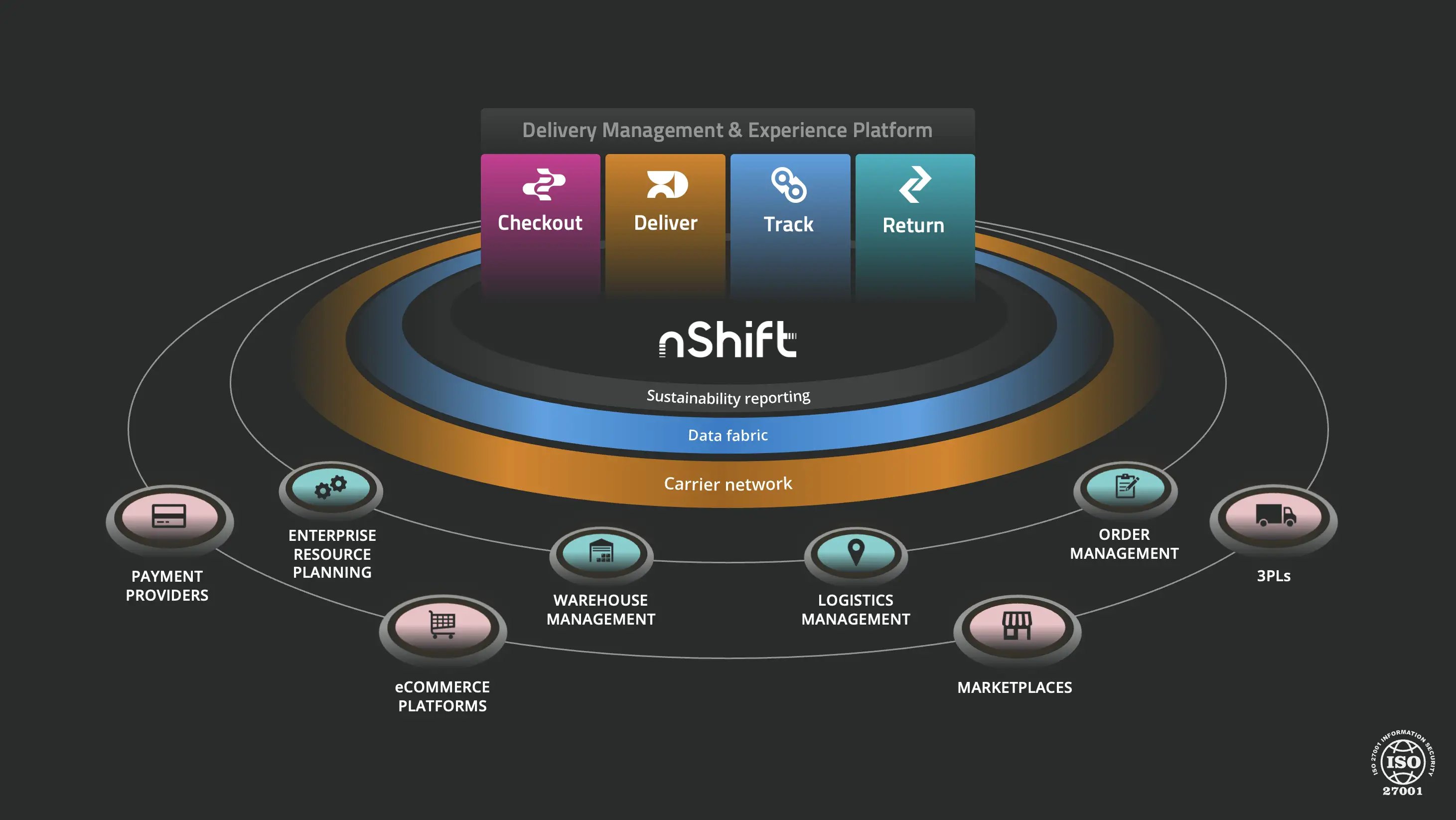
nShift's delivery management platform works at the point where promises become actions. That view makes it clear why automation needs governance, auditability, and event-level evidence before it can safely trigger refunds, reroutes, and exception flows at scale.
In practice, this means standardising delivery options and promises, normalising carrier events into a coherent tracking story, and keeping returns proof and refund status visible so both humans and systems can rely on the same post-purchase truth.
What to do next
If you are planning to scale automation in delivery and returns, start here:
- Map the decisions that touch money, responsibility, or policy interpretation.
- Define which decisions need review and what evidence is required.
- Standardise event truth across carriers, especially proof events in returns and refunds.
- Build auditability into the workflow so exceptions can be explained quickly.
Get the full picture
 This article is part of our research on “The new retail reality: Trust, proof, and the delivery experience in the AI era”, which covers what’s changing in retail delivery, the shifts in customer expectations, and what to do to make your delivery strategy hold up at scale.
For the complete picture, download the full report: The new retail reality 2026.