Real-time visibility is a prerequisite in 2026. When tracking data is incoherent, customer service ends up reconciling a game of telephone across three carriers, a warehouse, and a return drop-off point.
That problem is getting bigger because visibility is no longer only consumed by humans. It is consumed by systems. As assistants, automation, and decision engines scale, event data needs to be structured, machine-readable, consistent across carriers, and defensible in disputes.
This post is a deep dive into “event truth,” one of the foundations behind automation that earns trust in delivery and returns. When event data is inconsistent across carriers, automation becomes harder to scale safely. If you want the full 2026 blueprint across shifts, capabilities, constraints, and what to do next, explore The new retail reality: Trust, proof, and the delivery experience in the AI era.
Quick links
- What GS1 EPCIS is
- Why event truth matters now
- What EPCIS fixes in tracking and service
- What good looks like in 2026
- How to start without boiling the ocean
- Where nShift fits
- Get the full picture
- Frequently asked questions
What GS1 EPCIS is
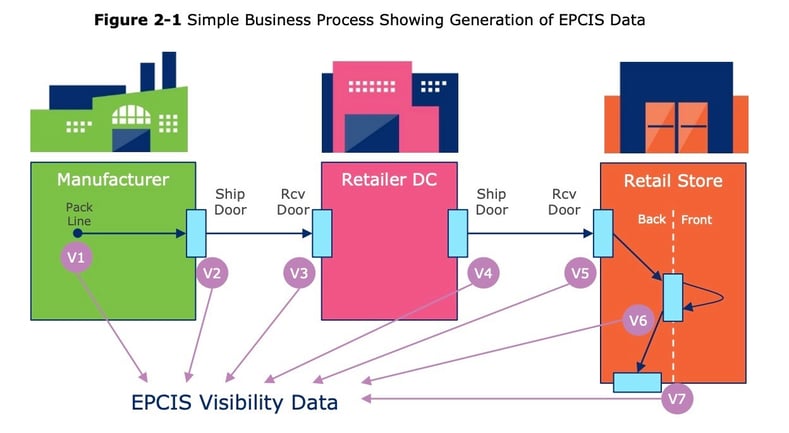
GS1 EPCIS is a standard for sharing event data about the journey of an object. It gives systems a consistent way to answer four questions:
- What happened
- Where it happened
- When it happened
- Why it happened
If you have ever tried to reconcile “in transit” versus “departed hub” versus “handover complete” across multiple carriers, you already know why a shared event language matters.
For more insights, including external references, explore /retail-ecommerce-delivery-strategy-2026.
Source: gs1.se
Why event truth matters now
In 2026, customers expect the option they chose at checkout to stay credible, the tracking story to stay clear, and the returns journey to stay visible through to refund.
That expectation is hard to meet when event data is fragmented across markets, services, and handovers. It creates the same failure pattern every team recognises:
- tracking becomes vague or contradictory
- exceptions become harder to explain
- automation becomes risky because it is acting on inconsistent signals
- refunds and claims become harder to prove
This is where EPCIS becomes practical. It is a foundation for consistent event truth, which makes service and automation more reliable.
What EPCIS fixes in tracking and service
A tracking page is only as good as the events behind it. Many retailers have improved design and branded notifications. The bottleneck is usually upstream.
Structured event truth helps in four concrete ways:
Tell one tracking story across handovers
Customers do not care which partner touched the parcel. They care what happens next. EPCIS-style normalisation makes multi-carrier journeys easier to present as one coherent narrative.
Make exceptions explainable
“Delayed” is not enough. Systems need an exception reason that can trigger the right action. Customers need a next step. Structured exception events reduce guesswork.
Trigger automation with evidence
Returns and refunds are where proof is contested. A reliable “return dropped off” event can trigger the next step safely. Weak evidence increases disputes and manual work.
Measure what matters
Feedback loops require consistent measurement. If event semantics vary by carrier, performance comparisons become noisy. Standardised events let teams find where promises drift and where handovers break.
If you want the broader set of delivery priorities around promise accuracy, tracking clarity, and returns visibility, explore /retail-ecommerce-delivery-strategy-2026.
What good looks like in 2026
You do not need perfect visibility everywhere. You need consistent truth in the moments that drive cost, contacts, and confidence.
In practice, “good” looks like this:
- The delivery option shown at checkout maps cleanly to what is executed
- Status events remain consistent across carriers and markets
- Proof exists where decisions depend on it, including pickup readiness, drop-off, and refund triggers
- Exceptions have a clear “what happens next” path for both humans and systems
This is where visibility becomes more than tracking. It becomes a foundation for service quality, safer automation, and measurable improvement.
How to start without boiling the ocean
Standards can sound like a big transformation. You can get value faster by narrowing scope and choosing the events that matter most.
Start with a returns-heavy market or category. Returns are where proof is most contested and where event gaps quickly become disputes, delays, and manual work.
A practical pilot looks like this:
- Pick one market and one carrier mix
- Normalise the milestone events that power tracking clarity
- Prioritise proof events, especially return drop-off and pickup readiness
- Add exception reasons that support clean service responses
- Measure drift between promise and outcome, then expand coverage
One additional benefit: event truth also makes cross-border status and duty-paid journeys easier to communicate consistently when handovers multiply, which you will recognise from your cross-border operations.
Where nShift fits
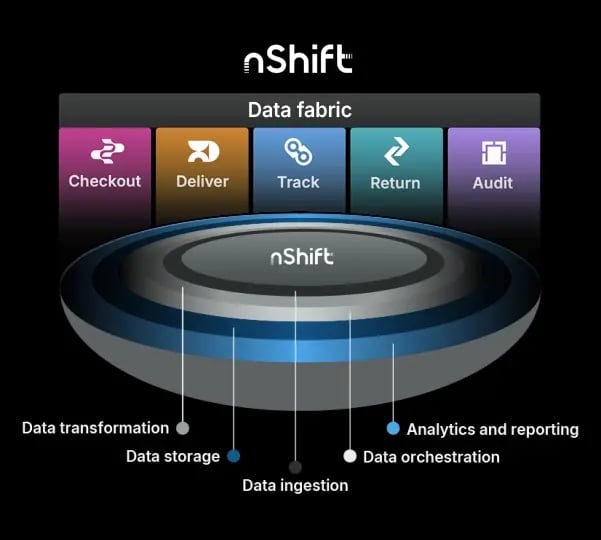
nShift's delivery management platform sits between checkout and doorstep, translating carrier execution into customer-facing truth.
In practice, that means standardising delivery options and promises, normalising tracking events across carriers, and keeping returns proof visible through to refund. This is the normalisation layer that makes structured event truth usable across markets and partners.
The takeaway
Real-time visibility improves when event data is consistent. In 2026, that consistency is also what makes automation safer and service more reliable at scale. Standards like GS1 EPCIS give teams a practical way to make event truth reusable across carriers and systems.
Get the full picture
 This article is part of our research on “The new retail reality: Trust, proof, and the delivery experience in the AI era”, which covers what’s changing in retail delivery, the shifts in customer expectations, and what to do to make your delivery strategy hold up at scale.
For the complete picture, download the full report: The new retail reality 2026.