In-store pickup creates the most value when it feels simple on the page and clean behind the scenes. Princess saw online sales increase by almost 100% the same day it introduced book-online, pick-up-in-store. VITA now offers 30-minute click-and-collect alongside next-day delivery. Those results point to the same standard: pickup works best when delivery logic is doing more than showing a checkbox.
Ppickup is part of a broader delivery choice architecture. Customers want convenience, speed, and control. Retailers need store availability, location relevance, pricing logic, and communication to line up well enough that pickup feels reliable from the first click. When that logic is strong, pickup supports conversion, store traffic, and a more connected omnichannel journey.
Direct answer: what makes in-store pickup work in ecommerce?
In-store pickup works when customers only see pickup options that are relevant to their order, location, and timing, and when the handoff to store operations stays clean. The gain comes from delivery logic, filtering, and communication that keep pickup clear for the shopper and manageable for the retailer.
Key results from nShift customers
- Princess says online sales increased by almost 100% the same day after introducing book-online, pick-up-in-store, and sales in physical stores also increased.
- VITA now offers 30-minute click-and-collect and next-day delivery, giving customers a stronger speed and convenience promise.
- RNB Retail and Brands now offers pickup point, home delivery, mailbox delivery, and in-store collection across its retail brands.
- Hunkemöller saw a 15% shift from return-to-warehouse to in-store returns, strengthening customer touchpoints and omnichannel convenience.
Why do shoppers keep choosing in-store pickup?
Shoppers keep choosing in-store pickup because it gives them more control over when and where they receive the order. Pickup can feel faster, easier to plan around, and more useful in daily life than waiting at home for a delivery window that does not fit the working day or the family schedule. It also gives customers a clearer sense of control before payment.
Princess is the clearest commercial proof. Kai Gulbrandsen, CEO, says:
"When we introduced the book-online, pick-up-instore concept, our online sales increased by almost 100% the same day."
The same customer says sales in physical stores also increased, showing how pickup improves more than one channel at once. It helps the online order convert, and it gives the store another moment to serve the customer.
The same principle appears in nShift Checkout, where click and collect, pickup options, and delivery-choice rules sit inside one customer-facing flow. Pickup becomes easier to choose when it appears with the right timing, the right location context, and the right expectation around availability.
How does delivery logic make pickup feel easy?
Delivery logic makes pickup feel easy because it decides which pickup choices actually belong in the checkout for that basket, address, and market. Customers get a more relevant set of options, and merchants get a stronger way to keep pickup clear without adding clutter to the rest of the page.
VITA shows why this is significant in practice. The retailer wanted a delivery setup that connected checkout, warehouse, and carriers into one flow and now offers 30-minute click-and-collect from conveniently located stores. Kristian Sonnenberg says:
"With nShift, we’re able to deliver on our promise every single day."
That flexibility comes from showing relevant delivery options, with clear timings and costs, without making the checkout harder to navigate.
Imerco brings in the architecture perspective. The retailer supports both click-and-collect and ship-from-stock inside a warehouse setup designed to handle sensitive products, high store volumes, and major peak swings. Pickup works best when it sits inside a broader delivery-choice model with logic around stock flow, store replenishment, and the real shape of demand.
That is where a connected delivery management platform helps. Pickup performs better when checkout logic, carrier execution, and the wider post-purchase experience all pull in the same direction.
Which checkout and returns capabilities keep pickup clean?
The biggest shift comes from pickup filtering, postcode and rule logic, localized presentation, and continuity into returns. Those capabilities help merchants show pickup only where it makes sense, keep the page understandable, and carry the same omnichannel logic into the post-purchase journey.
nShift Checkout supports custom pickup locations, PUDO filtering, postcode conditions, estimated delivery times, groups, and rules that let merchants tailor which methods appear based on basket value, product type, and location. That matters because pickup relevance comes from accurate matching and clear presentation.
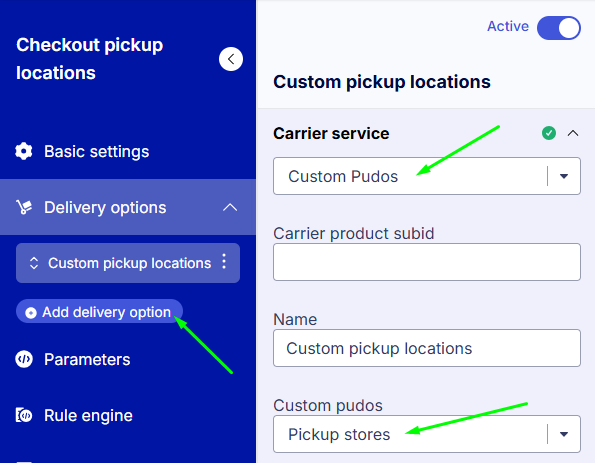
The widget and rule setup also matter for execution speed. Pickup should be visible in a way that feels native to the checkout, and the logic behind it should be manageable without turning each market or product category into a separate rebuild.
Groups and market rules help merchants keep pickup logic orderly as the setup grows. One configuration can prioritize store collection in one market, another can favor pickup points or home delivery where that fits better. That kind of structure helps teams expand pickup without losing control over checkout clarity.
Returns complete the omnichannel picture. Approved source material for Returns supports Checkout integration in Returns, which means merchants can carry the same delivery-choice logic into the reverse journey. That is important because the customer experiences pickup, delivery, and returns as one brand journey.
Hunkemöller is the best proof. Robin Visser, Omni Channel Business Development Manager, says:
"We’ve made returns part of a seamless omnichannel customer experience with increased returns control and insights."
The same customer reports a 15% shift from return-to-warehouse to in-store returns. That widens the article in the right way. Pickup gets stronger when stores stay part of the customer journey after purchase as well as before it.
What does a strong pickup experience put in motion?
|
Capability |
What the customer gains |
What the retailer gains |
|
Pickup-location filtering |
Pickup choices that fit the order and location |
A cleaner checkout with fewer irrelevant options |
|
Postcode and basket rules |
More relevant delivery choice at the right moment |
Better control over which methods appear and when |
|
Estimated delivery times |
Clearer expectations around collection timing |
More credible promises at checkout |
|
Embedded pickup presentation |
A simpler path to choose store collection or PUDO |
A more consistent, easier-to-manage checkout experience |
|
Returns continuity |
A more connected omnichannel journey after purchase |
Stronger store touchpoints and better service continuity |
How should retailers roll out pickup without complicating the rest of checkout?
Retailers should roll out pickup by starting with the customer situations where pickup is clearly useful, then building the rules that keep those options relevant by market, basket, and product type. The goal is a checkout that feels simpler as pickup expands and stays easy for customers who still prefer home delivery.
RNB Retail and Brands is strong proof on rollout and customer choice. Martin Jungertst, Head of Logistics, says:
"We have really benefited from nShift Checkout to offer our customers freedom of choice in the Swedish market."
 The same brand explains that customers can now choose between pickup point, home delivery, mailbox delivery, or in-store collection depending on the brand. That matters because pickup and click and collect become commercially useful faster when merchant teams can scale them without a long custom project.
Imerco adds the mixed-flow lesson. The retailer supports both click-and-collect and ship-from-stock while handling high store volumes and end-consumer orders through the same connected delivery process. That is what keeps pickup commercially useful when the operation grows.
VITA adds the customer-promise point. Pickup is strongest when it sits inside the same delivery-choice architecture that also supports home delivery, out-of-home, and express options. That is how checkout stays coherent even as the range of delivery options grows.
This is also where merchant control comes in. Teams should be able to adjust rules, conditions, and presentation without slowing down every change behind a development queue. Pickup improves faster when the commercial and CX teams can learn from usage patterns and refine the logic as part of normal trading.
Communication deserves attention as well. Princess wanted to remove manual work for store staff and unify the journey from warehouse to customer and store. Pickup performs better when the confirmation, collection message, and store handoff all feel as deliberate as the option shown at checkout.
What should teams measure after launch?
Teams should measure the signs that pickup is creating value for both the customer and the operation:
-
Pickup uptake
-
Conversion
-
Store-related sales impact
-
Service contacts
The goal is to see whether pickup is becoming a cleaner choice for customers and a stronger omnichannel lever for the business.
Princess is the clearest reminder that pickup can move fast when the offer is well designed. Online sales increased almost immediately, and store sales increased too. That makes channel-level measurement important. Pickup can support ecommerce performance and store economics at the same time.
Hunkemöller shows why touchpoints matter as well. When more returns move in-store, the customer journey creates more opportunities for assisted service, remarketing, and repurchase. Pickup and returns are different moments, but the commercial logic is related. Both benefit when stores remain part of the experience.
Teams should also watch operational clarity. If the pickup flow is working well, store handoffs should feel smoother, communication should feel more consistent, and the rest of the checkout should stay easy to understand for customers who still prefer home delivery.
Why in-store pickup becomes more powerful inside a connected delivery journey
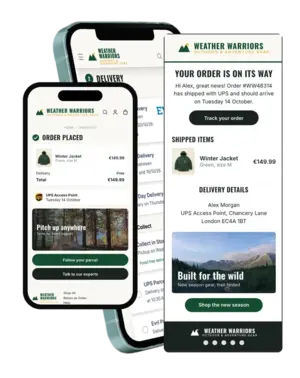 In-store pickup becomes more powerful when it is treated as part of delivery logic. That gives merchants a cleaner way to show the right pickup choices, protect checkout clarity, and connect stores more directly to the ecommerce experience.
This is where nShift is strongest on the topic. nShift Checkout helps merchants decide which pickup options to show and when to show them. The wider delivery-management layer helps keep that choice connected to fulfilment and post-purchase experience, which is what makes pickup feel simple for the customer and operationally clean for the retailer.
If your team wants to deliver cleaner pickup, click-and-collect, and omnichannel experiences, nShift Checkout is a strong place to start.
Book a demo to see how nShift helps retailers build more useful pickup experiences.