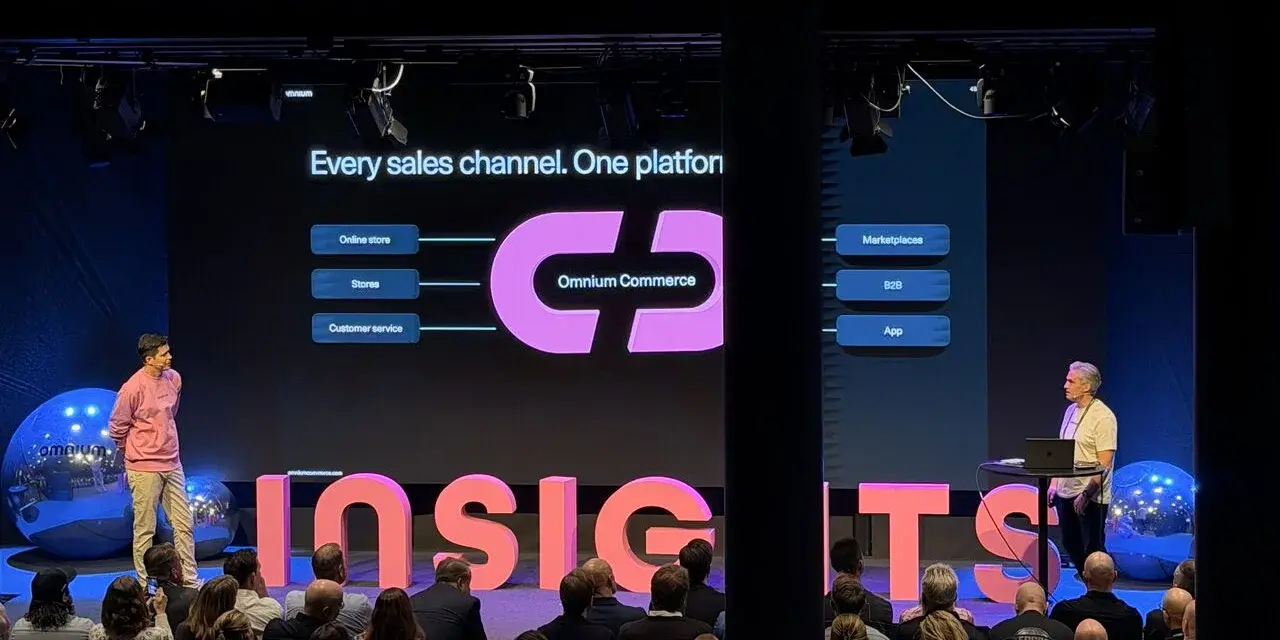
nShift Checkout for Shopify is a delivery management tool that uses the Shopify CarrierService API to replace static shipping rates with dynamic delivery logic.
Shopify can already return shipping rates at checkout and for many stores, that's a useful place to start. Third-party carrier-calculated shipping can display live rates based on order weight, dimensions, and destination, while shipping profiles let merchants apply different rules to specific products and locations.
In my previous article on how delivery choice shapes Shopify performance, we explored the gap between what shoppers want at checkout and what many Shopify setups actually show. This time, we focus on the mechanics behind that experience, and why more merchants are looking beyond basic rate display. This blog looks at the operational side of the same issue: when shipping rates alone stop being enough.
The pressure starts when checkout still feels too generic for how customers actually want to receive their orders.
A shopper reaches the final step ready to buy but then they see a broad delivery line, limited choice, and very little sign that the experience reflects local expectations or personal preference. The order can still go through, but the store's checkout is no longer helping the customer decide confidently.
Shipping rates tell the customer what delivery costs, but delivery logic shapes which choices appear, how relevant they feel, and how well they fit the order in front of them.
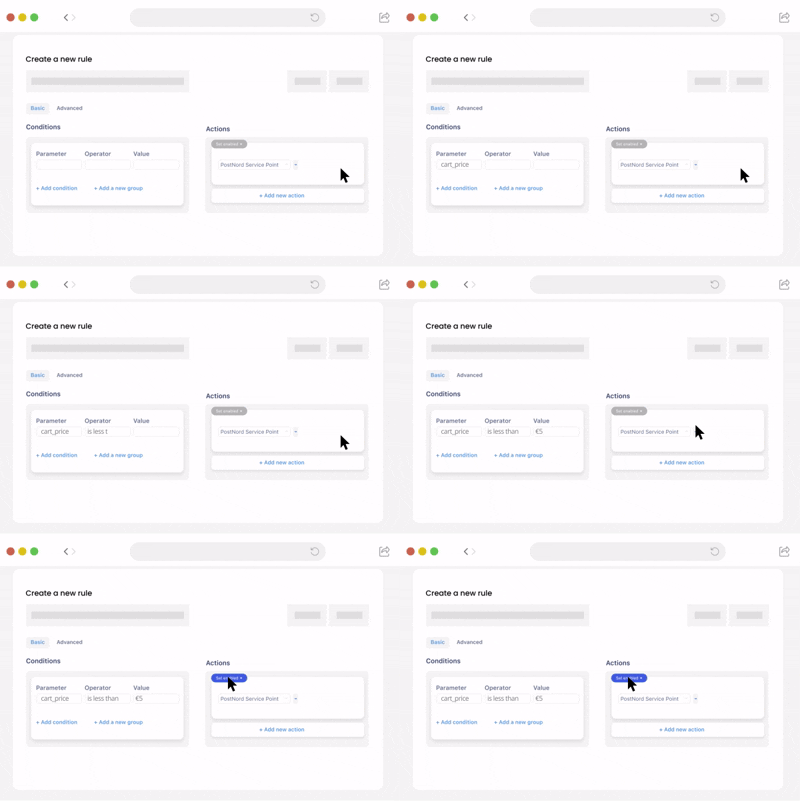
Shopify can return rates, but checkout decisions go beyond price
Carrier-calculated shipping is built to return live rates at checkout from connected carrier accounts. Shopify requests those rates and displays them as shipping options, while shipping profiles extend that foundation with product-based and location-based rules.
Showing valid prices is a reasonable starting point.
Customers, though, do not choose on price alone: they weigh convenience, certainty, speed, pickup options, and how clearly the promise fits their order. A low shipping price can still feel like a weak option if the experience is vague or inflexible. Another option may cost a little more and still perform better because it feels easier, clearer, or closer to how the customer wants to receive the parcel.
From our vantage point at nShift, this becomes even more obvious when delivery preferences vary across customers and markets. One shopper wants the cheapest option while another wants the nearest parcel locker. Another wants a home delivery window they trust, and so on. At that point, showing a rate is only part of the job.
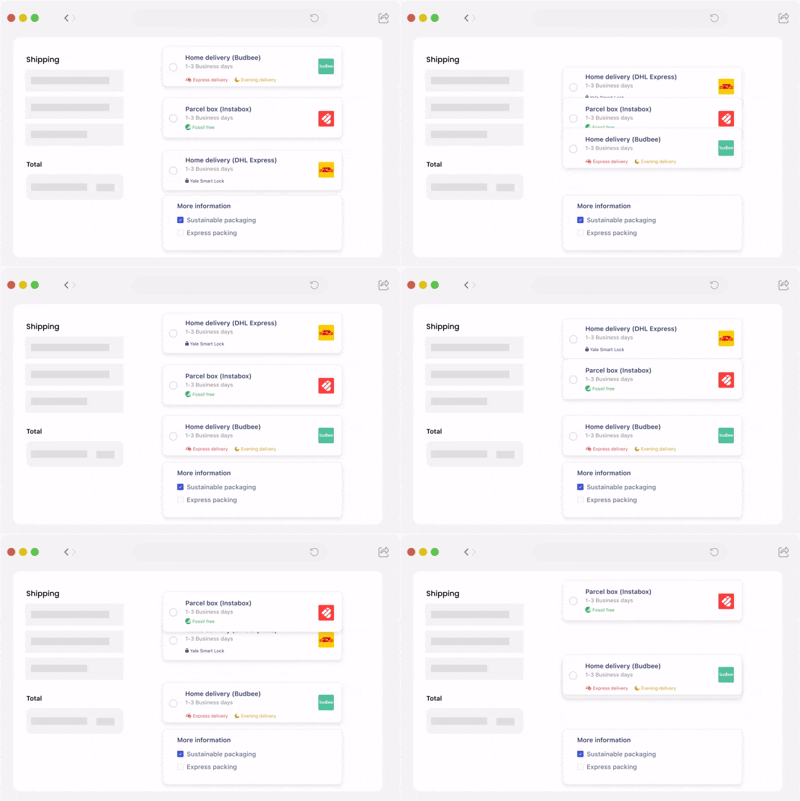
Growth is usually where the setup starts to strain
A simple setup can work well for a while, but then the business expands: more countries come online, more carriers enter the mix, some products need different logic or certain postal codes need exceptions. Besides, peak season can quickly change what is practical and operations teams may want more control without turning every update into a development task.
All of this adds up and checkout starts to get harder to manage than it first appears.
What began as a sensible shipping setup turns into a patchwork of profiles, carrier rules, apps, and manual workarounds. Each decision may make sense on its own, but together they create a setup that is harder to understand, harder to update, and harder to trust.
Once the carrier list grows and more markets come online, the question changes. Merchants stop asking how to show a rate and start asking how to control which options appear and whether checkout still reflects the business.
Pickup points and local delivery expectations raise the standard
Delivery choice is shaped by market reality. In some markets, parcel lockers or parcel shops feel like the obvious default while in others, home delivery convenience carries more weight. In many cases, customers want the freedom to choose between speed, convenience, and collection method before they commit.
A generic shipping line says very little in that moment. If customers expect a locker, a parcel shop, or a more relevant pickup option and do not see it, checkout feels less complete. It may still function, but it feels less aligned with how people actually buy.
Delivery is the last decision point before payment, and a vague or irrelevant set of options can stall a customer who was otherwise ready to buy. Everything else may have gone right, but the final step introduces uncertainty that did not need to be there.

A relevant stat from our 2026 delivery trends report
Better delivery logic can still live inside native Shopify checkout
...and this does not automatically call for a custom checkout rebuild.
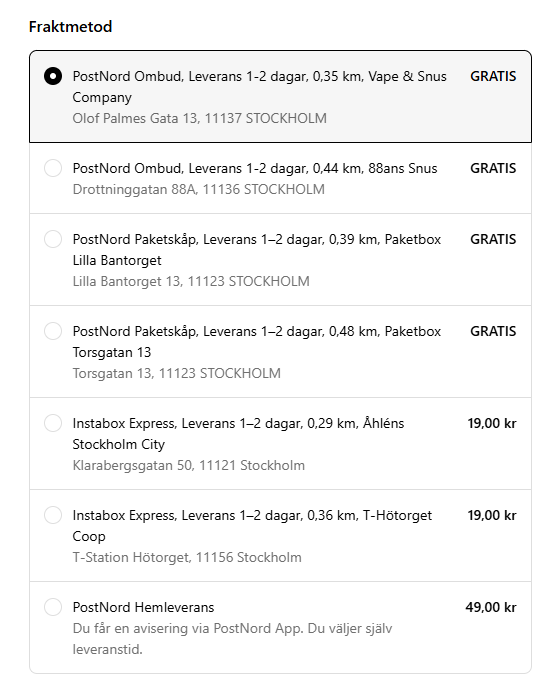
In many cases, the better approach is to keep the native Shopify checkout experience and improve the logic behind the delivery options shown there. The shopper still sees a familiar Shopify checkout, but the delivery options are shaped by richer conditions and a more deliberate set of rules which can include:
- market
- cart value
- geography
- product type
- customer data
- service availability
- lead times where available
This is the approach nShift Checkout for Shopify is built around. The app returns rules-based delivery options directly into Shopify’s native checkout through Shopify’s CarrierService API, with support for home delivery, parcel lockers, parcel shops, express options where available, and rules based on market, geography, cart conditions, product attributes, and customer data.
|
|
Standard Shopify shipping |
nShift Checkout for Shopify |
|
Delivery options |
Fixed rates, weight-based calculations, or basic carrier rates |
Home delivery, lockers, and parcel shops from over 1,000 carrier services |
|
Market-level rules |
Zone-based profiles using weight or price conditions |
Logic based on postal code, cart value, product type, and customer data |
|
Adding a carrier |
Individual apps or custom code for each new service |
Activation through the nShift platform without new code or app installs |
|
Operational control |
Settings managed in Shopify and separate carrier apps |
Rules and services controlled in one dashboard by operations teams |
The checkout experience stays native, but the delivery choice becomes more relevant:
Checkout choice should carry cleanly into fulfilment
A quick note on connecting to fulfilment:
What the customer chooses at checkout should stay attached to the order and flow cleanly downstream. If that choice has to be reworked or reconstructed later, the checkout promise starts to weaken: operations teams lose time, and the customer experience becomes more fragile than it needs to be.
With our native Shopify app, the selected delivery option is saved on the order and passed downstream for fulfilment in nShift Delivery, Ship, Transsmart or whatever shipping workflow you have, without re-entry or gaps - keeping the checkout promise, fulfilment flow, and post-purchase experience aligned.
Most merchants do not need more shipping methods...
...but they DO need checkout to show more relevant choices.
Many teams respond to complexity by adding another shipping method, another exception, or another app. Sometimes that solves a local problem but, more often than not, it makes the setup harder to manage.
The deeper issue is usually control: can the business shape checkout delivery choice in a way that reflects customer expectations, local norms, and operational reality, without rebuilding the model every time something changes?
Adding more rates does not automatically improve the checkout experience. Showing the right options, in the right context, does.
Delivery choice can influence conversion directly
The commercial case is already visible. Our customer Flying Tiger Copenhagen saw a 20% boost in conversion rates after improving delivery choice with nShift Checkout, while Scandinavian Luxury Group reduced cart abandonment by 20%, increased conversion by 25%, and lifted order value by 28%.
These are just a couple of strong signals that checkout delivery choice can influence commercial performance, not just operational flow. Other merchants report similar improvements in loyalty and repeat purchase rates.
International shoppers are the most sensitive to this: an unfamiliar shipping line in a foreign checkout is often enough to abandon.
What merchants should ask next
Shopify can already show shipping options. The better question is whether those options reflect how customers actually want to receive their orders, and whether your team can adapt that logic without turning every change into a manual development task.
That is usually the point where shipping rates alone stop answering the whole checkout question: merchants need more control over which delivery choices appear, when they appear, and how well they reflect customer expectations.
Talk to an expert about whether your Shopify store is ready for a more flexible approach to Shopify delivery logic and carrier integration.
Summary of nShift Checkout for Shopify
Native integration: Works within the existing Shopify checkout.
Carrier access: Connects to more than 1,000 carrier services globally.
Dynamic rules: Shows delivery options based on cart value, weight, and location.
Operational control: Operations teams manage shipping logic without needing a developer.
How to improve your Shopify checkout
To add dynamic delivery options and parcel lockers to your Shopify store, follow these four steps:
Connect your Shopify store to nShift.
Select the carriers that fit your customer base.
Set delivery rules to automate which options appear.
Display clear delivery dates at the point of payment.