
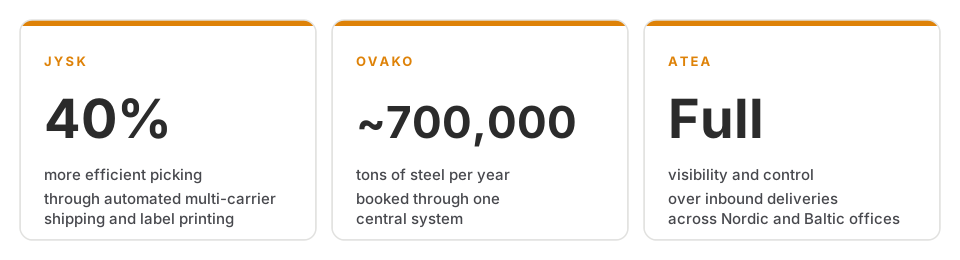
Every supply chain decision gets tested at the carrier layer. JYSK made its picking process 40% more efficient after automating shipping, label printing, and multi-carrier connectivity. Ovako brought bookings for around 700,000 tons of steel per year into one system. Atea gained full visibility and control over inbound deliveries. The same operational move sits behind all three outcomes: one connected layer behind carrier execution.
When booking, status data, carrier onboarding, and reporting sit on the same flow, daily decisions get faster and cleaner. That is also where supply chain strategy gets something concrete to plan from.
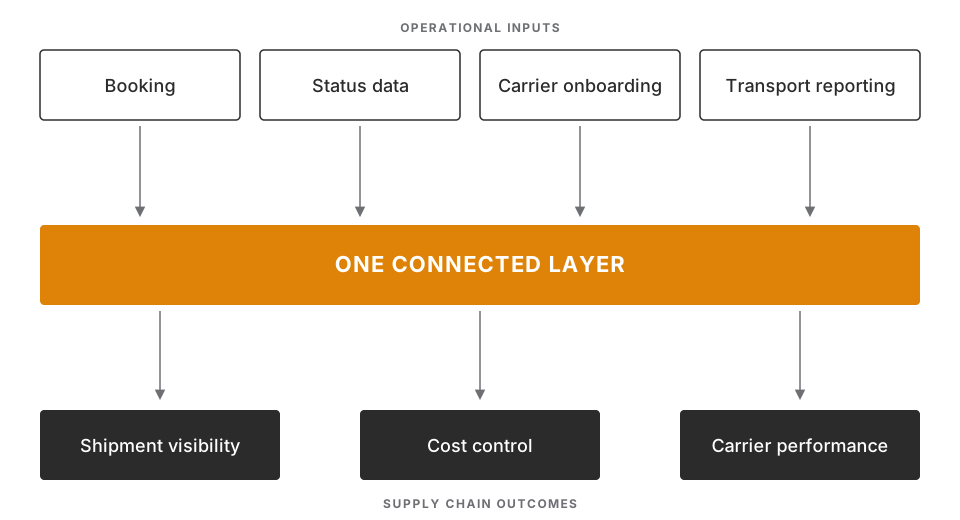
Direct answer: what improves supply chain visibility in ecommerce
Carrier onboarding, shipment booking, status data, and transport reporting on one connected layer is what makes the difference. Teams can see what is moving, where it is, how the carrier is performing, and what the shipment actually cost. Planning and performance work get a harder floor to build on.
Key results from nShift customers
- JYSK made its picking process 40% more efficient after automating shipping, label printing, and multi-carrier connectivity.
- Atea gained full visibility and control over inbound deliveries by extending the same layer into internal logistics.
- Ovako brought bookings for around 700,000 tons of steel per year into one system, giving teams clearer visibility of transport status and costs.
Why carrier control shapes supply chain performance
The operating facts arrive before the cost does. Booking, tracking, cost checks, and carrier onboarding on the same flow give teams the view they need while there is still time to steer.
Superdry shows the case directly. A growing global operation needed a way to add carriers quickly and see exactly what was moving across its network. Gordon Knox, Business Transformation and Logistics Director at Superdry, puts it plainly: "A growing international business such as Superdry needs to be able to put carriers onto our platform very quickly." He also makes the visibility requirement explicit: "Getting full visibility of anything that moves within the Superdry network and where it sits in our supply chain is very important."
How connected execution improves visibility and cost control
Shipment data stays close to the booking workflow, the carrier setup, and the reporting view. Teams can follow what is moving, see where service is drifting, and check whether carrier invoices match the service they actually bought.
JYSK shows the picture. The company needed one system to automate shipping, print labels, and connect to multiple carriers in one place. As the team put it, "We realized that we needed a system that could automate the shipping process, print labels and connect to multiple carriers all in one place." JYSK says the picking process became 40% more efficient. The same story points to invoice verification, where the team can catch gaps between agreed rates and carrier pricing. Execution quality and cost control sit on the same data.
Which execution and analytics capabilities create the biggest shift
Four capabilities carry the weight: carrier onboarding, booking discipline, shipment visibility, and reporting that feeds action. Together they give operations teams a cleaner way to run transport and give supply chain leaders a firmer base for improvement.
nShift Ship runs the execution basics: carrier activation, tracking setup, required-field discipline when booking, and consistent handling of pickup points and shipment data. Reliable booking and a carrier setup that can expand with confidence start here.
nShift TMS sits on top of that for transport control and analytics. It supports booking shipments, consolidating consignments, adding carriers, and tracking the operational data teams need to measure performance. Operations teams get a clearer way to manage bookings, combine flows, and monitor the data behind transport performance.
Connected carrier connectivity and tracking data close the loop. Carrier Performance and the ShipmentData API help teams move past status updates and into measurable transport improvement.
What connected carrier control puts in motion
| Capability | What teams gain | What the wider supply chain gains |
| Fast carrier onboarding | More flexibility when requirements change | Faster response to market, service, or capacity shifts |
| Standardized booking workflows | Cleaner shipment data and fewer avoidable errors | More reliable execution across sites and teams |
| Connected shipment visibility | Clearer status and service follow-up | Better planning and faster exception handling |
| Cost and invoice checking | A stronger basis for rate validation | Better control over transport spend |
| Performance reporting | Sharper carrier management decisions | Continuous improvement across service and cost |
How teams improve visibility through one operational layer
Centralize booking and carrier data first. Extend that foundation into reporting, inbound flows, and performance management next. The operational gains compound because each new use case builds on the same transport record.
-
Ovako began with a simple central booking setup that made the process more structured and transparent. Ted Lundström, Head of Logistics at Ovako, says, "Our priority has been to get going quickly with the least possible friction to directly achieve the performance we wanted." That phased approach matters for teams that want better control with a practical path forward.
-
Atea shows the same principle from another angle. The company extended visibility into inbound flows using the same delivery-management foundation. Pål Bråthen, Head of Logistics at Atea, says, "Looking ahead, I could not imagine a situation without this overview."
-
Unilever adds the measurement discipline. Tord Tillman, Process Specialist at Unilever Sweden, says, "The information from [nShift] makes it possible for us to constantly measure and improve our deliveries." That is the operational loop supply chain teams need.
-
Laithwaites bridges internal execution and customer-facing transparency. The same delivery foundation can tighten logistics processes while also giving customers more visibility and control.
What teams should measure first
Start with the measures that show whether carrier execution is getting faster, cleaner, and easier to trust. Four signals carry the weight: onboarding speed, booking quality, carrier-and-invoice alignment, and shipment-level visibility.
Onboarding speed shows how quickly the operation can adapt when requirements change. Booking quality is the data-discipline test: does the record hold up in the real workflow? Carrier-and-invoice alignment checks whether service and commercials match the agreement. Shipment-level visibility is the last one. Can the team answer where a shipment is, what happened to it, and what needs attention next?
Why carrier control gives supply chain strategy room to work
Supply chain strategy needs carrier execution that holds up every day. When it does, planning, transformation, and performance work get the control they depend on: faster carrier onboarding, cleaner bookings, stronger status data, and reporting teams can act on.
That is where nShift is strongest on this topic. Ship, TMS, and Track give teams the carrier control, shipment visibility, and transport performance to make supply chain strategy land on the operating floor.
If your team wants better supply chain visibility through a more connected operational layer, nShift Ship is a practical place to start. Book a demo to see how nShift helps teams tighten carrier control, shipment visibility, and transport performance.