
Warehouse performance earns its reputation at the outbound edge. Goods can be picked faster, packed faster, and staged faster, yet the real gain still depends on how smoothly the shipment gets booked, labelled, and handed over to the carrier.
Our customers' results reflect this. JYSK reduced its picking process by 40% after connecting shipping automation into the operation. Glamox estimates that nShift, together with its WMS, increased warehouse efficiency to 30%. Those results point to a universal truth: warehouse automation delivers its full value when outbound shipping is part of the same improvement program.
That is why shipping automation deserves a bigger role in warehouse conversations. It keeps the outbound flow steady, helps the team work with more confidence, and turns warehouse investment into a result the operation can feel every day.
Direct answer:
Why does shipping automation matter in warehouse automation?
Shipping automation matters in warehouse automation because outbound work still depends on labels, booking rules, carrier requirements, and shipment follow-up. When those steps are automated alongside picking and storage, warehouse gains travel all the way through dispatch instead of slowing down at the final handoff.
At a glance:
Key results from nShift customers
- JYSK reduced its picking process by 40% after implementing shipping automation and multi-carrier handling.
- Glamox estimates a 15 to 30% increase in warehouse efficiency through nShift and WMS integration.
- Imerco supported a 14% increase in annual outbound shipments and 240% scale-up capacity during peak season.
- Stihl saves 1,000 hours a year with automated label printing.
Why does outbound execution shape warehouse results so strongly?
Outbound execution shapes warehouse results because it is where the work becomes real. Every picked order still needs a carrier, a compliant label, the right shipment data, and a clean handoff to dispatch. If that step feels dependable, warehouse speed carries through. If it does not, value gets trapped at the end of the line.
JYSK makes the point well. Ole Rønnest Nielsen, Head of Logistics IT, JYSK says:
We realized that we needed a system that could automate the shipping process, print labels and connect to multiple carriers all in one place.
That is a warehouse statement as much as a shipping one. The same customer reports a 40% reduction in the picking process. The operational lesson is clear. When the outbound step is standardized, the rest of the warehouse has more room to perform.
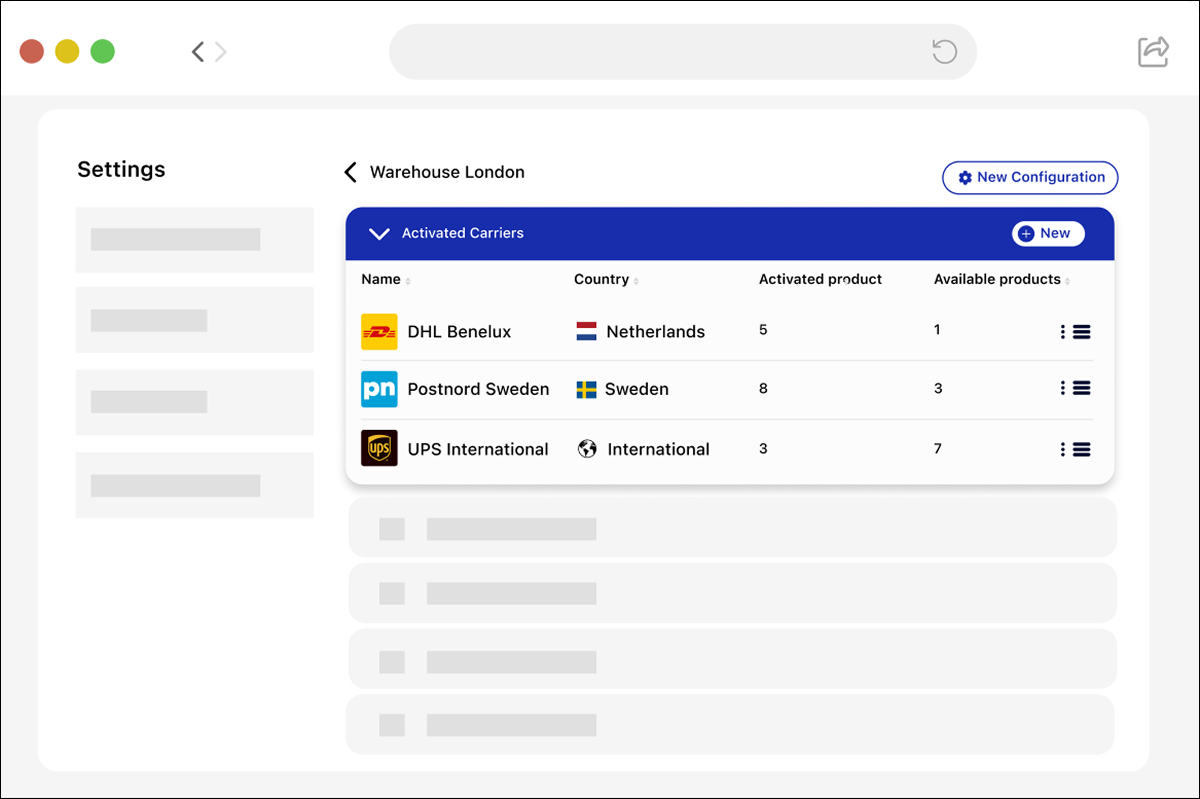
nShift Ship supports that by helping teams activate carriers, handle carrier-specific booking requirements, and keep shipping execution in one working environment. It gives outbound teams a steadier base, which is exactly what warehouse investments need if they are going to show up in daily throughput.
Which shipping steps usually protect throughput first?
The first shipping steps that protect throughput are label creation, carrier selection, booking validation, and the data handoff to the carrier. After that, shipment status and history matter because they help teams keep control once the goods have left the building.
Stihl is a focused example. Peter Hermansson, IT Manager, STIHL, told our team:
"Now we automatically print these labels, saving us two to three minutes in processing time per order."
On paper, that looks like a narrow improvement. In reality, it adds up across the year to 1,000 hours saved. Outbound shipping has that kind of leverage. A repeated task can carry major value when it sits inside every order.
Glamox shows the same principle through carrier data. In the words of Vidar Andreassen, Warehouse Manager, Glamox:
We transfer EDI to carriers automatically, so we do not have to remember the many requirements of each supplier ourselves.
That line captures a big part of warehouse automation maturity. The system holds the shipping logic, so the team can stay focused on flow.
nShift Delivery supports batch printing, reusable print setups, shipment history, and shipment status. nShift Transsmart adds import, book-and-print, manifesting, and shipment reporting. Those capabilities help outbound shipping keep pace with the rest of the warehouse, especially when order mix or carrier mix gets more varied.
How does peak readiness improve when shipping is automated too?
Peak readiness improves when shipping automation sits alongside warehouse automation because seasonal growth shows up fastest in the outbound lane. More picks and more packs only become revenue when shipments leave the building with the same confidence and speed. Automated shipping gives peak a calmer shape.
Imerco is a strong example. The retailer increased annual outbound shipments by 14% and achieved 240% scale-up capacity during its busiest season. Steen Kokholm Jørgensen, Director IT & Business Development, Imerco, says, "nShift Ship gives us the scalability we need." That is the point of peak readiness: the warehouse keeps its rhythm when demand turns up.
F-Box adds the volume proof. The company handles more than 1 million shipments per year and reports 95% faster operations. Riku Purmola, Production Manager also says, "For 99.9% of the time our employees barely even realize that nShift is there." That is a strong description of good automation: the system supports throughput without drawing attention to itself.
This is where carrier connectivity matters as more than a network talking point. Carrier breadth is most valuable when the operation can use it through one steady outbound workflow. That gives teams room to support peak, new services, and market shifts without scrambling on the floor.
Which capabilities matter most on the warehouse floor?
The capabilities that matter most on the warehouse floor are the ones that make the recurring outbound steps faster and more reliable. Teams benefit from reusable print logic, quick access to the right carrier setup, shipment import, clear manifesting, and post-dispatch visibility. Those are practical tools, not abstract features.
nShift Ship helps teams connect multiple carriers and manage carrier-specific booking requirements. nShift Delivery supports batch printing and printing favorites, which is valuable when teams want the right setup ready for the next wave of orders. nShift Transsmart supports import workflows and shipment reporting, which helps teams keep the outbound layer connected to the wider warehouse operation.
The result is stronger than raw speed. The team gets a process it can trust. That confidence matters in peak, in complex carrier environments, and in industries where the shipping details themselves carry compliance weight.
What does a strong warehouse-to-shipping setup put in motion?
| Capability | What the warehouse team gains | What the business gains |
| Automated label and document handling | Faster dispatch with less repeated work | More output from the same operational base |
| Carrier-specific booking control | Fewer delays around service and data requirements | Better carrier flexibility without added complexity |
| Batch printing and import workflows | Smoother outbound rhythm across high-volume periods | Stronger peak readiness and scale capacity |
| Shipment history and status visibility | Better follow-up after dispatch | More operational control and easier issue handling |
| Reporting and manifesting | Clearer oversight of outbound activity | Better planning and performance management over time |
How should teams connect warehouse and shipping automation in practice?
Teams should connect warehouse and shipping automation by treating outbound shipping as part of the same process design, not as a separate finishing task. Start with the repeatable workflows that the floor touches every day, then connect carrier handling, reporting, and post-dispatch visibility.
Glamox is useful here because their story ties nShift directly to the warehouse system. The gain came from the connection, not from a disconnected label tool. JYSK shows the same lesson at retail scale. The warehouse moved faster because shipping execution sat inside the same operational picture.
Stihl adds an important detail. Some outbound bottlenecks come from specific shipment types or label requirements. That makes shipping automation a precise tool as well as a broad one. One targeted improvement can create meaningful time gains when it applies across enough shipments.
What should teams measure after launch?
Measure the indicators that show whether warehouse flow is carrying through to dispatch:
-
Picking speed
-
Dispatch time
-
Label handling time
-
The number of carrier-related interventions
Teams should also watch peak performance, shipment accuracy, and the effort needed to support new carrier or service requirements.
Imerco is a reminder that scale capacity deserves its own place on the scorecard. F-Box shows that operational speed and invisibility can live together when the workflow is mature. Glamox shows that lower cognitive load is part of efficiency too. When teams do not need to remember every carrier requirement themselves, the warehouse feels more controlled.
Why warehouse automation needs shipping automation to deliver full value
Warehouse automation creates momentum while shipping automation protects it. The strongest operations connect both, so the gains from picking, storage, and process design continue all the way to dispatch.
That is why outbound shipping belongs in the center of the warehouse conversation. It is where speed becomes a shipment, where control becomes a customer promise, and where automation earns its full return.
If your team wants warehouse improvements to show up in outbound performance as well, nShift Ship, nShift Delivery, and nShift Transsmart provide a strong shipping automation layer. Book a demo to see how nShift helps teams protect throughput with more control.