A few months ago, I ordered a garden office. The website looked premium, the estimated delivery window felt reasonable, and I clicked buy with confidence. Then I heard nothing for weeks. No build update, no dispatch notification or tracking link. Eventually a generic email arrived on a Monday afternoon telling me the delivery was scheduled for the next day, with no time slot and no way to track it. The next day, nothing showed up and nobody called.
I have spent nearly three decades in logistics, carrier management, and ecommerce fulfilment. I run nShift's customer growth team and work directly with enterprise delivery teams across Europe. That experience as a customer stuck with me because it is the same pattern I see playing out inside enterprise delivery management every day, just at a much larger scale.
Where delivery control actually breaks down
There is a gap between the promise made at checkout and what the operation can actually deliver. I call it the delivery control gap, and it exists in almost every organization I work with.
The symptoms are familiar: support tickets about missing parcels, cost overruns that nobody can trace, carrier SLAs that look fine on paper but fall apart regionally, checkout options that were never connected to real operational capacity. According to Ofcom's 2025 research, 68% of UK consumers experienced at least one parcel delivery issue in the preceding six months. The scale is significant, but what makes this gap hard to close is that the symptoms scatter across departments. Customer service fields the complaints, finance absorbs the cost, and operations deals with carrier failures, so nobody ever sees the full picture.
Across thousands of conversations with enterprise delivery teams, I see this gap show up in predictable places. Four of them matter most.
The checkout promise most carriers cannot keep
One of the most common mistakes I see across nShift's customer base: presenting delivery at checkout as a list of carrier names. Customers do not buy "Carrier A." They buy next-day, a time slot, click-and-collect, or a guaranteed date. When the options are confusing or the costs are unexpected, they leave. Statistics show that 39% of cart abandonment traces back to unexpected costs at checkout.
The fix is straightforward in principle, harder in execution: design delivery as service outcomes, backed by estimated delivery dates that reflect real operational capacity. When businesses make that shift, the results are measurable. Flying Tiger Copenhagen redesigned their checkout delivery options around pick-up preferences rather than carrier names and saw a 20% increase in conversions.
That kind of result does not come from tweaking button colours. It comes from connecting the front-end promise with what the warehouse and carriers can actually do today, at this hour, for this postcode.
The carrier strategy most teams never stress-test
Most organizations I work with have multiple carriers. Having them is table stakes. Using them well is where delivery management separates from delivery administration.
The strongest delivery operations I see have engineered their multi carrier management around resilience. They have failover logic built in, so when a carrier misses a collection or a depot goes down, another carrier picks up the volume automatically and the customer never notices. The SLA holds, and the promise made two hours ago at checkout stays intact.
This requires more than a spreadsheet of rates: it requires multi-criteria allocation that weighs cost, service level, delivery urgency, order value, and regional capability for every shipment. At enterprise scale, that is nearly impossible to manage manually. It is the point where carrier management solutions stop being a procurement exercise and become an operational system.
And when it comes to evaluating carriers, I see most teams running the sequence backwards. They start with cost. The strongest operations start with:
-
Service fit (can this carrier deliver what our customers expect?)
-
Operational alignment
-
Performance reliability based on actual OTIF data
-
Cost enters the equation last
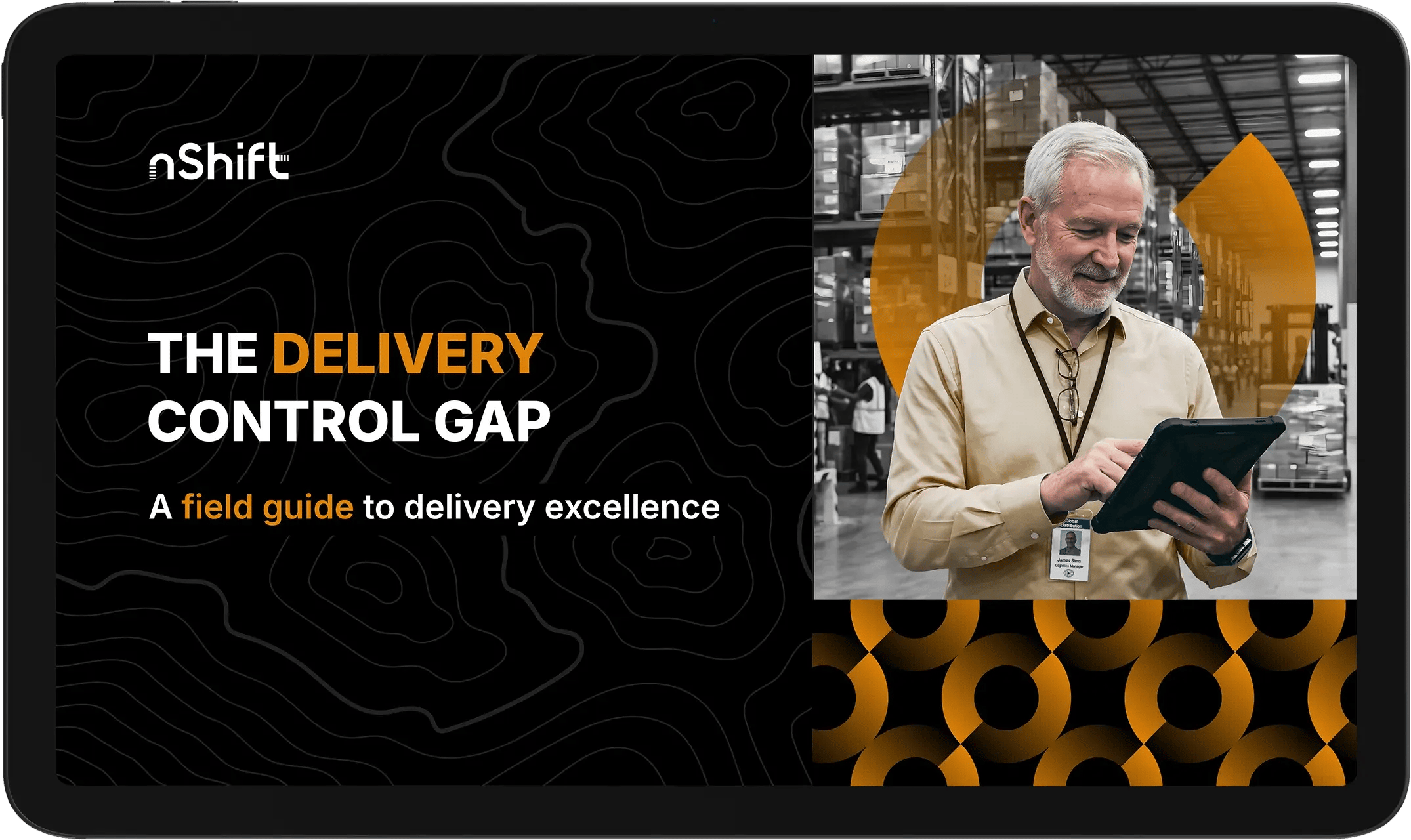
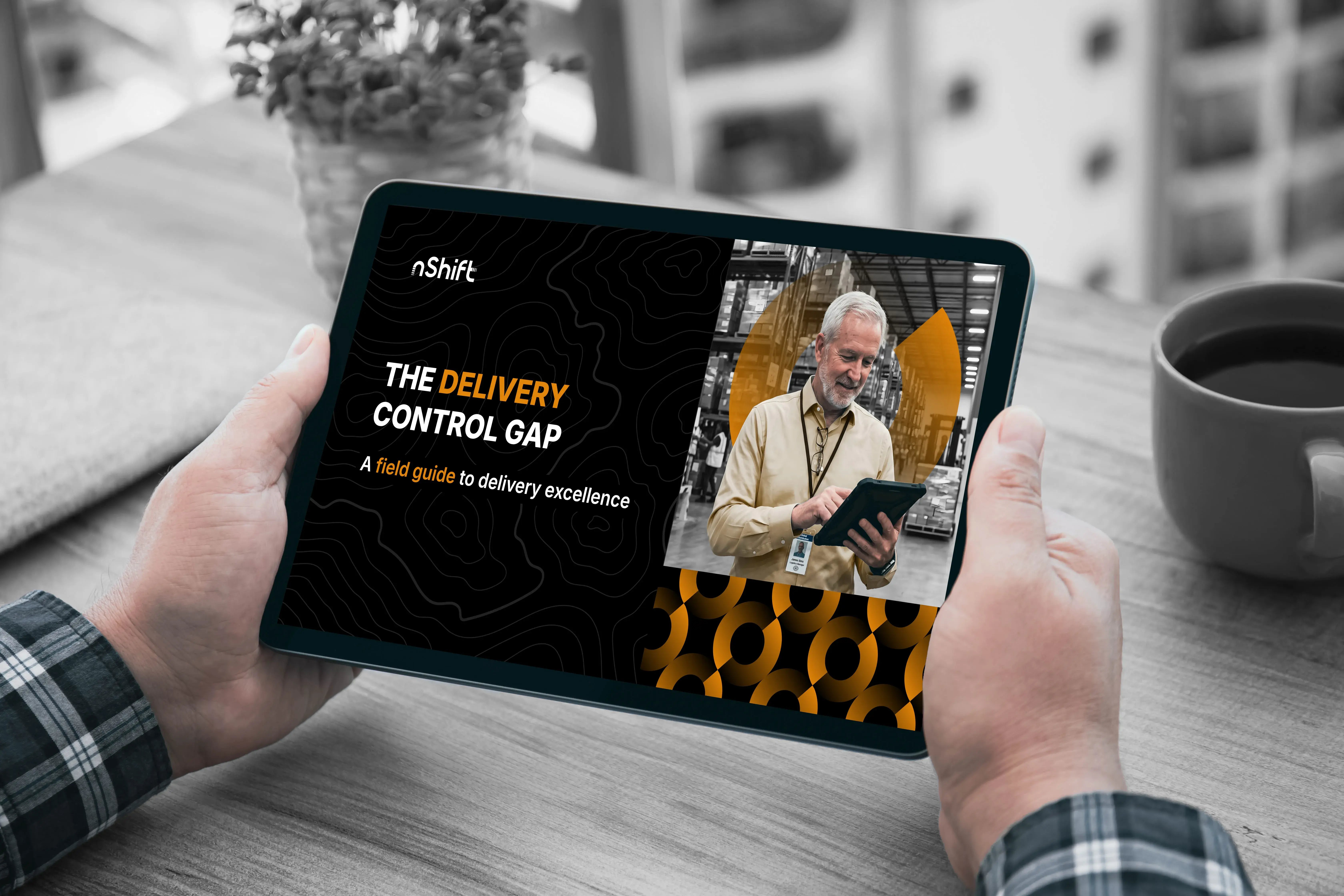
I covered all four of these areas, with sourced data and evaluation frameworks, in my new guide The Delivery Control Gap. Download the guide here.
The cost problem nobody can see
Here is something I tell every delivery team I work with: the biggest cost wins in last mile delivery management come from data accuracy, not rate renegotiation.
Last-mile delivery has consistently accounted for up to 53% of total shipping costs. At that scale, even small errors compound fast: surcharge misclassifications, shipment data that does not match what was actually booked, invoices that nobody reconciles against dispatched volumes. Most teams accept the leakage because they cannot see it clearly enough to act on it.
The organizations that get this right treat freight cost management as a visibility discipline first. They capture legitimate surcharges and flag incorrect ones. They reconcile invoiced amounts against actual booked shipments. They tender carrier contracts every 12 to 24 months, backed by real operational data (OTIF rates, failure rates, cost variance per region) rather than headline SLA numbers. The savings follow from the visibility, not the other way around.
The post-purchase silence that floods your support queue
That garden office I ordered? The weeks of silence followed by a last-minute delivery email is exactly what happens when the post-purchase experience has no control layer, and it plays out thousands of times a day at enterprise scale.
Customers now expect accurate delivery dates and proactive updates as standard. When that experience is unclear or absent, they pick up the phone. In delivery operations, we call those contacts WISMO (where is my order?), and they are one of the most expensive symptoms of a broken delivery management system.
Organizations closing this gap use estimated delivery dates that improve over time, proactive delay notifications that reach the customer before they start worrying, and branded tracking pages that keep the experience in the retailer's own voice. Across our customer base, we have seen WISMO contacts fall by up to 50% through proactive post-purchase communication alone.
The deeper shift is treating delivery failure as a data problem. The strongest teams I work with capture failure reasons and feed that insight back into checkout design, address validation, and carrier selection. Each cycle gets tighter, failures compound downward instead of upward, and the operation improves structurally rather than just reactively.
Closing the control gap
Delivery excellence is not a single initiative. It is an ongoing discipline of connecting checkout, carrier strategy, fulfilment, and post-purchase into one coordinated system. The organizations that get it right treat delivery as a controlled capability that directly affects revenue, retention, and brand trust.
I wrote The delivery control gap because these are the patterns I keep seeing. The guide maps all six operational areas where control breaks down, with frameworks, sourced data, and the evaluation models I use with enterprise delivery teams every week. If any of the patterns in this post sound familiar, the full guide is worth your time.