Growth shows up first in the work around every parcel: the label, the booking decision, the customs field, the extra print step. At low volume, those tasks feel incidental. At scale, they determine whether the warehouse floor keeps moving or starts to stall.
F-Box processes more than 1 million shipments a year and reports 95% faster operations compared with manual methods. DTK cut processing time by 90% and saves 35 hours a day in printing time. Both gains started with the parts of fulfillment that repeat on every order and reward consistency over ambition.
That is the real lesson in order fulfillment. High-growth brands automate the shipping work that surrounds the order before they chase bigger transformation programs. When labels, booking, documents, and carrier-specific rules move into a consistent flow, teams gain speed, accuracy, and headroom at the same time.
Direct answer:
What should growing brands automate first in order fulfillment?
Growing brands usually automate the repetitive shipping steps first: label creation, booking, shipping documents, carrier-specific rules, and shipment-status visibility. Those steps sit closest to daily throughput, so improvements show up quickly in speed, consistency, and the team’s ability to keep pace as order volume rises.
Key results from nShift customers
- F-Box reports 95% faster operations and processes more than 1 million shipments per year.
- DTK achieved 90% faster processing and saves 35 hours daily in printing time.
- Hemimex reduced daily delivery processing from four hours to one.
- Rebelz runs a business serving 54 countries with a small team by removing nearly all manual shipping steps.
- Bauhaus configured all carriers within 48 hours and now supports around 750,000 orders a year through ship-from-store fulfillment with 99.9% platform uptime.
Why do high-growth brands automate shipping admin first?
High-growth brands automate shipping admin first because it sits inside every order that leaves the building. Labels, carrier choices, documents, and pickup bookings are small tasks on their own, but they repeat all day. When those steps become consistent, the whole fulfillment operation gets easier to trust.
Maya Delorez is a sharp example. The brand ships to around 80 markets a month. Madelene Törnblom, Founder & CEO told us: "At some point you realise: this can’t scale." That line describes a familiar turning point: growth creates momentum, then volume asks for a flow that can carry the same standard through the next wave of orders.
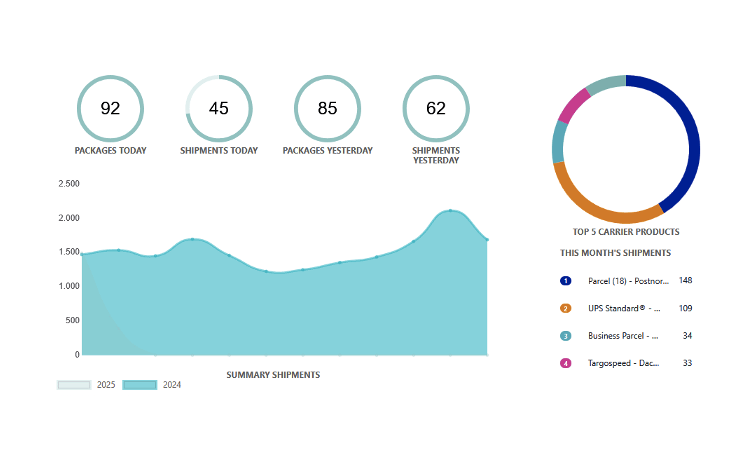
That is where nShift Delivery earns its place. It gives teams reusable print setups, batch printing, shipment history, shipment status, pickup booking, and faster day-to-day label handling. nShift Ship adds carrier activation and support for carrier-specific booking requirements, so the workflow stays consistent even as the carrier mix grows. Together, those capabilities turn fulfillment from a sequence of small decisions into a repeatable operating rhythm.
Which fulfillment workflows usually move first?
The first workflows to automate are the ones the team touches most often and the ones that slow the floor when they depend on memory. Label printing is usually first. Booking comes next, followed closely by shipping documents. After that, the gains deepen when shipment import, shipment status, and reusable print logic join the same flow.
F-Box shows why label automation earns that priority. Riku Purmola, Production Manager, says:
Using nShift Delivery to automate our processes means that label printing can be done with a single click.
Speed improves, but so does consistency: the workflow becomes easier to repeat under pressure.
DTK shows the same pattern in a more compressed form. Edwin Schildkamp, Project Manager, says,
Now we are printing it on one label and are able to do it in 15 seconds.
A faster print step sounds narrow until you multiply it across the day, then it becomes a throughput story.
Backshop brings the full picture into view. Mandy Kornet says:
The entire process, from receiving an order to processing the packing slip and shipping label, is automated.
That is usually what good first-stage automation looks like. It keeps dispatch steady by removing friction from the recurring steps that surround every shipment.
nShift Transsmart supports book-and-print workflows, shipment import, manual manifesting, and reporting in one interface. For teams that need a clean handoff between order data, shipment creation, print, and follow-up, that single layer keeps the first phase of automation practical and visible.
How does multi-carrier complexity shape what teams automate?
Multi-carrier complexity shapes the order of automation because each extra carrier adds service rules, booking requirements, and document needs. The winning move is to standardize the fulfillment experience for the team while keeping the carrier options open for the business.
Rebelz proves the point cleanly. The company ships to 54 countries with a small team. Daniel Rosendahl, CEO & Founder, says:
We’ve always focused on efficiency. With a small team, every click counts, and manual shipping simply wasn’t sustainable.
Shipping labels, customs documents, packing slips, and return labels all run through one setup. The team grows output without growing the workload.
Hemimex shows why carrier choice counts, too. The company handles complex packages and uses five carriers. Daily delivery processing fell from four hours to one. Managing the right carrier choice is valuable on its own, but the real gain comes when that choice sits inside a workflow the team can trust.
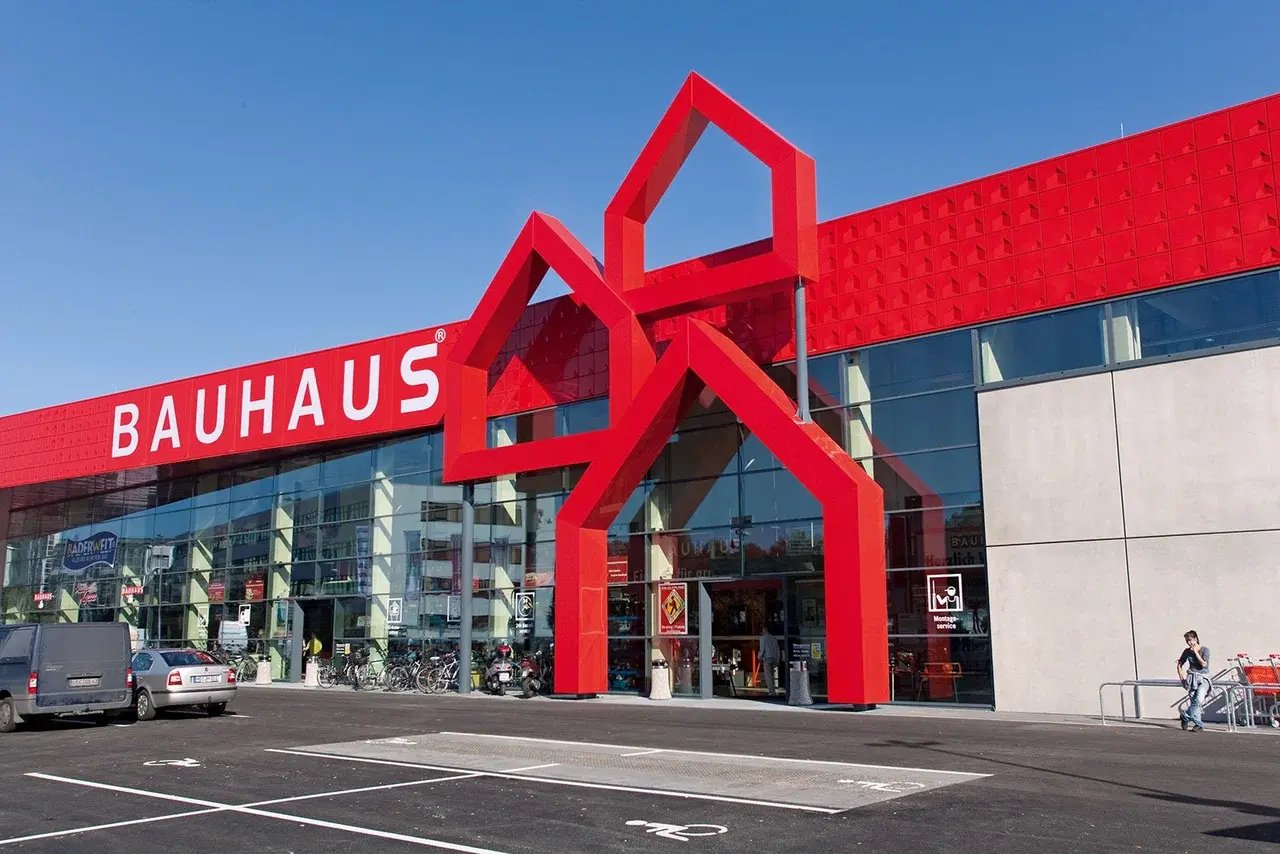
Bauhaus adds another dimension: speed of rollout. The European DIY retailer needed to turn physical stores into shipping points as part of a broader ship-from-store strategy, with delivery integrated into its Reflex warehouse management system. Håkan Asp, Logistics Development Manager, says:
What mattered to us was execution. Carriers needed to be connected fast, without turning delivery into a separate program.
Bauhaus configured all carriers within 48 hours, without additional help from nShift. Since go-live, the platform has delivered 99.9% uptime and the setup now supports around 750,000 orders a year across Nordic markets.
This is where carrier connectivity strengthens the argument. Carrier breadth matters most when teams can use it through a workflow that still feels familiar on the floor. A broad carrier network becomes commercially useful when the warehouse can work through one recognizable flow across markets and services.
Which shipping capabilities make the gain stick?
The gains stick when automation covers the work the team repeats most often and the follow-up work that protects control after dispatch. Reusable print setups, batch printing, shipment history, shipment status, and import workflows all play a role, but the strongest setups combine fast execution with built-in oversight.
nShift Delivery supports batch printing and printing favorites, which gives teams a clean way to reuse the right shipping setup without rebuilding it order by order. nShift Ship helps teams activate carriers and understand the required booking fields for each carrier setup. nShift Transsmart adds import, book-and-print, manifesting, and shipment reporting for teams that want one operating layer across multiple shipment steps.
The pattern across these tools is consistent: fulfillment speed is only valuable when it is repeatable. The strongest teams do not rely on individual memory to preserve shipping quality. They use the system to hold the rules, the carrier logic, and the print flow in place.
What does a strong fulfillment automation setup put in motion?
| Capability | What the team gains | What the business gains |
| Reusable print setups | Faster label and document handling with less repetition | More consistent shipping output across shifts and sites |
| Carrier-specific booking logic | Clearer booking flow for each carrier and service | Greater multi-carrier flexibility without extra admin |
| Batch printing and book-and-print workflows | A smoother dispatch rhythm during busy periods | Higher throughput with better control over recurring work |
| Shipment import and manifesting | Cleaner handoff from order data to shipping execution | A more scalable path for higher daily shipment volume |
| Shipment history and status visibility | Better follow-up after dispatch | Stronger operational control and easier exception handling |
How should teams roll out fulfillment automation?
Start when the daily repetition is already obvious. Begin with the label and document flow. Add the carrier logic that protects booking quality. Then connect status and history so follow-up stays visible after the parcel leaves the floor. That sequence keeps the gains practical and builds trust with the warehouse team before widening scope.
Rebelz shows why the phased approach works. The gain was a shipping model that let a small team run a global business with more predictability. Daniel Rosendahl puts it plainly:
"This setup lets us run a global business with a small team. It’s efficient, predictable and easy to manage as we grow."
Maya Delorez adds the growth lens. When the company moved from founder-led shipping work to a systemized setup, the goal was not elegance for its own sake. The goal was to keep packing flowing as order volume increased. Maja Törnblom, Warehouse & Logistics Manager, says:
The system is fast and works well with our carriers, so labels can be created smoothly as part of the packing process.
That is the rollout principle worth keeping. Start where the repeated work lives. Protect the flow the team uses every day. Then widen the automation once the foundation is trusted.
What should teams measure after launch?
Track the indicators that show whether the floor is moving with more consistency. Processing time per shipment, printing time, daily output, and time spent on carrier-specific fixes are the most revealing early signals. Teams should also watch exception handling and the effort needed to add or change carrier setups over time.
DTK is a reminder that time savings become strategic when they repeat every hour. Hemimex shows that daily processing time can fall sharply when carrier handling becomes more systematic. F-Box shows what scale looks like when the workflow holds under volume.
The wider business measures count too. Faster fulfillment supports customer promise accuracy, helps teams handle peak periods more calmly, and gives leaders more confidence when growth arrives ahead of plan.
Why order fulfillment gets easier when shipping automation comes first
Order fulfillment gets easier when teams automate the repeated shipping work that sits inside every dispatch. Labels, booking, documents, and carrier logic may look operationally small, but in aggregate, they shape the pace of growth.
That is why the strongest brands start here. They turn shipping work into a repeatable flow, then let the warehouse, the business, and the next stage of growth build on top of it.
If your team wants to automate shipping work and scale fulfillment with more confidence, nShift Delivery, nShift Ship, and nShift Transsmart give you a strong operational foundation. Book a demo to see how nShift helps fulfillment teams move faster with more control.