



Returns management: how it works, and how to do it well

Returns management is how a business handles the products customers send back, from the first request through to refund, exchange, restock, or resale. It covers the return policy, the customer experience, the physical movement of goods, the money, and the data each return leaves behind.

Companies tend to treat returns as a leak to plug. But a customer who sends something back has not walked away yet, and a return that goes smoothly is one of the cheaper ways to keep them. Getting there takes a clear process, a few real decisions about policy, carriers, and disposition, and software that ties returns to the rest of the operation instead of running beside it.

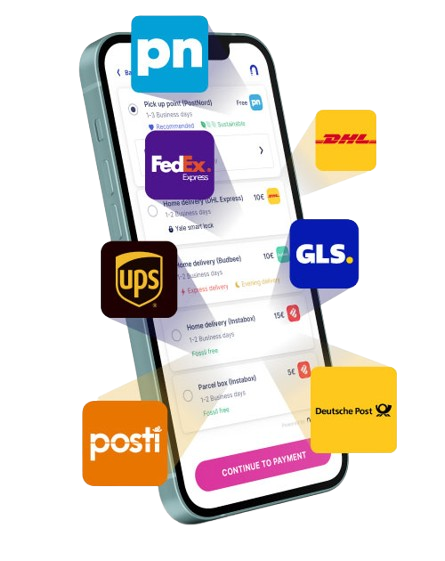
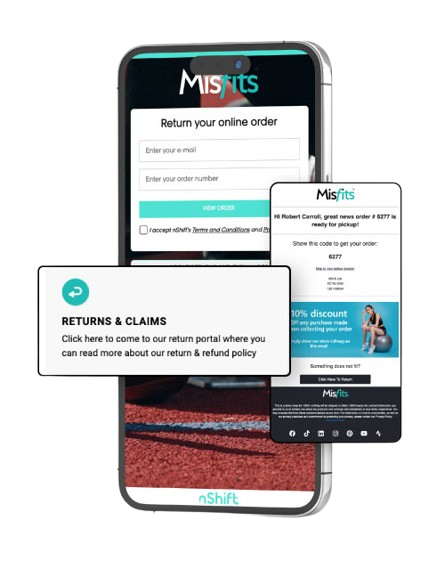
nShift Returns flow on a mobile device

Key capabilities

The capabilities that decide whether a returns platform reduces work or just moves it around, from a branded portal to a rules engine the business owns. 

Use cases

How returns management supports ecommerce, customer experience, international, warehouse, and finance teams across the post-purchase journey.

Implementation

How a returns platform fits the systems and teams already in the business, from markets and policies to ERP, WMS, and refund flows.

What is returns management?

Returns management is the process a business uses to handle the products customers send back, from the return request through to refund, exchange, restock, or resale. It covers the return policy, the customer-facing experience, the physical movement of goods, the financial outcome, and the data that comes out the other side. Handled well, it protects margin, gets stock back on sale sooner, and gives a hesitant shopper a reason to come back rather than walk.

  • A return is a second conversation with a customer who already trusted you once, so the strongest teams design returns with the care they give checkout.

  • It integrates with ERP, WMS, and ecommerce platforms.

  • It automates refunds and exchanges and routes each returned item to the right disposition.

  • It surfaces return reasons and most-returned products so teams fix the cause upstream.

For most online retailers, returns are a standing share of order volume rather than an exception, and in categories like fashion and consumer electronics that share is high enough to move the margin line on its own.

Talk to a returns management specialist:

At a glance

Returns management is sometimes called reverse logistics, but the two are not the same thing. Reverse logistics is the physical flow of goods back through the supply chain. Returns management is the wider process around that flow, including the return policy, the customer experience, the commercial decision, and the data.

The logistics team owns the carrier network, the routing rules, and the warehouse intake. The returns function owns the policy, the experience, the financial result, and the reporting. Both perform best when they work from one shared view of the same return. For the physical-flow detail, our guide to reverse logistics in ecommerce goes a level deeper.

Synonyms: returns management software, return management system, returns management platform, reverse logistics.


A branded self-service portal where the customer starts the return, not a generic carrier page.

A rules engine that decides what happens to each returned item, configured by the business. 

Automated refunds and exchanges, written back into connected ERP and ecommerce systems.

End-to-end visibility, so both the customer and the warehouse can see the return moving.

Analytics that feed return reasons back into product and purchasing decisions.

How returns management works

A return moves through the same sequence every time. How cleanly each stage passes to the next decides how fast and how cheap the whole thing is.

Step 1
Request and authorization. The customer starts the return and the business decides what is eligible, under what conditions, and through which channels.
Step 2
Return method and label. The customer chooses a return option and carrier, with label-less and drop-off options where they exist and a printed label when one is needed.
Step 3
Transit visibility. Once the parcel is moving, both the customer and the warehouse can see where it is, which removes status questions and shortens recovery cycles.
Step 4
Receiving, inspection, and disposition. The warehouse takes the item in, assesses its condition, and decides to restock, refurbish, resell, or recycle.
Step 5
Refund or exchange, plus reason data. The outcome is processed, an exchange is offered before a refund, and return reasons feed back into product and purchasing.

How to set up a returns process

icon-verified-partnerships
Define your markets and policies

Group countries that share a currency and a return policy into markets, and document return windows, reasons, and conditions by product category.

icon-verified-partnerships
Brand the self-service portal

Set the logo, colors, fonts, and languages so the return page matches your store, not a generic carrier page.

icon-verified-partnerships
Connect carriers and return options

Add the carriers and the drop-off, label-less, and in-store options you want to offer in each market.

icon-verified-partnerships
Set the rules

Configure eligibility, pre-approval, exchange-first flows, and disposition routing by market, category, and segment, without developer work.

icon-verified-partnerships
Connect refunds and the warehouse

Link refunds and credit notes to your ERP and ecommerce systems, and send warehouse updates so intake is visible ahead of each return wave.

icon-verified-partnerships
Test and go live

Run a return end to end in each market, check the customer emails and the refund write-back, then publish.

Business impact

Retained revenue

Retained
revenue

An exchange keeps revenue inside the business while a refund hands it back. A size or color swap offered at the point of request keeps would-be refunds as sales.

Lower cost per return

Lower cost
per return

Smarter routing, consolidation, and automated disposition reduce the handling and transport cost of every return, so stock is updated with a few clicks.

Loyalty & support load

Loyalty &
support load

A clean, predictable return tells customers the brand is easy to deal with, and visibility into each return removes the reason they call.

Risk & control

Risk &
control

Consistent policies, eligibility rules, and audit-ready records reduce disputes, while pattern detection limits serial returns and item switching.

What good returns management covers

A branded self-service portal and one configuration across markets

Customers start the return, choose a method, and track its progress without contacting support, on a page that shows the brand rather than a generic carrier page. A market is one or more countries that share a currency and a return policy and can support multiple languages, so the customer-facing experience stays consistent everywhere while the carriers, currencies, and rules underneath vary by country.

Use case: An online retailer runs one branded returns flow across Europe while routing each market to local carriers underneath.

Business impact: A consistent post-purchase experience and lower support load, without rebuilding returns per country.


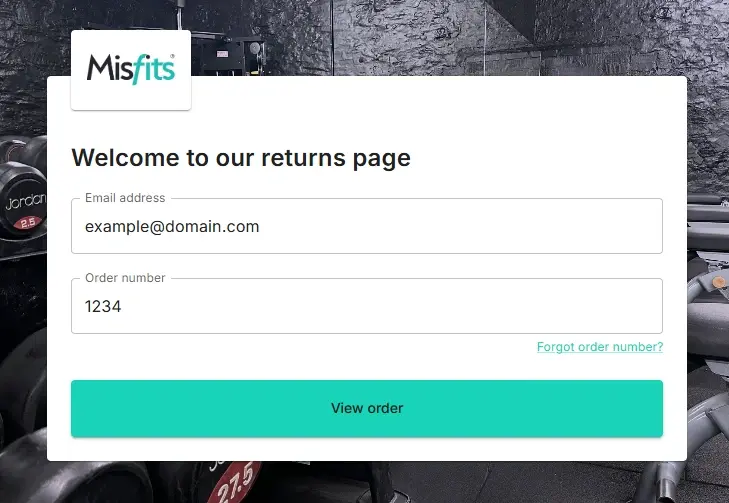
Customer starting a return in the nShift Returns self-service portal
The branded self-service portal where customers start a return.

A rules engine the business owns, with exchanges and reconversion

Return authorization, label generation, carrier selection, and disposition routing are configured by market, product category, and customer segment without developer work, and pre-approval rules control how much manual review a claim needs. The flow checks stock and offers an alternative size or color at the point of request, and smart rules act on customer behavior to optimize for that reconversion automatically.

Use case: A fashion retailer offers an exchange before a refund and pre-approves trusted segments to skip manual review.

Business impact: Revenue stays with the business by design, and manual review drops without losing control.

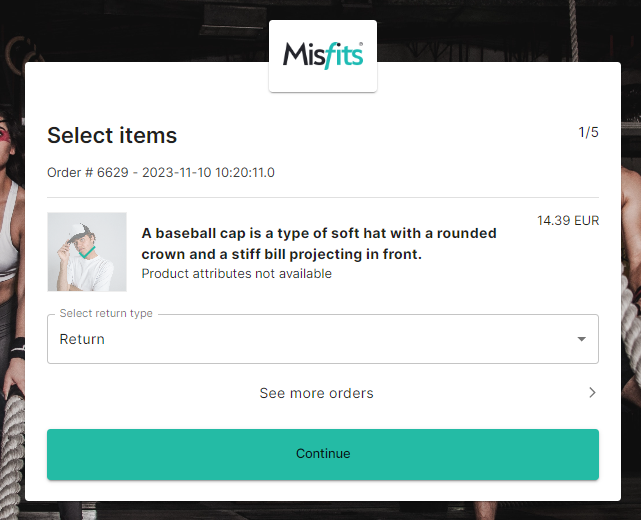
Choosing a return or exchange in the nShift Returns portal
Customers choose a return or an exchange before a refund.

Automated refunds and returns analytics

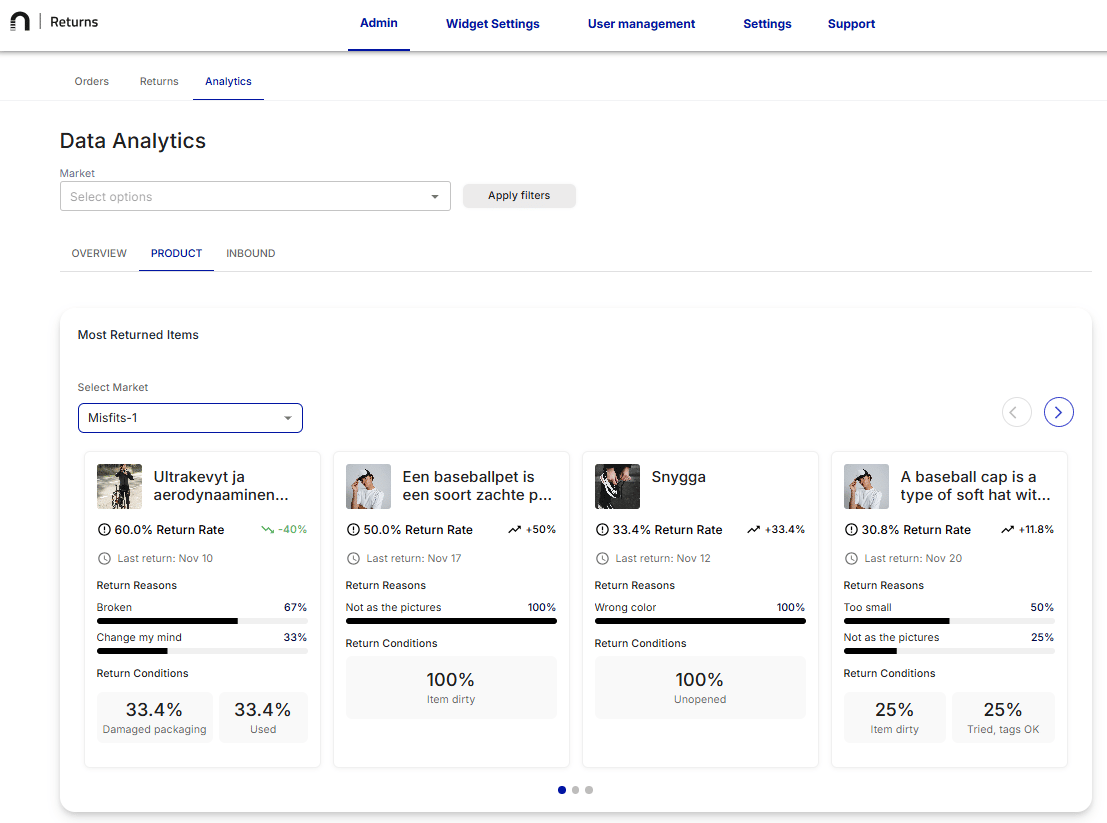
Refunds and credit notes are triggered automatically and written back into connected ERP or ecommerce systems, including partial refunds and original-shipping refunds where the policy allows. Reporting goes beyond volume to surface return reasons and score the most-returned products.

Use case: A team acts on returns reasons data to fix sizing and product-description issues upstream.

Business impact: Faster, accurate refunds and fewer returns at the source.

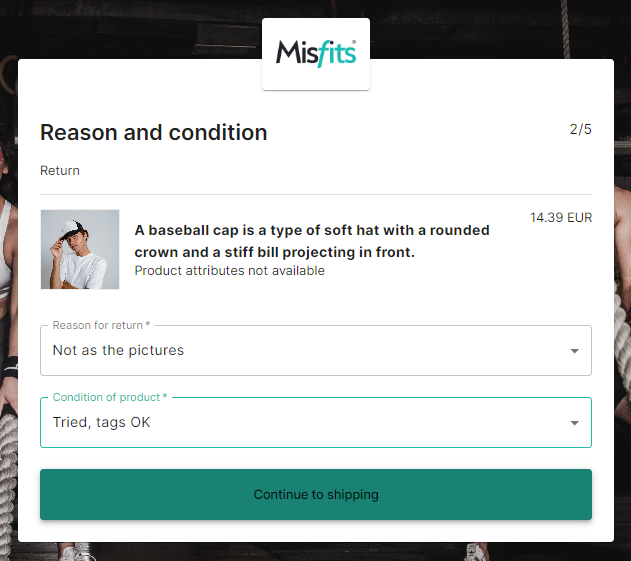
Selecting a reason for return in the nShift Returns portal
Structured return reasons feed the analytics.
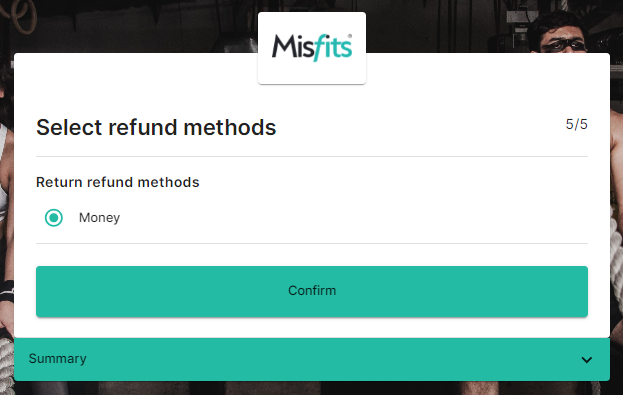
Refund confirmation in the nShift Returns portal
Refunds resolve automatically once the return is approved.

Advance warehouse visibility and carrier breadth

Through warehouse APIs, fulfillment teams see incoming returns before they arrive and provision for them, so returns are planned for rather than a surprise. Returns inherit the same network that carries the outbound order, which makes local routing in every market possible.

Use case: A warehouse team provisions for an inbound returns wave after a promotional peak instead of being caught out.

Business impact: For a buyer’s view of these capabilities, see what to look for in a returns platform and our quick guide to returns management software.


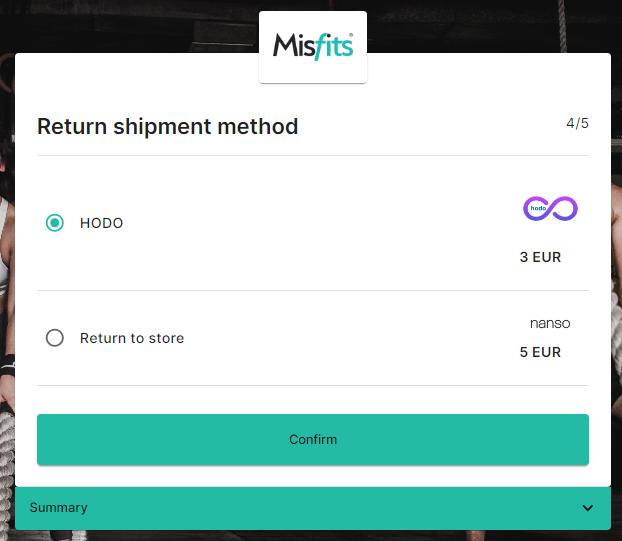
Choosing a return carrier and method in the nShift Returns portal
Customers pick a return carrier and method by market.

“Attractive return options are an important part of a good customer experience”

When it receives returns at the warehouse, Friluftsmagasinet registers them with a few clicks and uses the invoice number to identify the order in the return portal, so stock is updated right away and employees use a minimum of working time. The team also reports “a lot fewer calls regarding how to track and return their parcel.”

Use cases

Returns management supports different teams and sectors in different ways.
Ecommerce & retail
Ecommerce & retail
A branded portal, exchange-first flows, and in-store return options keep customers close and revenue in the business, with store credit offered alongside refunds.
Customer experience
Customer experience
Return tracking, proactive status notifications, and a consistent branded flow reduce friction and the support calls that come with returns, keeping shoppers confident.
International returns
Consolidating returns locally, using regional hubs, and authorizing local resale protects margin, supported by coverage across 1,000+ carriers and 190 countries.
Warehouse & fulfillment
Advance visibility of inbound returns, structured return reasons, and the option to route claims around the warehouse keep intake efficient and restocking accurate.
Commercial & finance
Returns shape unit economics, and visibility keeps them in control. One view of return rates, cost per return, recovery value, and write-offs ties returns to margin.
Returns & reverse logistics
The lead protecting margin after the sale uses disposition rules and local routing to recover stock value before handling cost accumulates across the network.
Ecommerce managers
Ecommerce managers
Minimize return-related churn with exchange-first flows and store credit that keep the customer shopping with the brand instead of leaving with a refund.
Customer experience leads
Keep the post-purchase experience on brand and predictable, so the return a customer remembers is an easy one that brings them back.

“We’ve made returns part of a seamless omnichannel customer experience with increased returns control and insights. What was a historical pain point for the company and our customers has been changed into something that adds real value.”

Robin Visser, Omni Channel Business Development Manager, Hunkemöller. The retailer moved 15% of its returns from return-to-warehouse to in-store across six European markets, creating more chances for assisted service, remarketing, and repurchase.

Implementation

Returns management has to work with the ERP, WMS, and ecommerce systems a business already runs, and the teams who own each one. The better that fit, the less it costs to put in place.

Implementation overview

Most retailers start by:

  1. Defining markets, return policies, and reasons

  2. Branding the self-service portal

  3. Connecting carriers and refund flows

  4. Configuring no-code rules by market, category, and segment


Because configuration is no-code, operations and customer experience teams can launch and adjust returns without waiting on development.

Time to value comes quickly through automated refunds and exchange-first flows that keep revenue in the business.

Prerequisites and stakeholders

  • Operations: warehouse intake, disposition rules, and exception workflows.

  • Customer experience: the branded portal, tracking, and proactive notifications.

  • Finance: refund and credit-note rules and reconciliation.

  • IT: integration approach, authentication, and data governance.

A clear owner for policy and a shared definition of the return event across those teams prevents the fragmented-data problem that makes returns hard to measure.

Data and integration needs

  • Refunds and credit notes write back into ERP and ecommerce platforms.

  • Warehouse updates flow through WMS integration so the warehouse can see and process returns.

  • Connecting returns to nShift Checkout offers the same delivery and drop-off options for returns that customers had when they bought.

  • Connecting to nShift Track carries visibility through the whole journey.


Most-returned-products analytics in the nShift Returns admin dashboard


Governance and risk checks

  • Serial returns, wardrobing, and item switching are measurable for high-volume retailers.

  • Pattern flags, tiered policies by segment, and pre-approval rules keep control without adding friction for the customers who play fair.

  • Eligibility rules and category-specific reasons keep the policy enforceable across markets.

  • Audit-ready return records and consistent policies reduce disputes and keep cross-border returns compliant.


Readiness checklist

  • Your markets and currencies are confirmed.

  • Your return policy and reasons by category are documented.

  • Your carrier coverage per market is in place.

  • Your refund and exchange rules are defined and approved.

  • Your ERP and WMS connections and the analytics you want to act on are ready.

Best practices and sustainability

Peak is when returns operations tend to break: volume spikes, temporary staff run intake, and small problems multiply fast. A few habits head that off, and most of them cut cost and emissions at the same time.

Best practices

Decide disposition earlier
Route on category, condition, and destination before the parcel reaches the warehouse, so it picks up less handling cost.

Standardize the customer layer, localize underneath
One branded experience in every market, while carriers, currencies, and rules vary by country.

Lead with exchange, not refund
Offer an alternative at the moment of the request. Every exchange is revenue kept rather than handed back.

Act on reason data and measure the right numbers
Track cost per return, recovery value, and repeat-purchase rate, and fix recurring causes upstream. Understanding the costs in reverse logistics starts with seeing them in one place.

Returns and sustainability

Disposition keeps value in, waste out
Every item restocked, refurbished, or resold instead of scrapped keeps value in the business and waste out of landfill.

Local routing cuts transport
Routing returns locally and consolidating them reduces the transport behind reverse logistics.

Returns count in your carbon picture
Return shipments are part of a retailer’s Scope 3 transport emissions, so capturing them gives a complete picture.

Reporting that ties it together
nShift Returns connects to sustainability reporting so emissions from return journeys feed the same calculations as outbound delivery. See reverse logistics and sustainability.

Returns and EU regulation

EU rules are tightening around how returns are handled, from consumer withdrawal rights to the ban on destroying unsold goods. A consistent, logged returns process is what keeps you compliant and audit-ready across every market you sell in.

Get the EU withdrawal playbook →

Read about the EU ban on destroying unsold goods →

leadspace-wismo-tracking_1782671756

What changes when returns are connected

You can handle returns with a free app that emails a label, and for a small catalog in one country that holds up fine. The strain shows once returns cross a border, or finance starts asking why the category's margin keeps slipping, or a January surge hits the warehouse with no warning. That is where a returns app and a connected returns operation stop being the same thing.

Manual or disconnected returns

A connected returns platform

Manual or disconnected returns

A connected returns platform

Customer experience
Generic carrier pages, varies by market
One branded, self-service flow everywhere
Refunds and exchanges
Manual refunds, refund-by-default
Automated refunds, exchange offered first
Visibility
Blind once the parcel is dropped off
Tracked end to end, for customer and warehouse
Cross-border
Ship everything back, margin lost
Local routing, consolidation, local resale
Data
Fragmented across teams
One view of reasons, cost, and recovery
Cost and effort
Manual handling, high touch
Routed and automated by rules the business owns

How returns management works for:

Ecommerce
retailers

Ecommerce retailers use returns management to keep the experience on brand and convert refunds into exchanges, protecting both loyalty and revenue from the same flow. nShift has found that retailers who digitize returns can convert a meaningful share into exchanges rather than refunds. The refund effect explains the mechanism in full.

Cross-border &
high-volume brands

Cross-border brands make returns consistent across markets while routing locally underneath, so international growth does not mean rebuilding returns country by country. High-volume and 3PL operations keep returns from disrupting the warehouse, with advance visibility of inbound returns and structured intake that temporary staff can run.

Fashion &
high-return categories

Fashion and high-return categories see the largest share of orders come back, so the exchange flow and reason data do the most work, turning size and fit returns into kept sales and into product fixes upstream. Returns also concentrate after promotional peaks and into January; our post-peak returns guide maps that out.

Frequently asked questions about returns management

Q: What is returns management?

A: Returns management is the process a business uses to handle products customers send back, covering the return request, authorization, return shipping, inspection, disposition, and the refund or exchange. Done well, it lowers the cost per return, recovers stock value faster, and protects customer loyalty.

Q: What is the difference between returns management and reverse logistics?

A: Reverse logistics is the physical movement of returned goods back through the supply chain. Returns management is the broader process around that movement, including the return policy, the customer experience, the commercial outcome, and the data. Reverse logistics is one part of returns management, not a synonym for it.

Q: What is returns management in supply chain?

A: In a supply chain context, returns management is the function that brings returned products back into inventory, recovery, or disposal in a controlled way, and feeds the resulting data back into purchasing, product, and carrier decisions. It connects the customer-facing return to warehouse intake and finance.

Q: How can retailers reduce returns?

A: The most effective lever is acting on return reason data to fix the causes, such as inconsistent sizing or unclear product information. Clear eligibility rules, accurate product detail, and an exchange-first flow that keeps the sale all reduce the share of orders that turn into refunds.

Q: What should I look for in returns management software?

A: Look for a branded self-service portal, one configuration across markets, a rules engine the business controls, an exchange flow with stock checks, automated refunds that write back to your ERP, analytics on return reasons and most-returned products, and advance visibility of inbound returns for the warehouse.

Q: How do I set up a returns process?

A: Start by defining your markets and return policies, then brand a self-service portal, connect carriers and refund flows, and configure rules by market, category, and segment. Test a return end to end in each market, check the customer emails and the refund write-back, then go live.

Q: How do I handle cross-border returns?

A: Group countries into markets that share a currency and a return policy, route each market to local carriers, and keep one consistent, logged policy across them. Consistent records keep cross-border returns compliant and audit-ready as EU reporting expectations grow.

Recap

Returns are one of the few parts of the post-purchase experience a retailer can improve without paying again to win the customer back.

The work is steady more than dramatic: a branded return the customer trusts, an exchange offered before a refund, a warehouse that sees returns coming, and one policy that holds across markets.

None of it needs a year-long program. Most teams begin with the portal in a single market, test the exchange flow on real returns, and widen from there.

If a second opinion on your markets and carriers would help, that is what the demo is for.

The nShift platform

nShift treats returns as the closing stretch of one post-purchase experience that runs from checkout to tracking to returns, rather than a separate system stitched on at the end. The same delivery choice logic, carrier network, and data layer that carry the outbound order also carry the return.

nShift Returns gives customers a branded, self-service portal, runs the operation on rules the business owns, automates refunds and exchanges, and surfaces the analytics that turn return data into fewer returns. It sits inside the wider nShift delivery management platform, alongside Checkout, Track, and the carrier network.

See how nShift Returns works →