What is a transport management system (TMS)?
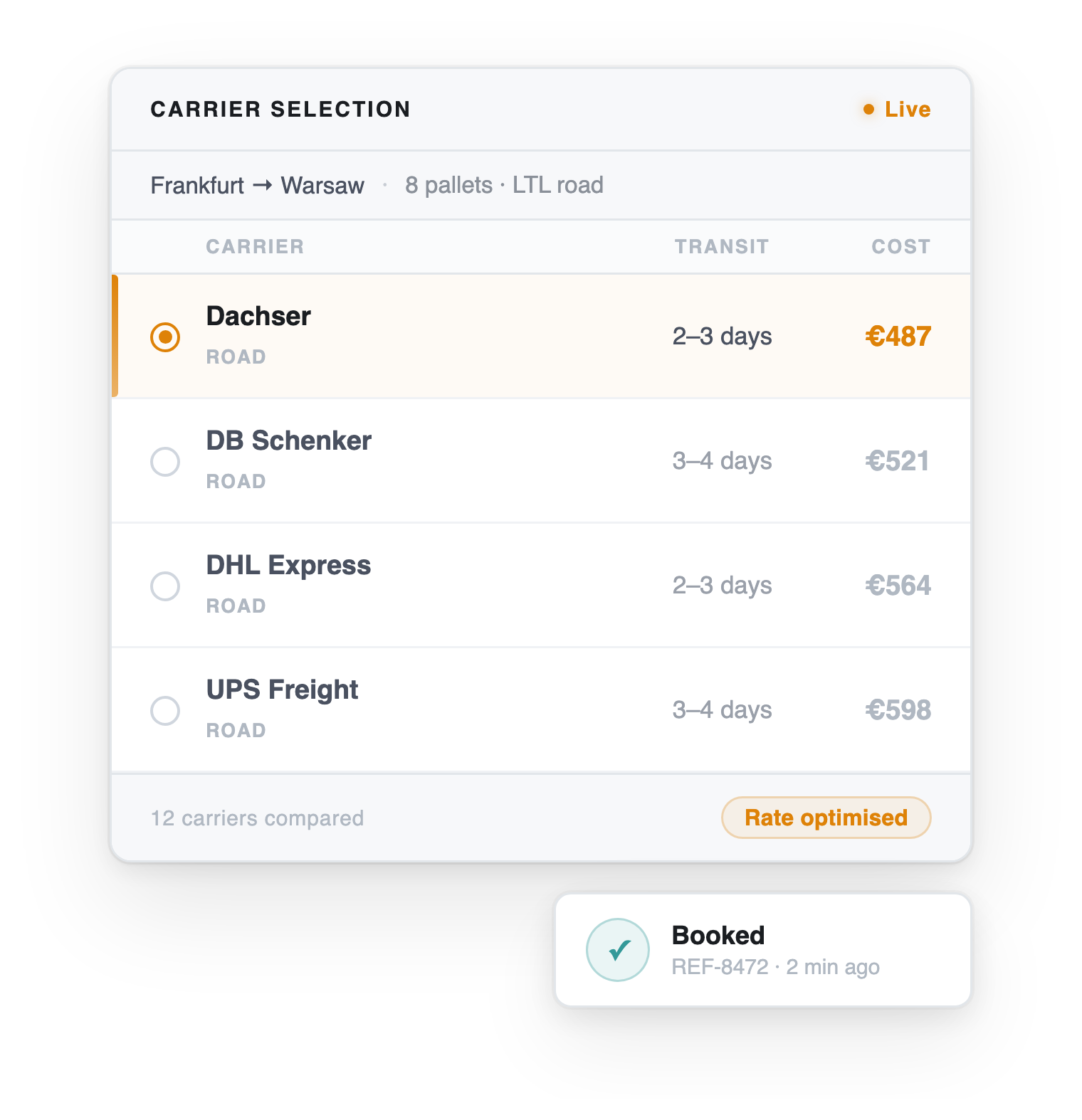
A transport management system (TMS, also written transportation management system) is software that helps businesses plan, book, execute, and track freight shipments across carriers and transport modes. It replaces manual booking through separate carrier portals, email, or phone with a centralized platform that gives operations, finance, and management a shared view of transport activity, costs, and performance. For the step-by-step version, read
how a TMS works.
What is the difference between a TMS platform and a TMS solution?
Gartner defines a TMS platform as pre-built software with standardized features: quick to deploy and suited to businesses with established logistics needs. A TMS solution is tailored to specific business processes, offering more flexibility but requiring significantly more time and resource to configure. nShift TMS is designed to deliver both: modular and fast to stand up, with the freight depth to handle complex, multi-site, multi-carrier operations.
How long does it take to implement nShift TMS?
Core booking, labels, carrier connectivity, and tracking can be live within weeks. Additional modules are layered in based on your priorities. There is no requirement to deploy everything at once.
Can nShift TMS handle multi-modal freight?
Yes. nShift TMS supports road, sea, and air transport. You can book and track shipments across modes from the same platform, consolidate consignments, and manage goods-level detail for complex routing.
How does nShift TMS pricing work?
nShift TMS is priced per shipment with a modular structure. You pay for the Core module as your base, then add Cost, Collaborate, Emissions, or Report modules based on what your operation needs. No forced bundles or hidden per-feature charges.
Does nShift TMS integrate with ERP and WMS systems?
Yes. Standard integrations are included in the Core module. nShift TMS connects to ERP systems like SAP and IFS, and to WMS platforms, without requiring major custom development. API access is available for additional workflow automation.
What is the Collaborate module?
Collaborate is a module unique to nShift TMS that keeps shipments active after booking. You can update weights, pickup times, and goods details throughout the transport lifecycle. External parties can enrich shipment data through a secure link without needing a login. In most TMS or book-and-print systems, the shipment process ends at the label. With Collaborate, data stays live through delivery and beyond.
Who is nShift TMS built for?
nShift TMS is designed for manufacturers, distributors, wholesalers, and B2B shippers who manage freight across multiple carriers, sites, or transport modes. It is built for companies that think in shipments (pallets, full loads, LTL, consolidations), not individual parcels.
Can I manage inbound transport with nShift TMS?
Yes. Inbound transport management is built into the Core module. You can invite suppliers to book shipments using your negotiated carrier contracts, giving you control over inbound logistics without requiring nShift to onboard each supplier.