Two days in Amsterdam, hundreds of conversations at the stand, and an agentic commerce-themed stage session that reframed how we think about the next few years of delivery.
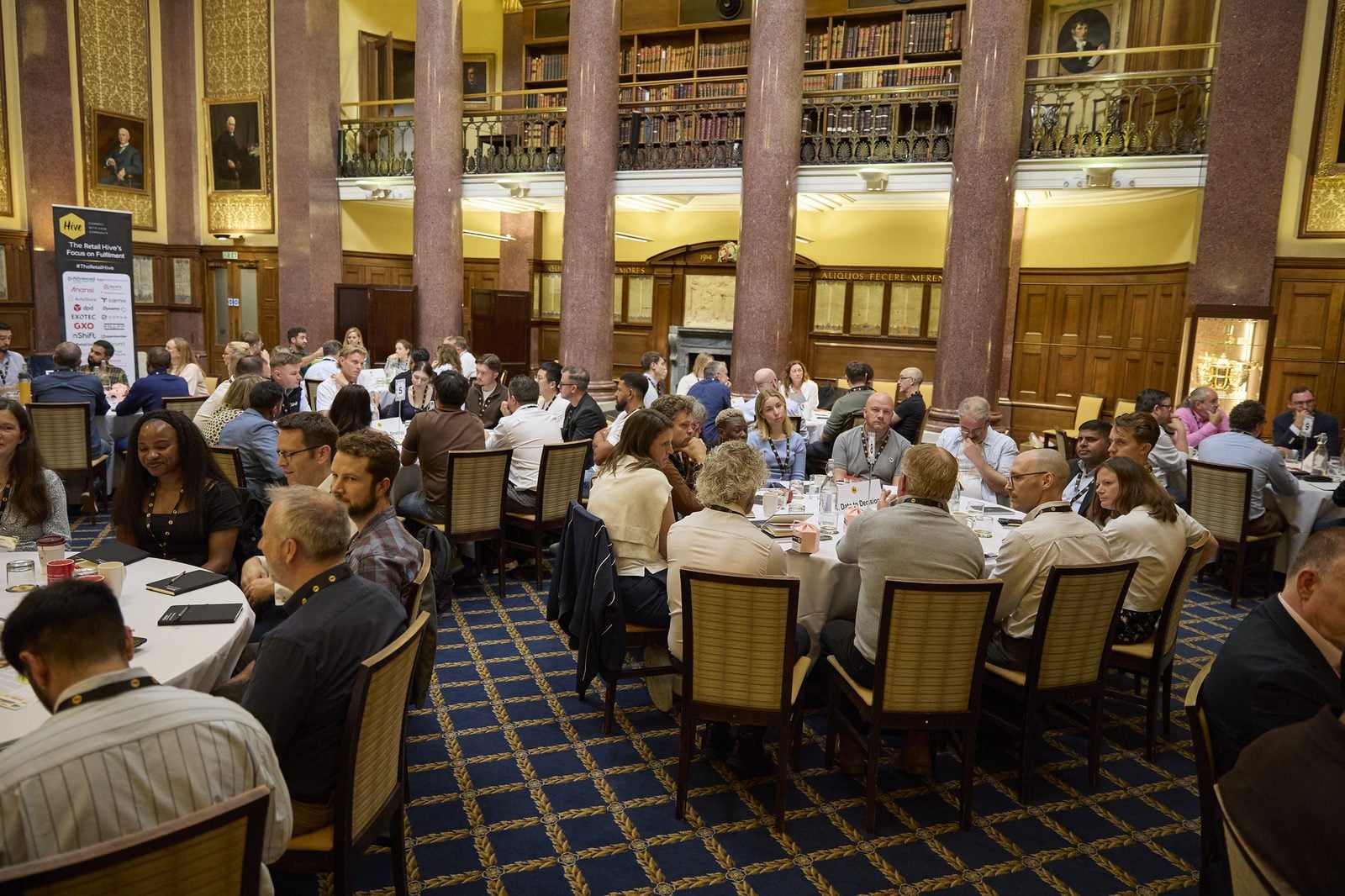
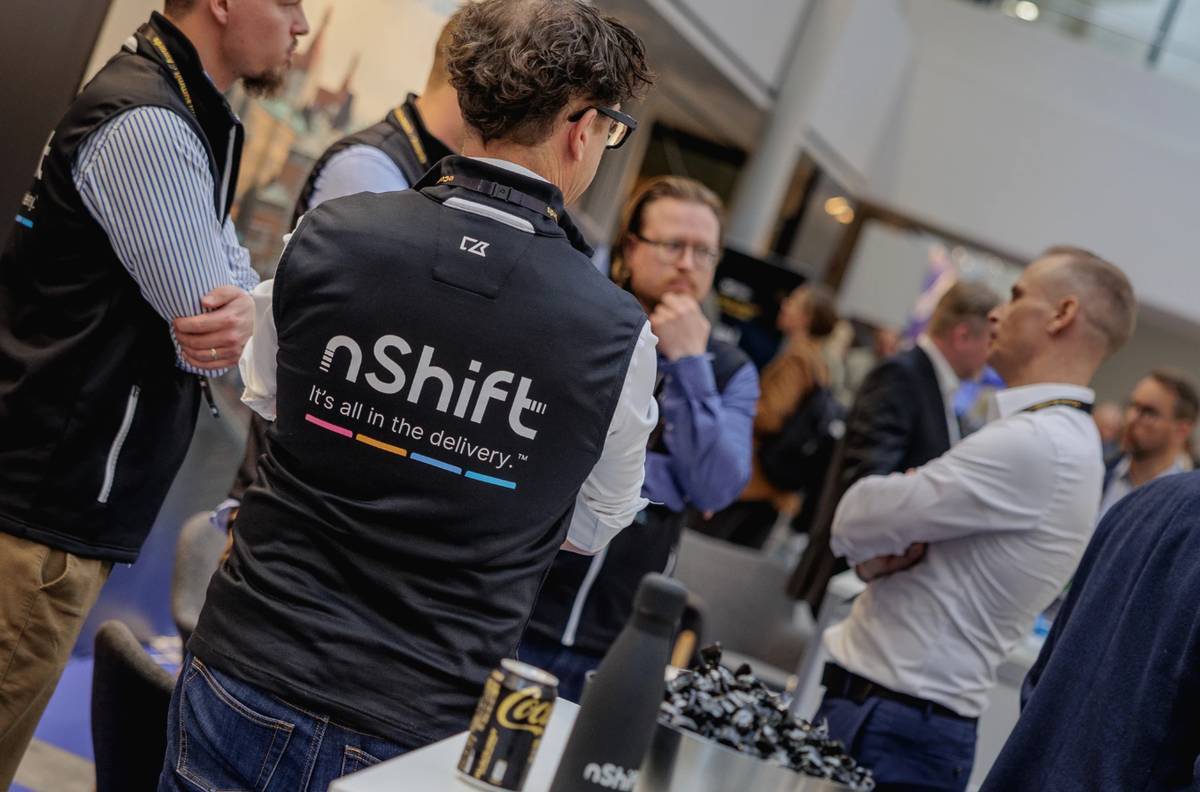
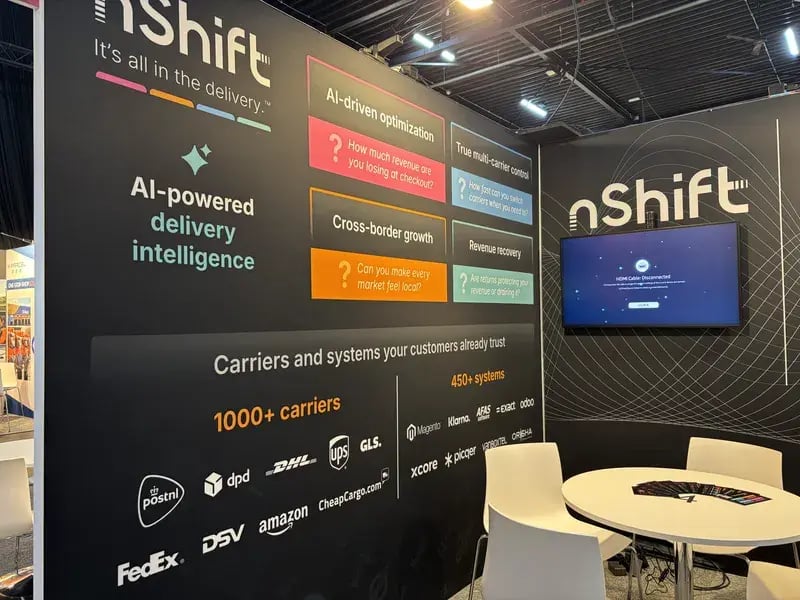
nShift spent both days of DELIVER Europe at Stand B39 in the TAETS Event Park, with hundreds of conversations across the two days.
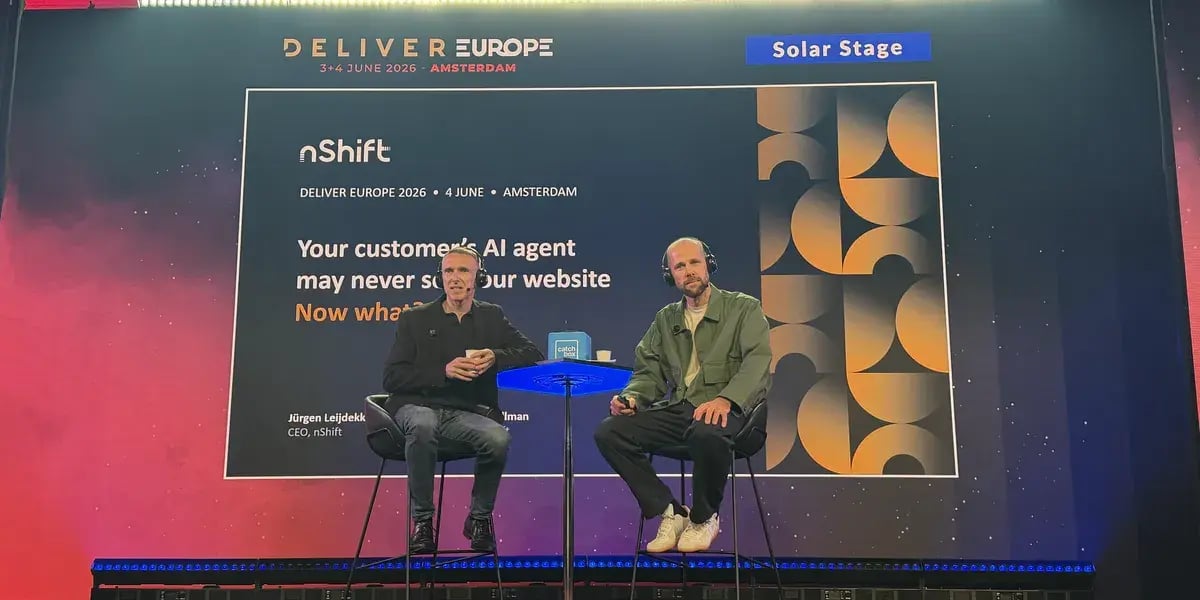
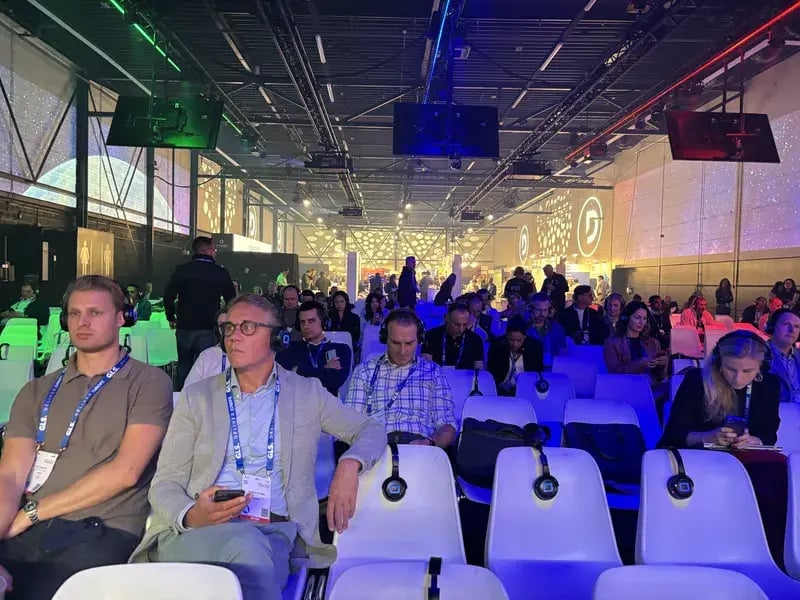
On Thursday morning, our CEO Jürgen Leijdekker and I took the Solar Stage with a deliberately uncomfortable question: "Your customer's AI agent may never see your website. Now what?"
The short version: Agentic commerce moves the buying decision off your website and into AI agents that read facts, not marketing. When an agent compares product, price, and delivery as one package, the delivery offer at checkout becomes the deciding factor. The retailers getting ready are making carriers and delivery promises explicit, then building a public record of good delivery that the next generation of models will learn from.
"Another session about AI, it's very hard to get away from it nowadays," Jürgen admitted at the start. Fair. But the argument underneath was specific, and it changes where retailers should spend their attention.
What is agentic commerce, and why does it change online retail?
Agentic commerce is when an AI agent discovers, compares, and buys on a shopper's behalf. The shopper sets a goal (buy a washing machine under 800 euros, delivered by Friday, with a good return policy) and the agent goes off to find the option that fits. It reads facts and data, not banners.
For about 25 years, the ecommerce funnel has been built on human psychology: SEO, paid search, social ads, influencers, homepage UX, A/B testing, countdown timers. Shoppers like us are a bit lazy, easily distracted, and drawn to the shiny object, and the funnel is built to work on exactly that. Delivery sat below the line, handled once the deal was done. "It's a footnote," Jürgen said. "An agent does not work that way."
How do AI agents shop differently from humans?
An agent reads every link in a result, where a human typically stops at the top one. About a third of human clicks go to the first result; an agent is far more patient and data-driven, weighing specifications and delivery promises across the options. It also arrives with opinions already formed, because the model behind it learned from reviews, forums, and everything published about your brand before its last training cut-off.
That last point caught the room. The models powering agents are not neutral, they come preloaded with a view. Jürgen's line for it stuck with me: you can never make a first impression on an agent, because it already has one.
So the funnel changes shape: discovery is shifting from search to agents, and Google is already moving AI ahead of the classic results page. The agent drops to checkout pre-qualified, which is why nShift is already seeing leads from agentic search convert at roughly twice the rate of traditional organic search. The long campaign of small battles collapses into one moment. The way I put it on stage: you now win and lose at the checkout.
Why does delivery become the differentiating factor?
When an agent assesses product, price, and delivery as a single package, delivery is often the only variable you can still move. Most products have a close substitute somewhere, so the way you get the order to the customer is where you separate yourself in the agent's comparison.
Jürgen offered a useful mental image: a website "as boring as it gets, black and white, facts and figures," that no human would ever buy from because it has no shine, but that an agent finds richly informative. Clear, specific delivery choice at checkout is exactly the kind of fact an agent can act on.
How do you make your store agent-ready?
My homework for retailers, the part you can act on in the near-term:
- Lead with carriers at checkout. Carriers are a bit like food: people have opinions about them. One large brand we met at the show was shipping globally on a single carrier and came to nShift precisely because not every customer likes that carrier. Making carrier choice visible gives the agent something concrete to weigh, and it shares accountability: when a customer picks the carrier, a delivery problem belongs to the carrier, not only to you.
- Be specific about the promise. Estimated delivery date, pickup point or locker, room of choice, time slots. Vague promises give an agent nothing to act on, and accuracy beats optimism. A date you keep is worth more than a fast one you miss.
- Build the proof base. Deliver well, and let it show up in reviews, forums, and social posts, the places agents go for facts. Earn your way into the next model's training data and it will arrive already knowing you are a good place to buy. That turns into a flywheel: good delivery earns reviews, reviews train agents to recommend you, and more orders give you more chances to deliver well. The reverse runs just as fast, since people talk about bad experiences more readily than good ones.
There is also something you can do in the next five minutes: open your preferred AI assistant, name two competitors, and ask how AI-friendly your site is by comparison. I pointed the room to a recent Google finding that only 40% of European retailers are fully machine-readable, not even optimized, just readable by a bot. For years retailers worked to keep bots out and stop price scraping. That logic flips when the bot is the buyer.
The moments that build the most goodwill are the recoveries. When something goes wrong and you handle it well, customers appreciate it more than a routine "your package is on the way." nShift sees this in practice: tracking updates that carry a discount voucher with a delay notification convert better than standard vouchers, and a strong returns experience does the same job for retention.
Watch the full nShift session @ DELIVER Europe:
What were retailers actually asking on the show floor?
The same subjects kept surfacing across the meetings and conversations we had at the stand: carrier flexibility, cross-border growth, and returns.
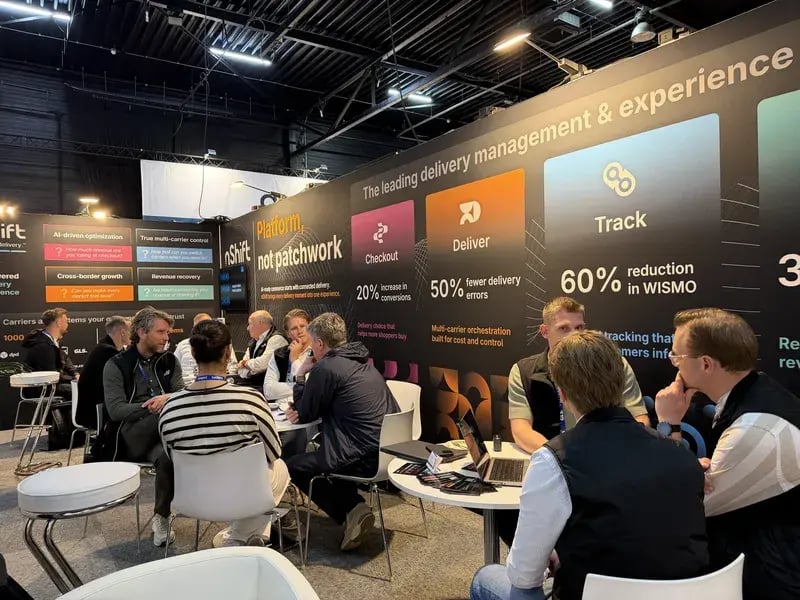
Carrier flexibility. Joran Veger spent the days in retailer conversations and came away with a clear read: demand for carrier flexibility is higher than ever, the right mix of carriers, the ability to enter new markets, and room to scale without rebuilding everything from scratch. What surprised him most was how many companies are still doing this without a dedicated delivery management partner. The businesses that have solved it can move quickly. Bauhaus configured all its carriers within 48 hours, and Proshop absorbed a 300% order surge without disruption. The recurring question across the floor: how fast can you switch carriers when you need to?
Cross-border growth. Luc Altorf's takeaway was that cross-border is more relevant than ever, and retailers want sustainable ways to sell outside their home market. The ones moving forward, he noted, are brave enough to rethink their logistics operating model rather than bolt new markets onto the old one. Jeroen Terheggen heard the same theme: "Customers want to go for a multi-carrier, multi-country strategy. They want to ship from one warehouse to multiple warehouses and reach consumers all over the globe. It's all part of one delivery system that nShift can provide." Making every market feel local, with local carriers, expectations, and returns, is what earns trust from customers who have never heard of your brand. Stenströms grew international shipments by 153% on one platform.
Returns. By Greg Mannix's account, returns were the topic on everyone's lips. Handled well, a return protects revenue and retention at the same time. Hunkemöller increased in-store returns by 15% versus sending them back to the warehouse, turning each one into a repurchase opportunity rather than a flat refund.
These results, alongside Flying Tiger Copenhagen's 20% increase in conversions after improving PUDO delivery choice and ICANIWILL's 50% cut in delivery-related customer queries, are the kind of public proof the next generation of agents will train on.
What we took home from Amsterdam
Delivery has moved to the front of the buying decision, for human shoppers today and AI agents next. The businesses best placed to win are building the record now: clear delivery choice, accurate promises, a tracking experience that handles the bad days gracefully, a returns process worth repeating, and the carrier performance to back all of it. nShift connects those moments from checkout to doorstep to returns on one platform.
The note I closed the session on: the agent may not see your website, but it will find proof of your delivery experience. Make sure it likes what it sees.
Want to see what an agent-ready checkout looks like for your store? Bring us the delivery promise you want to stand behind, and we will show you how to make it visible to customers and to the agents shopping for them. Book a demo with the nShift team.