
The basket is full, the delivery slot works, and the shopper is one tap from paying. Then they scroll off to find the returns policy, because they want to know what happens if the dress arrives and the fit is wrong.
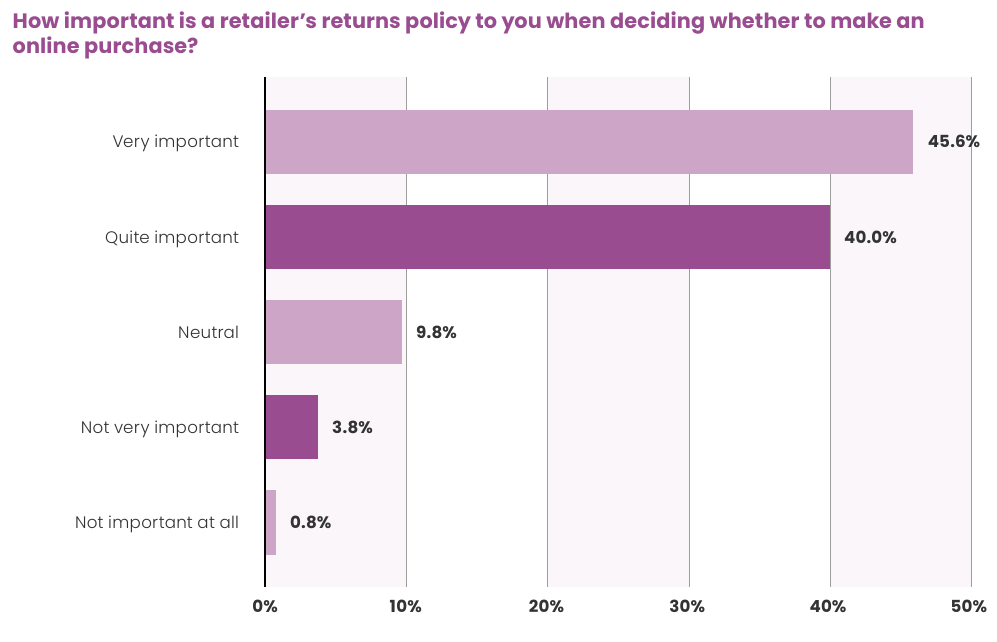
New research from IMRG and nShift puts a number on that pause. In The Ecommerce Returns Opportunity, a survey of 1,000 UK consumers run in April 2026, 85.6% say a retailer's returns policy is important when deciding whether to buy online. Nearly half, 45.6%, call it very important. The returns policy has moved into the basket, next to price and delivery choice, and it's helping decide the sale.
"Returns are no longer just a cost of doing business; they are a defining moment in the customer relationship," Jyo Saikia, Product Specialist Director at nShift.
The report covers what consumers expect from returns in 2026: how policies influence conversion, when return charges feel fair, what a poor experience does to repeat purchase, and where exchanges recover revenue that refunds give away. Here's what stood out, and what to do with it.
When a returns fee reads as fair
Free returns still pull hard, with 48.3% of consumers rating them very important when choosing where to shop and another 37.4% calling them quite important. On the other side of the ledger, 26.3% actively avoid retailers that charge for returns, and a further 40.9% are less likely to shop with them.
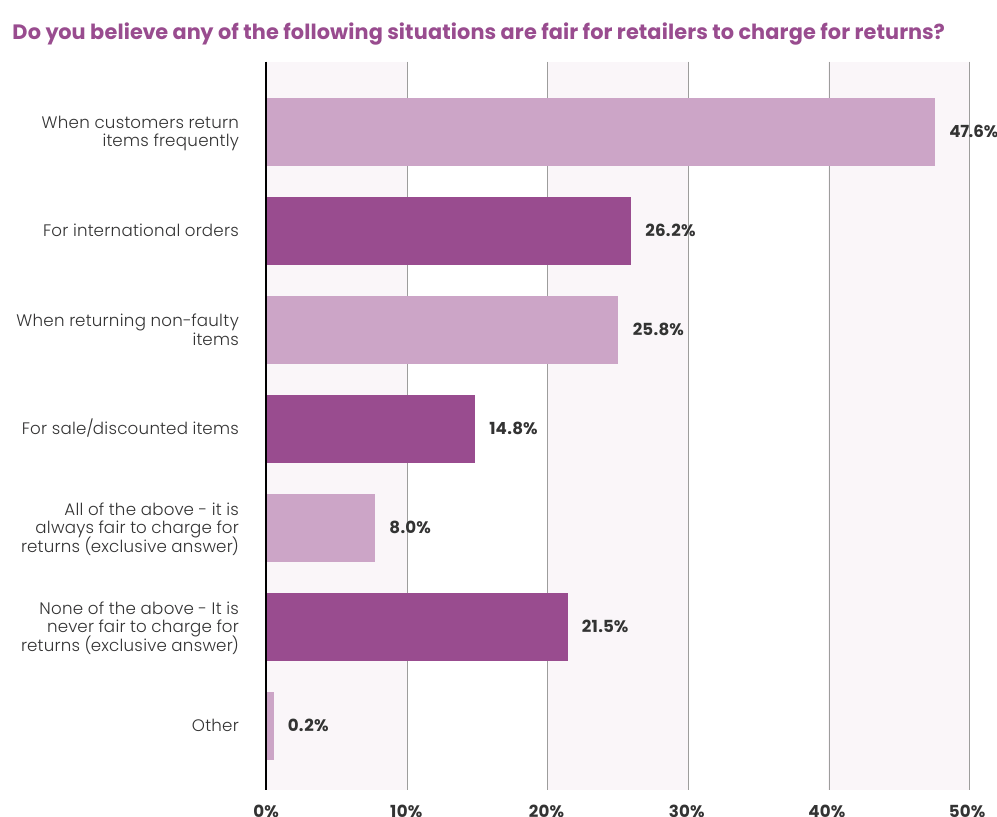
Charging does protect margin on the single order, and with fulfillment costs where they are, plenty of retailers have reached for it. The trouble starts when the fee is blunt. Consumers accept charges when the situation reads as fair: 47.6% think a fee is fair for frequent returners, 26.2% for international orders, and 25.8% for non-faulty items. A stubborn 21.5% say charging is never fair, so no policy pleases everyone, but the pattern in the data is proportionality: shoppers will wear a fee that fits the situation and resent one applied across the board.
Getting there takes rules: a faulty item should never cost the customer anything, a first-time shopper is a different case from someone who orders five sizes with three coming back, and a cross-border return carries a different cost from a domestic one. nShift Returns lets retailers build that logic into the return flow itself, so the policy customers read before buying is the policy the portal applies after, market by market and case by case.
State it all before checkout: the return window, the refund timing, the exchange options, any charge and the reason it exists. Rules that only surface after payment feel like a trap, even when they're reasonable.
A poor return follows the customer to their next order
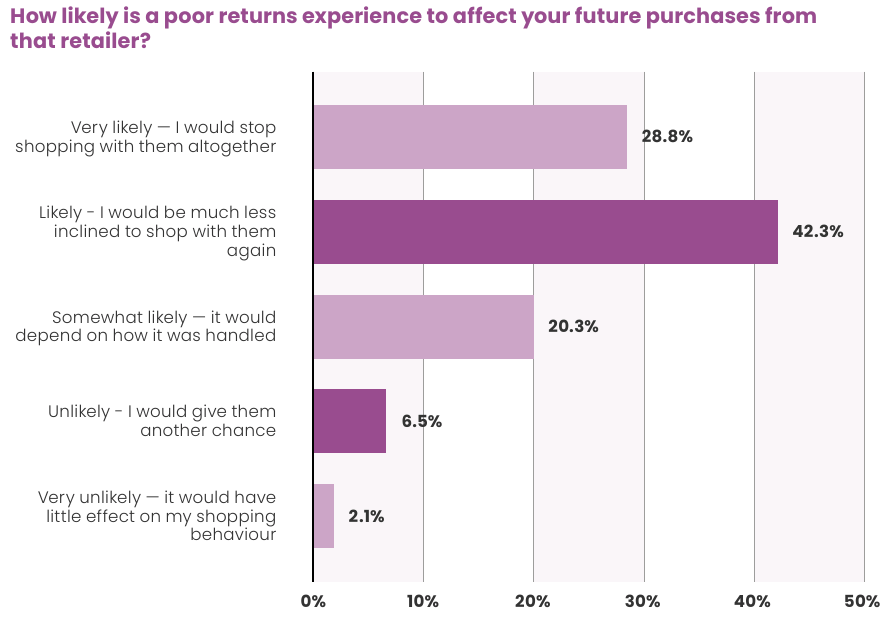
A bad return changes how the customer shops with you afterwards: 42.3% say a poor returns experience would leave them much less inclined to shop with that retailer again, and 28.8% would stop altogether. A further 20.3% say it depends on how the situation is handled, which is the group good communication wins back.
The retailer sees the return arrive at the warehouse and books the processing cost. The lost second order never appears in any report, and it's usually the bigger number.
Consumers are specific about speed: 47.4% expect starting a return to take one to three minutes, and 30.1% will accept three to five if the steps stay clear. A branded self-service portal covers that bar, keeps the customer informed while the parcel travels back, and answers "where is my refund?" before it becomes a support ticket.
Two thirds of shoppers will take an exchange if you offer one in time
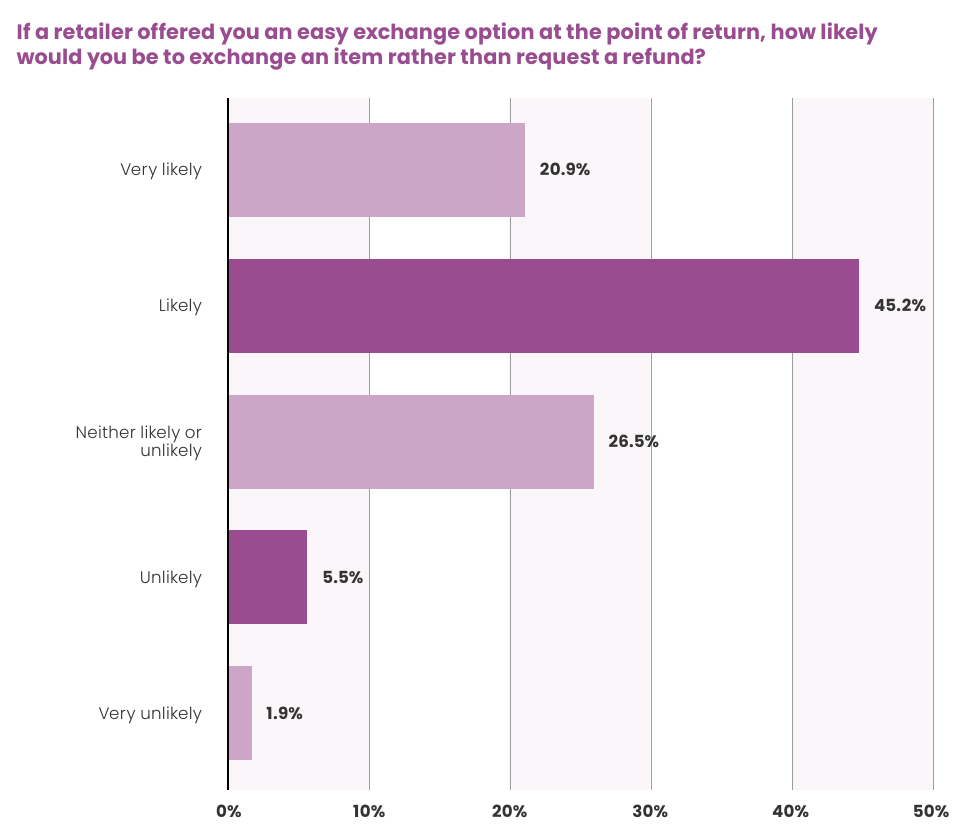
66.1% of consumers would be likely or very likely to accept an exchange offered at the point of return instead of requesting a refund, and no other number in the report carries more revenue.
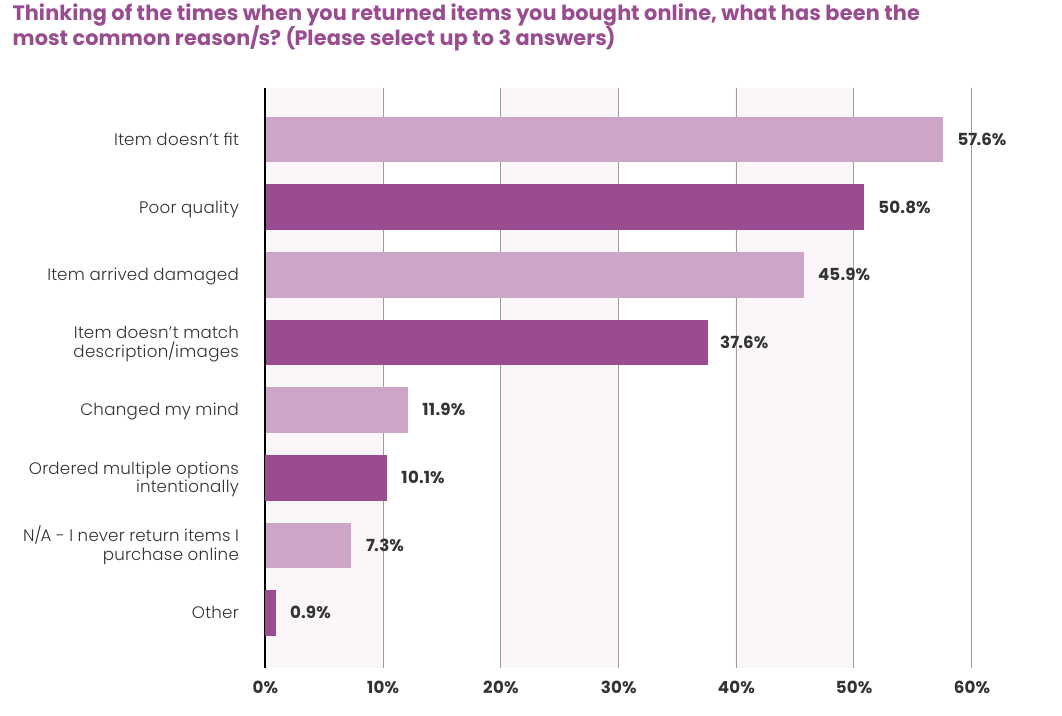
Look at it beside the top return reason: fit leads at 57.6%, ahead of poor quality at 50.8% and items arriving damaged at 45.9%. A customer returning shoes because the size is wrong still wants the shoes, one size along, and a good exchange flow keeps that purchase alive. nShift Returns customers typically convert 30% of returns to exchanges, revenue that a refund-first flow hands back by default.
Most return journeys still route straight to the refund because it's the easiest process to build. The report makes the case for asking one question first: can this purchase still be solved? Offer the right size, the other color, the alternative product with stronger reviews. Refund only when the answer is genuinely no.
"The best return journey does not ask, 'How do we process this refund?' It asks, 'Can we still solve the customer's original problem?'" - Frida Wikingsson, Product Manager at nShift.
Denied returns follow the same logic. 61% of consumers expect a clear explanation of the decision, 51.3% expect the chance to raise it with customer service, and 46% expect a quick alternative such as credit or an exchange. A refusal delivered with an explanation and an alternative can keep the relationship, which is worth the effort when 30.1% of consumers say they would stop shopping with a retailer after a denied return.
The store is a second chance at the sale
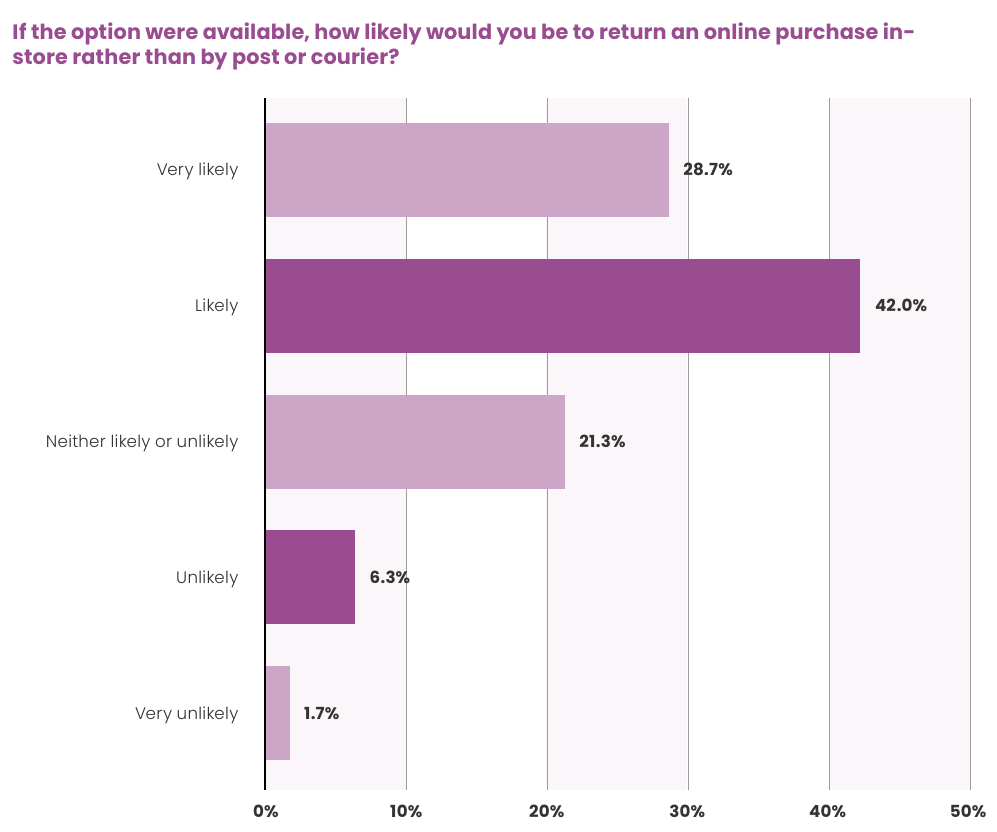
More than 70% of consumers would be likely or very likely to return an online purchase in-store rather than by post if the option existed. For retailers with a physical estate, that's a returns channel where a person can fix the problem on the spot, offer the alternative, and send the customer out with a bag instead of a receipt.
Hunkemöller built its returns experience around that logic with nShift Returns, replacing printed labels with a fully digital flow across its European markets. Since going live, the retailer has seen a 15% shift from return-to-warehouse to in-store returns, each one an opportunity for assisted service, remarketing, and repurchase.
The clearest feedback arrives with the parcel
Every completed return form is feedback from a customer who put money down, and the data is more honest than most teams assume: 58.4% of consumers always select the most accurate return reason, and another 21.8% pick the closest match available.
Read the reasons as signals: fit problems at 57.6% point at sizing guidance, damage at 45.9% points at packaging, handling, or a carrier conversation, and "doesn't match the description" at 37.6% points at product content that oversells or underspecifies. Each fix belongs to a different team, which is why the return reason field deserves better than a bureaucratic dropdown built for the warehouse.
"The return is often the first honest audit of the product page, the delivery promise and the customer experience," - Jyo Saikia, Product Specialist Director at nShift.
Timing the follow-up helps too: 63% of consumers are most willing to complete a returns survey once the refund has landed and the process is complete, and just 3.1% would only respond when something went wrong. Ask at the right moment and the feedback represents the whole customer base, quiet majority included. Fashion retailer Quiz runs this loop with nShift Returns, automating each step of the reverse-logistics journey and keeping customers updated in real time while the return travels.
For the wider discipline of running returns as a proper operation, our returns management guide goes deeper on process, software criteria, and cost control.
Get the full picture
The report covers more than fits in one article: how consumers rate the post-purchase experience overall, what they expect after a denied refund, and the full breakdown of fair-charge scenarios by situation.
Download The Ecommerce Returns Opportunity for the complete data.
Watch nShift's on-demand webinar on returns to see how retailers use delivery and returns insight to improve revenue and customer satisfaction across the whole delivery journey.