
Customers notice delivery personalization when the choice on the page feels right straight away. The timing fits. The price makes sense. The pickup option is relevant. The delivery promise feels credible. Delivery stops feeling like a formality and starts helping the order close.
FLOYD.no wanted a checkout flexible enough to "Floydify" the customer journey. Pikkuvihreä uses rule sets to trigger the right delivery methods for each customer and shopping cart. Those examples show why delivery deserves a bigger place in personalization strategy. The gains are visible to the customer and manageable for the merchant.
That is where delivery personalization becomes commercially useful, helping checkout feel more relevant without turning it into a science project.
Direct answer:
What is delivery personalization in ecommerce?
Delivery personalization means showing the delivery options, prices, timings, and pickup choices that fit the order, the location, and the market. Done well, it makes checkout clearer for the customer and gives the merchant more control over what appears, when it appears, and how it supports conversion.
At-a-glance:
Key results from nShift customers
- FLOYD.no chose a flexible checkout setup that could extend the brand experience into delivery choice.
- Pikkuvihreä uses rule-based delivery logic to match methods to different customers and cart combinations.
- VITA offers 30-minute click-and-collect and next-day delivery, showing how delivery promises can be personalized by urgency and method.
- RevolutionRace supports localized delivery choice across 35 countries, 18 webshops, and 11 languages.
- Dermosil can add carriers and test service changes directly in checkout.
Why should personalization extend to delivery?
Personalization should extend to delivery because it is one of the last decisions before purchase. Customers are already weighing speed, convenience, confidence, and cost. Delivery choice is where those priorities become visible. A personalized product recommendation can inspire interest. A personalized delivery offer can help the order close.
Pondres makes the operating case clear. Marcel Winkelman, CEO, Pondres, says:
"nShift offers an enormous range of transport options and service levels, so the right and best suited carrier is always chosen for the situation."
This moves personalization out of the cosmetic category: delivery personalization starts behind the scenes, with flexible control over carrier and service logic.
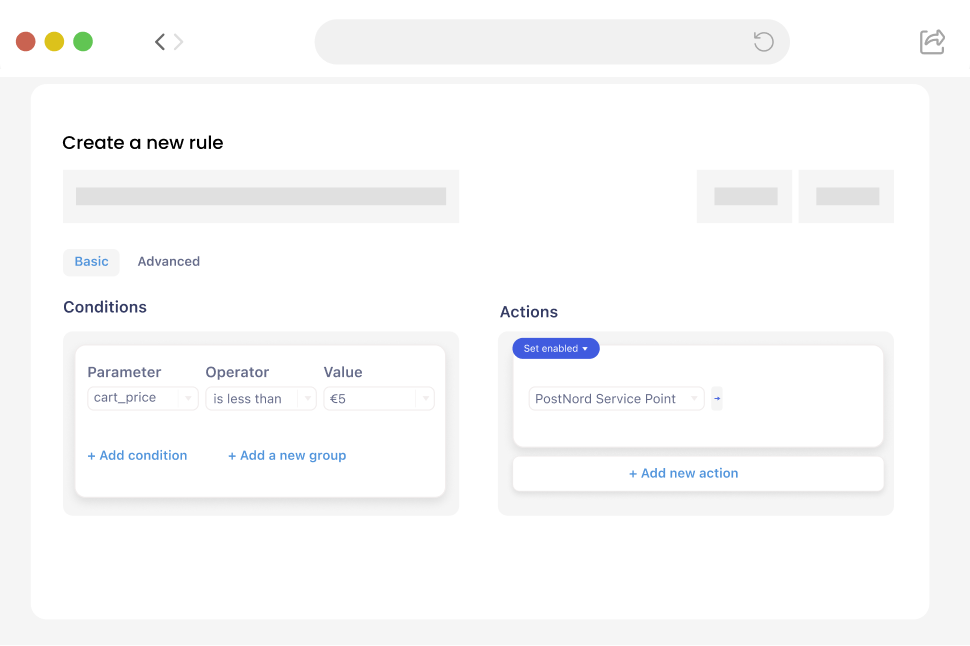
That is where nShift Checkout stands out. It gives merchants rules, groups, condition lists, badges, estimated delivery times, experiments, and custom pickup-location control inside one delivery-choice layer. The customer sees clarity while the merchant keeps the control.
What does delivery personalization look like in practice?
Delivery personalization looks like relevance. A shopper sees the right home delivery option for the postcode. Another sees a useful pickup option close by. A different basket triggers a different price step or a different delivery method. The logic is practical and visible at the same time.
Pikkuvihreä is a strong example. Eemeli Palo, E-commerce Manager, says:
"With nShift, I can code simple rule sets on how and which delivery methods are triggered for each customer or shopping cart."
That is personalization in a form customers can feel immediately. The offer is clearer because it reflects the real basket and the real delivery need.
VITA adds the method-level side:
"Speed and flexibility are at the heart of our lightning-fast delivery experience with customers now able to pick-up their purchase in just 30 minutes from conveniently located stores." - Kristian Sonnenberg, Chief of Digitalization & Technology, VITA
This way, delivery personalization becomes visible when the promise reflects how the customer actually wants to receive the order.
RevolutionRace adds the localization layer. The brand serves customers in 35 countries across 18 webshops and 11 languages, and Linus Andrén, CTO, says:
"We want to be able to offer the delivery options requested by our customers in the different markets and their respective languages."
That is the standard to aim for: personalization should make the page feel simpler and more useful.
Which capabilities make delivery personalization manageable?
Delivery personalization becomes manageable when the logic lives in tools that commercial and CX teams can actually use, turning rule logic into customer-facing clarity.
-
Postcode conditions
-
Price steps
-
Custom pickup locations
-
Groups and experiments
-
Estimated delivery times
-
Badges
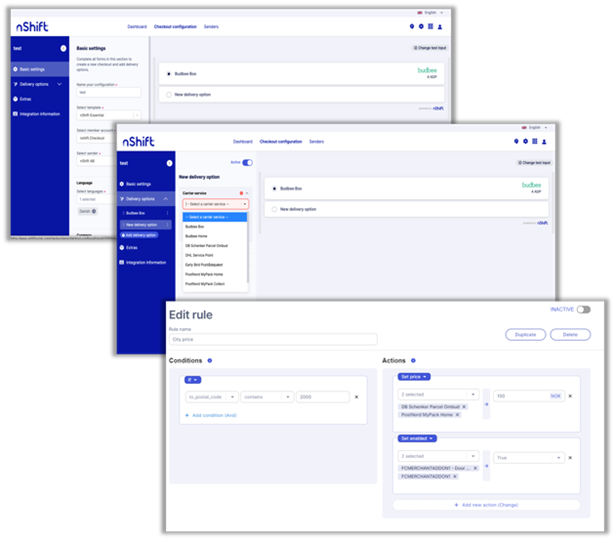
nShift Checkout supports all of those layers. Condition lists help merchants adapt delivery choice by postcode or pricing logic. Groups help direct traffic into the right configuration. Experiments support market-specific tests, including different setups for different countries. Estimated delivery times and badges add confidence and readability to the final presentation.
In the words of Dermosil staff: "We can now add carriers and transport services to the checkout ourselves, instead of needing to go through the webshop provider." They also explain that the team can try a service, see how customers react, and remove it again if needed. That keeps personalization grounded. The goal is using delivery logic to learn what makes the checkout more useful.
 FLOYD.no adds the brand layer. Preben Nesheim, Development Officer, FLOYD.no says the team wanted the option of "Floydifying" the customer journey. That is a good description of delivery personalization at its best. The delivery step feels like part of the same brand and the same customer promise.
How do you keep personalized delivery choice clear?
You keep personalized delivery choice clear by showing customers the options that fit and quietly removing the ones that do not. Relevance creates clarity. The page gets easier to understand because the logic has already done the sorting.
nShift Checkout helps merchants do that with custom PUDO filtering, groups, rules, and market-specific conditions. The delivery-options widget and product-page widget make that logic visible in a cleaner format. Customers get a better sense of what is available before they have to decode a crowded list.
The post-purchase layer gives us another dimension. For instance, nShift Track supports localized notifications, public tracking URLs, and embedded tracking views, which helps the personalized delivery promise carry through after checkout. That continuity is important: a local delivery promise feels stronger when the follow-up communication speaks the same language and keeps the same standard of clarity.
Pondres and FLOYD.no both support the same wider point: good delivery personalization is operational, brand-aware, and customer-facing at the same time. That is why it tends to be noticed - it feels coherent.
What does a strong personalized delivery setup put in motion?
|
Capability |
What the customer gains |
What the business gains |
|
Postcode and market rules |
More relevant delivery choices for the actual order and location |
Better control over when methods and prices appear |
|
Price-step logic |
Delivery pricing that feels more understandable |
A cleaner way to match cost, basket value, and offer design |
|
Custom pickup options and PUDO filtering |
Convenient collection choices that fit the shopper |
More precise control over pickup presentation |
|
ETA, badges, and widget presentation |
A clearer view of speed, value, and method differences |
Stronger checkout readability and better testing opportunities |
|
Localized post-purchase communication |
Delivery follow-up that feels familiar and credible |
Better continuity from checkout to tracking |
What should teams test first?
Teams should test the parts of delivery choice that have the clearest effect on relevance and confidence. Start with option order, price steps, and market-specific logic. Then test which badges, ETAs, or pickup choices help customers decide faster.
Dermosil treats testing as part of the operating model and keeps learning built into delivery choice. RevolutionRace reinforces the same lesson from a market-localization angle. If the team can manage the logic itself, the checkout improves faster.
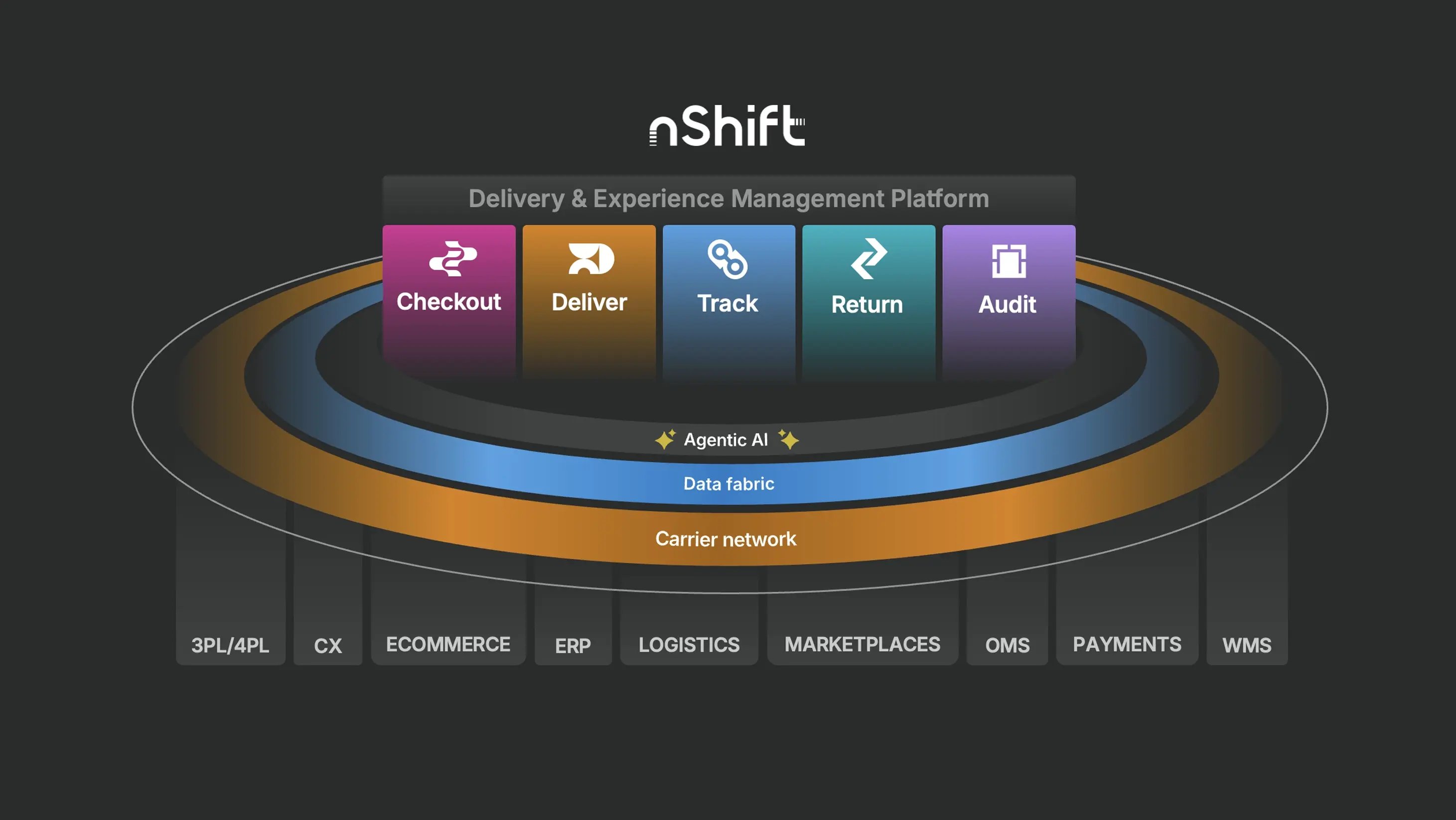
This is where the nShift platform helps win the argument: delivery personalization works best when checkout choice, carrier execution, and post-purchase communication stay connected. A relevant choice at checkout becomes more valuable when the delivery journey that follows keeps the same level of clarity.
Why delivery personalization is one of the most visible forms of relevance
Delivery personalization stands out because customers feel it at the moment of decision. The right option appears. The price makes sense. The promise feels believable. The brand still feels present.
That is why this topic deserves more attention in ecommerce strategy. Personalization becomes more useful when it shapes delivery choice alongside merchandising and messaging.
If your team wants to make delivery choice more relevant without adding complexity to checkout, nShift Checkout and nShift Track provide a strong foundation. Book a demo to see how nShift helps teams personalize delivery at scale.