
In this blog: we have already covered what delivery management is and how to evaluate an enterprise delivery system. With those in place, this piece moves on to the question we keep hearing from enterprise retailers and 3PLs as they scale: what does a delivery management program actually consist of, and how do you structure it so it holds together across every carrier and market you serve?
We hear a version of that question constantly. A business has its carriers connected and its parcels moving, yet delivery still feels uncontrolled, and no one can quite say who owns it end to end. From where we sit, with more than 20,000 businesses shipping on the platform, the operations that stay in control run delivery as a managed program with clear control points, rather than a collection of tools that happen to be wired together.
Here is the pattern that brings people to the question:
A retailer opens three new markets in a year; each gets its own carrier, added fast to keep the launches on time. Checkout keeps quoting delivery dates built around the original domestic carrier, so the new lanes miss them. Exceptions collect in an inbox no one formally owns, and customer service hears about failures from customers first. When finance asks for cost per parcel by market, the answer takes a week of exports. None of it is broken, exactly. The carriers work; what is missing is the program that ties them together.
Every order is a chain of handoffs: Checkout makes a promise, the warehouse picks it, a carrier moves it, the doorstep receives it, and some of it comes back. A delivery management program is the operating model that decides who owns each handoff and what happens when one goes wrong.
The integrations are the easy part but connecting a carrier, printing a label, showing a tracking page, none of that is where enterprises lose control. They lose it in the gaps between the handoffs, when checkout promises a date the carrier cannot keep, when an exception sits unowned for a day, when finance and operations argue over which export is right. The work of a program is closing those gaps and keeping them closed as you add carriers, markets, and volume.
The test of a program is where control lives when something changes.
In short
An enterprise delivery management program is the operating model a retailer, brand, or 3PL uses to control delivery across many carriers and markets. It includes delivery data governance, carrier strategy and connectivity, delivery choice at checkout, visibility and exception control, returns, cost and emissions reporting, a KPI framework, defined roles and decision rights, and risk and peak controls. The clearest way to organize them is as control points along the order's journey, each with an owner, a metric, and a known way it fails.
Components of an enterprise delivery management program
- Delivery data governance
- Carrier strategy and connectivity
- Delivery choice at checkout
- Visibility and exception control
- Returns as part of the program
- Cost, service, and emissions reporting
- The KPI framework
- Governance, roles, and a delivery RACI
- Risk and peak controls
Each one is a control point - read them as a map of where an order can stay under your control or slip out of it.
Delivery data governance
Every other component runs on this one. When checkout, the warehouse, customer service, and finance each read from their own export, the program runs on numbers that disagree, and no metric below can be trusted. Delivery data governance sets where shipment, carrier, and tracking data lives, who can read it, and how it stays consistent as orders move.
A unified delivery data layer gives every team the same view.
Owner: the delivery or operations lead, not IT alone.
Failure mode: four teams, four versions of the truth.
Carrier strategy and connectivity
This is where most of the cost and most of the flexibility sit. The program defines the carrier mix, the rules that decide which carrier wins each order, and how a new carrier is added without a development project. The mix differs by country, so the strategy is governed centrally and expressed locally. A carrier network of more than 1,000 providers lets you rate-shop and reroute instead of depending on one or two relationships, and multi-carrier shipping execution keeps booking and labeling consistent as volume grows.
Explore the nShift carrier network here >
The rules hold the control, and the platform applies them the same way on every order. "By defining our shipping rules in nShift, we are now able to automatically pick the cheapest or fastest freight option for our shipments, based on certain criteria," says Brian Østergaard, warehouse manager at OJ Electronics, whose team no longer has to figure out the best option shipment by shipment.
Read the OJ Electronics customer story >
Failure mode: a single carrier outage with nowhere to send the volume.
Delivery choice at checkout
The delivery promise is made at checkout, so the program starts there. It sets which options appear, how they are priced, and whether the displayed date reflects what carriers can actually do. The right delivery choices at checkout can lift conversion by up to 26%, because shoppers finish more orders when the option they want is visible and credible.
Failure mode: a checkout that promises dates the carrier network cannot keep, which pushes the problem straight into tracking and support.
Visibility and exception control
Once an order ships, control depends on seeing it and being able to act. It runs on tracking, the alerts that flag a delivery going wrong, and a named person who steps in when one does. Branded tracking and proactive notifications keep the customer informed and can cut "where is my order" contacts by around half.
Watch nShift Track in action here >
Swedish retailer Hatstore cut tracking inquiries by 90% after automating parcel tracking, turning a daily run of missing-parcel cases into something the team could see and act on. The decision this control point supports: when an exception fires, whether to reroute, reship, or reach the customer before they reach you.
Failure mode: the customer finds out before you do.
Returns as part of the program
Returns belong inside the operating model. It defines how a return is started, how it is routed, and how the data feeds back into carrier and cost decisions. A managed returns process gives customers a clear path and gives the business the chance to convert a return into an exchange. Return rates and reasons also tell you where the forward journey is underperforming.
Failure mode: returns run as a cost center no one owns, blind to the rest of the program.
Cost, service, and emissions reporting
Leadership asks three things about delivery: what it costs, how well it performs, and what its carbon footprint is. The program answers all three from the same data. Multi-carrier rate shopping can cut shipping costs by 10 to 15%, and carbon can be calculated per shipment, so emissions reporting sits next to cost and service rather than in a separate exercise. Reporting per carrier, per lane, and per market turns this from a finance report into an operational lever.
The KPI framework
A program is only as governed as its metrics. Track a small, consistent set, measured the same way in every market so regions stay comparable.
- On-time delivery rate. When it slips on a lane, decide whether to shift volume to a stronger carrier or renegotiate the service level.
- Exception rate by carrier and lane. A climbing rate on one carrier shows where to reroute before customers feel it.
- Cost per parcel. Rising cost against flat volume is the signal to revisit the carrier mix and rate-shopping rules.
- WISMO contact volume. A spike tells you whether the break is in the carrier handoff or in proactive tracking, and where to act first.
- Return rate and reasons. Patterns point back to the forward journey, from sizing to packaging to carrier handling.
- Carbon per parcel. This guides which greener options to surface at checkout and which lanes to rework.
Governance, roles, and a delivery RACI
Someone owns each control point, and the program states who can change a delivery rule, in which market, without waiting on a release. This covers decision rights, a regular review of delivery performance, and a RACI that names who is accountable for carrier strategy, exceptions, data, and cost, including per market where accountability is local. Clear ownership is what lets the program move when a carrier or a market shifts.
Failure mode: a rule everyone relies on and no one owns.
Risk and peak controls
The program has to hold when a carrier fails or volume surges. It spans carrier failover, the ability to change delivery rules quickly, and compliance by market. Peak season is the real test, when the cost of a missed control point multiplies. For how these controls hold or break in practice, see where delivery management breaks down.
Up to 26%
higher checkout conversion
When shoppers see the delivery option they want
10 to 15%
lower shipping costs
Through multi-carrier rate shopping
90%
fewer parcel tracking inquiries
Hatstore, after automating tracking with nShift
Build the program from the gaps, not the tools
You do not stand up nine control points at once, and you do not need to. Start where control is slipping. Find the handoff with the worst number, the lane missing its promised dates, the carrier with the climbing exception rate, the market finance cannot cost, and treat that gap as the first control point to formalize. Give it an owner, agree what good looks like, and instrument it so the metric is visible to everyone who can act on it.
Then move to the next gap. A program built this way grows from real problems rather than a template, and each control point you close makes the next one easier, because the data layer, the carrier rules, and the ownership model are already in place. The nine components are the map; the order you work through them is set by where your operation is losing control today.
Run it across markets, govern it as one
The same nine control points apply in every country, but the carrier mix, compliance rules, and customer expectations change as you cross borders. A workable model governs the program centrally, sets one KPI definition for everyone, and lets each market execute with the carriers and options that fit it.
That balance holds more easily on a single delivery management platform than across separate regional tools, because the data and the rules stay in one place.
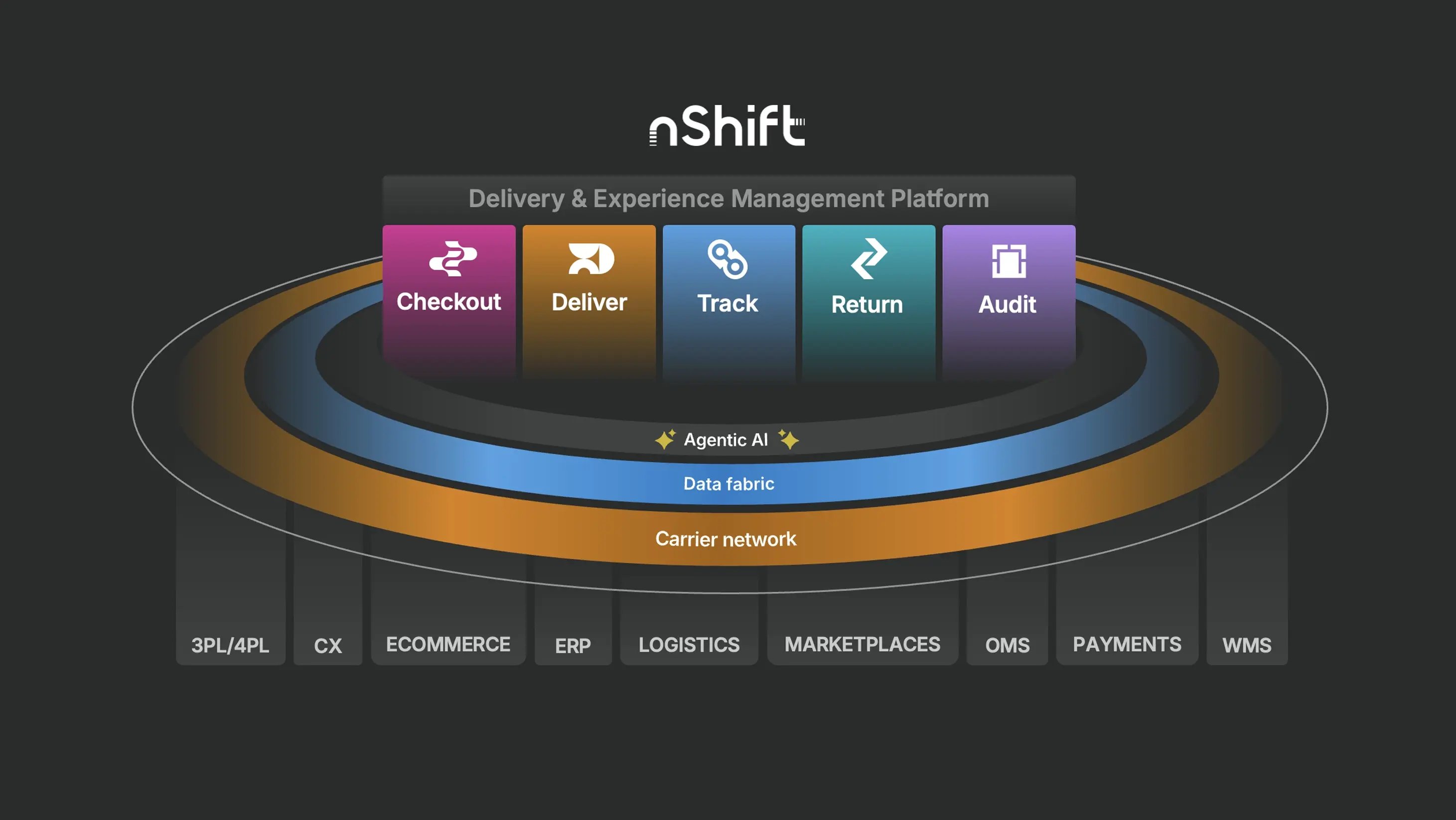
Run well, a delivery management program protects margin, keeps the promise the brand makes at checkout, and turns the post-purchase experience into a reason customers come back. The carriers and the dashboards are table stakes; the program is what decides where control lives, and control is what the enterprise is really buying.
Bring us the handoff that keeps slipping, and we will show you the control point that fixes it. Get in touch to discuss your specific needs, or the opportunities you're not seeing today.