At nShift, the biggest last mile delivery challenges we're seeing across the board are:
-
a checkout promise the operation can't keep
-
failed first delivery attempts
-
out-of-home options that don't work when chosen
-
tracking that goes quiet
-
slow returns
-
carrier integrations that make every new market a project
The good news? Each one is fixable - but until then, it keeps adding cost.
Nobody has ever screenshotted a delivery that went fine. The last mile is the part of your brand the customer experiences most directly, it arrives after you have already won the sale and spent the acquisition budget, and it is where the gap between what you promised and what you can execute becomes visible. An Ipsos survey found that 85% of shoppers in France, Spain, and Germany would stop buying from a retailer after a poor delivery experience.
Here are the six challenges doing the damage, and what fixes each one.
1. The promise made at checkout that the operation never agreed to
"Order in the next three hours for delivery Thursday" is the most consequential sentence in the transaction.
Everything that follows gets judged against it, and it fails in both directions. A promise that looks slow or expensive loses the sale before it exists: Baymard's research puts slow delivery among the top reasons for cart abandonment, cited by 21% of abandoners.
A promise the network can't execute loses the customer after the sale, because the checkout showed a Thursday that the carrier cut-off, the day's capacity, and the service available for that postcode never agreed to.
The promise lives in one system, execution runs in several others, and where nobody has connected them, the front end keeps writing checks the back end has to cash.
Build the promise from the things that decide it: market, postcode, basket, carrier service, cut-off, and live availability, and show only the options the network can keep. Delivery options at checkout tied to live carrier rules turn the promise from a hopeful guess into an instruction the operation can follow.
2. The failed first attempt, the costliest non-event in delivery
A driver knocks at 11 a.m. on a Tuesday. Everyone who lives there is at work. The parcel goes back to the depot to think about what it has done, and the whole expensive machine resets for tomorrow.
A failed delivery attempt is a delivery where the parcel arrives and the handover doesn't happen: nobody home, no safe place, an access code missing, an address that doesn't quite exist. Nothing was delivered and nothing was resolved, and the meter ran anyway.
The second run is only the visible cost - behind it queue the re-handling at the depot, the "where is my order?" contact from a customer who watched "out for delivery" turn into nothing, and often a refund or a return to sender once patience runs out. One missed doorstep, several costs, none of them on the original shipping line.
That cascade is a big share of the hidden cost we unpack in our cost to serve blog post.
Most failed attempts were decided before the van left:
- The address was incomplete, and nothing checked it at checkout
- The customer got home delivery when a locker near work would have suited them better
- There was no credible ETA, so they couldn't plan to be in
- There was no easy way to reroute once they knew they'd miss it
Each of those is a choice you control:
-
Validate addresses at checkout
-
Offer pickup and locker options to the customers they genuinely suit
-
Send an ETA someone can plan around, with a reroute one tap away
First-attempt success is decided at checkout and in the notification flow, and it costs far less there than the failure costs later.
3. Out-of-home delivery that only works on the map
Out-of-home delivery is a strong answer to the empty doorstep, and shoppers agree: Geopost's E-Shopper Barometer 2025 has 46% of regular European online shoppers favoring out-of-home delivery, up 15 points since 2019. A locker doesn't need anyone home, and one stop serves dozens of parcels.
A full locker, a PUDO point that closed in March, or a service that isn't eligible for that parcel in that market moves the failure somewhere the customer participates in it: they chose the locker, traveled to it, and collected a wasted trip.
It gets harder across borders, because every country runs its own networks, eligibility rules, and carrier-specific points, and a program managed one integration at a time turns each small network change into permanent maintenance.
Out-of-home earns its economics when eligibility and live availability are managed by market, so every point on the screen is open, in range, and able to take that parcel. The handoff should be unambiguous too: where, when, how long they have, what to bring.
When Flying Tiger Copenhagen rebuilt its checkout around better PUDO options with nShift, it recorded a 20% increase in conversions, and 70% of customers preferred the new PUDO option. Options customers want, that the network can keep, sell more and fail less. Read the full story here.
4. Tracking that says "out for delivery" and means nothing
A tracking link only points the customer at a page. Real visibility depends on consistent, trustworthy milestones across every carrier you use, for customers and your own teams. When scans arrive late, go missing, or carry a different label per carrier, the page goes quiet, and every "where is my order?" contact is a customer who hit the visibility gap before you did.
Speed won't save the page, either. In McKinsey's consumer research, delivery speed fell from the most important delivery factor in 2022 to fifth in 2024, behind the assurance that the order lands when promised. Customers will forgive a delay they saw coming. What they don't forgive is a page that read "out for delivery" for three days while the parcel sat in a depot nobody was watching.
85%
of shoppers would stop buying from a retailer after a poor delivery
Ipsos with Octopia, France, Spain and Germany
1st to 5th
delivery speed's fall among delivery priorities, 2022 to 2024
McKinsey consumer research
46%
of regular European online shoppers favor out-of-home delivery
Geopost E-Shopper Barometer 2025, up 15 points since 2019
Normalize raw carrier events into milestones both sides can trust, and watch for the non-events: the scan that should have arrived and didn’t. Branded tracking with proactive notifications reaches the customer before the issue becomes a support contact.
5. Returns that take weeks to become money again
The last mile runs in both directions, and the return leg is where cash and stock go quiet. When initiation, transit, and refund live in separate systems, the refund waits because nobody can confirm the item is on its way back, the customer's patience drains alongside their money, and the stock ages on a shelf nobody can see while the buying team reorders more of it.
Give the customer:
-
a clean way to start the return
-
the right return method for their market
-
one timeline from initiation to resolved
-
a deliberate rule for which event releases the refund, first carrier scan, warehouse receipt, or another control point you trust
The money then moves on a rule instead of on a complaint, and returned stock goes back on sale while it still sells.
6. Every new market is a brand-new engineering project
The last mile is local everywhere. Each market brings its own carriers, label specifications, locker networks, service rules, cut-offs, and customs paperwork. Built one integration at a time, that variety turns into a portfolio of bespoke connections, each aging on its own schedule, and the market that has been "next quarter" for three quarters stays there because the integration work never quite makes the sprint.
The same fragility shows up during peak. When a carrier wobbles, you need to reroute volume quickly, but a hand-built integration turns the switch into a project. Treat carrier connectivity as a network you connect to once, so a new market or carrier switch becomes configuration rather than another build.
Our last mile delivery overview covers the wider operating model.
Where to start, in order
All these issues trace back to systems that don't talk to each other, which in turn points to the order to fix them in.
-
Make the checkout promise true first, because everything downstream is judged against it.
-
Then win the first attempt, the number with the most cost attached.
-
Then wire tracking and returns into one visible timeline, so the exceptions that remain get caught while they are cheap.
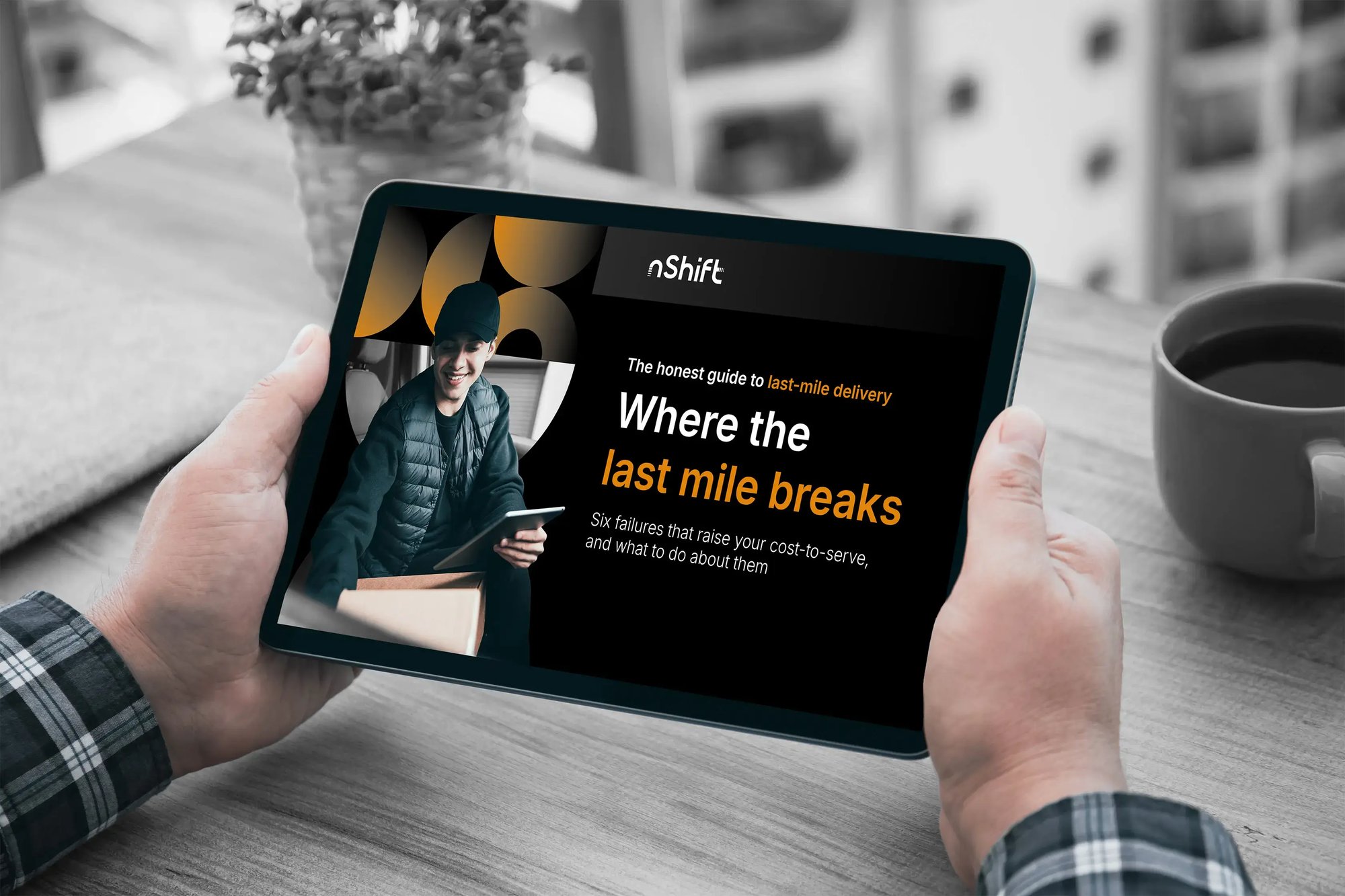
We wrote the unvarnished version of all six, plus the buy-or-build decision matrix, the feature checklist, and the KPIs to baseline before you change anything, into one guide:
Nobody has ever screenshotted a delivery that went fine.
The honest guide to the last mile covers all six failures, the KPIs to baseline, and the buy-or-build call, without the varnish.
Get the guideLast mile delivery challenges FAQs
What is the biggest challenge in last mile delivery?
Why do first delivery attempts fail?
What is a failed delivery attempt?
How can retailers reduce failed deliveries?

About the author
Gregory Mannix
Delivery Expert
With over 20 years of experience in SaaS, ecommerce, and logistics, Greg Mannix helps retailers and logistics providers streamline delivery operations. His expertise includes optimizing carrier management, enhancing tracking visibility, and simplifying returns to improve efficiency and customer satisfaction.