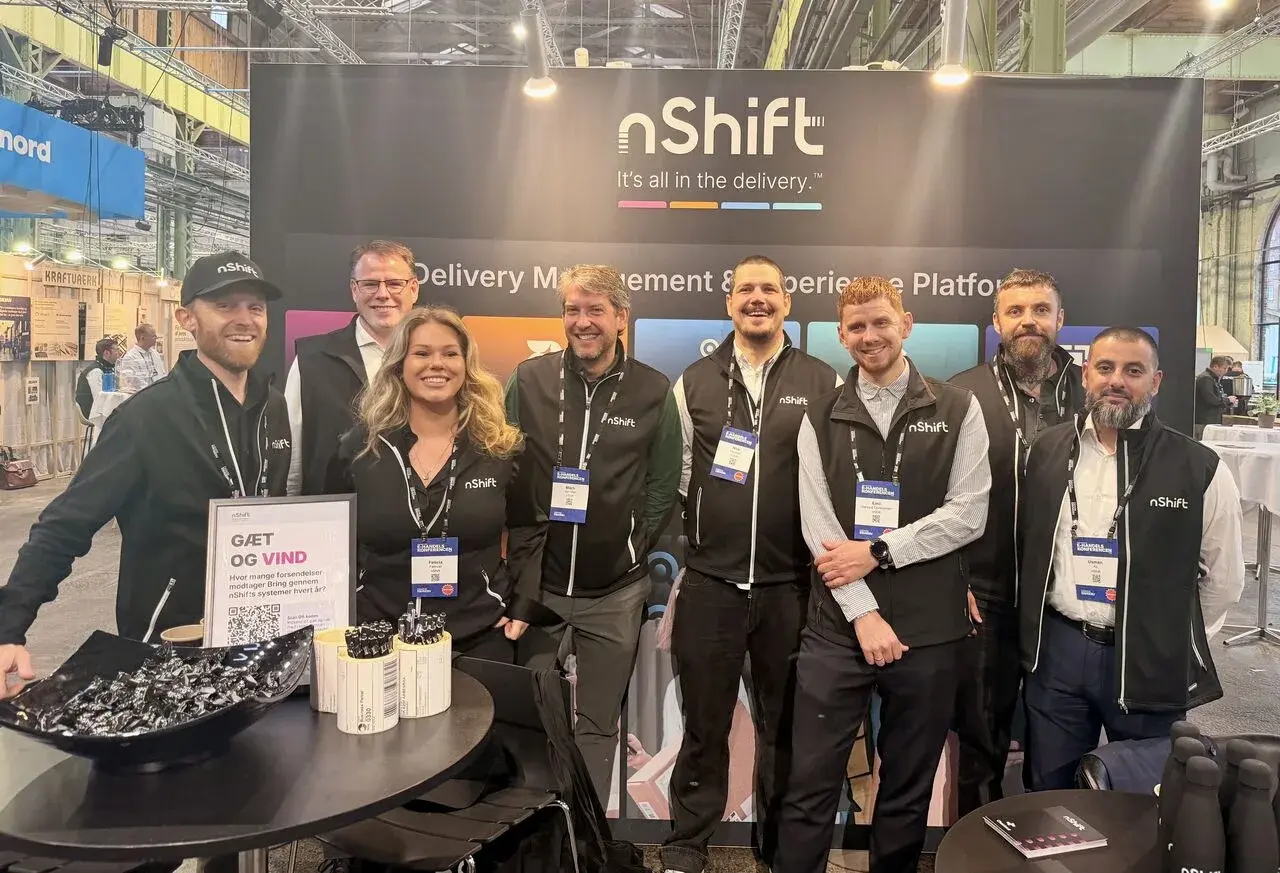
Most of the retailers I sat down with at Focus on Fulfilment already work with more than one carrier. What they want now is the ability to use them: move volume when service slips, compare how each carrier performs, and know what each one charged.
Peak is a few weeks away, and it will show how quickly each of those can happen.
Focus on Fulfilment is The Retail Hive's annual day for heads of fulfillment, operations and logistics, held this year on 17 September at The Law Society on Chancery Lane in London. It runs under the Chatham House Rule, so everything below is anonymous. I moderated two roundtables on "Multicarrier strategy: the opportunity to better serve customers and reduce costs", and my colleagues and I spent the rest of the day in one-to-one meetings.
Last year our table talked about carrier relationships and visibility. This year the conversation kept coming back to speed. Here's what came up, and what I'd do about each point before peak.

Switching carriers takes too long
Retailers told us the time and money go into bringing a second carrier live:
- A new carrier takes too long and costs too much to integrate
- Moving volume between carriers mid-season is slow
- A/B testing one carrier against another is hard to set up
One head of operations, already planning their setup for 2030, put it in one line: they can't change carriers quickly enough. Another team changes carriers most years, which only works if the switch is fast and cheap.
Retailers on a single carrier had a different worry. A few had been through a rough patch with one network, and with one carrier, all you can do is hope you chose well.
Spreading volume too thin has its own cost, though. A key carrier gives its best rates and attention to the customers who commit volume, so several retailers wanted both: resilience across carriers and a close relationship with the main one.
My advice is to make carrier choice a rule per shipment rather than a default. Destination, delivery promise, parcel size and weight, cost and recent carrier performance can all decide which carrier gets the parcel. When those rules are set in one delivery management platform, adding a carrier means switching on an existing integration instead of building a new one.
Peak is the backup carrier's first real test
For some retailers in the room, the second carrier exists for one reason: peak. When the main network's service slips under November volumes, overflow goes elsewhere.

Before you rely on that plan, I'd add three questions to it:
- Which parcels move to the backup carrier, and who decides?
- How do you share volume without breaking commitments to your main carrier?
- How do you keep the delivery promise intact while it happens?
A backup carrier that needs weeks of setup is still being set up when the volume lands. Retailers selling large and bulky items have it harder still. They described a lot of inconsistency between carriers, so a like-for-like alternative is harder to find. If that's you, run real parcels through the backup route now, before the volume arrives.
Carrier choice at checkout splits the room
Should the shopper pick the carrier? The retailers I spoke to did not agree.
In a few businesses, shoppers only find out which carrier is delivering after they've paid. Some teams want to change that. One retailer with a flat shipping rate spotted the catch: a choice of carriers usually means a choice of prices, and the flat rate has to go.

Others keep carrier choice off the checkout on purpose. Every extra option is another click before the payment button, and one retailer told us they would rather keep that path short.
Sustainability makes the call harder. Retailers hear clearly that customers want greener delivery, yet when one team A/B tested a more sustainable carrier option at checkout, customers wouldn't pay the difference. For now, the greener option has to win on price too.
If you're weighing carrier choice at checkout, test it the way that team did: real shoppers, real prices, and a clear read on conversion.
Carrier data arrives too late to act on
The cheapest carrier on the rate card can turn out to be the expensive one once you count the failed deliveries, the "where is my order?" contacts and the refunds. We unpack that math in our post on cost to serve.
To make that call you need comparable data for every carrier, and several retailers told us they don't have it. One cut down to two carriers to make life easier, then watched parcel losses rise with no data from the carriers to explain why. Their point was as much about speed as access: loss data that arrives weeks later can't change this week's allocation.

Returns add another blind spot. Most retailers in the room use the same carriers for outbound parcels and returns, mainly for convenience. When the two flows split, the data does too. One brand ships into the UK from overseas while UK returns go back to a UK warehouse, and the records from the two don't line up.
Pick a small set of measures and track them the same way for every carrier, so you know when to investigate, when to shift volume and when to change provider. Our post on delivery KPIs covers the eight I'd start with.
Most freight invoices get paid as they arrive
In most of the businesses we spoke to, the freight invoice arrives and gets paid as it is. A few check invoices now and then, or check some but not all.
One team has started running carrier invoices through a general-purpose AI assistant. They were candid that it's still manual: someone gathers the invoices, feeds them in and reads the output.
The checking load grows with every carrier you add, because each one brings its own invoice format, surcharges and pricing rules. We built nShift Audit for this work. It reads carrier invoices in the format they arrive and checks every line against your contract and your shipment data.
Our freight invoice audit guide shows what to check on each invoice before you approve it.
What I'm taking into peak
The strongest setups I heard about balance customer choice, cost, service and resilience together, rather than chasing any one of them.
Before peak, this is what your own operation needs you to consider:
- How quickly could you move a share of volume to another carrier if service slips next week?
- Do you see losses and late deliveries per carrier while you can still act on them?
- Do you know the full cost of each carrier, including failed deliveries, customer contacts and refunds?
- Does your returns data line up with your outbound data?
- Who checks your freight invoices, and against what?
Thank you to The Retail Hive and to everyone at our tables for such open conversations. If you were there and want to pick up where we left off, or want to compare notes before peak, get in touch.