Improving delivery performance means increasing the share of orders that arrive when you said they would, at a cost you can account for, without avoidable delivery attempts or support contacts. Look for the failure in four places: the checkout promise, fulfillment, carrier allocation and post-purchase communication. Check them in that order, change one thing at a time and measure the result against the original promise.
When a delivery performance review reaches me, it usually opens with a carrier scorecard. On-time rate by carrier; claims by carrier; cost per parcel by carrier. These figures are readily available, so they dominate the discussion while the customer's question is often lurking in the background: did my parcel arrive on the day you gave me at checkout?
I have spent close to 30 years around carriers, distribution and ecommerce fulfillment and today I work with enterprise delivery teams all across Europe, and beyond. The recurring problem I keep seeing is rarely confined to one carrier - instead, it sits between the date shown at checkout and what the operation could execute that day, for that postcode and parcel.
Carriers are part of that chain, but they are often blamed for delays that began before collection.
DHL's 2026 research shows how much is at stake: of 29,000 online shoppers in 29 countries, 67% said they had abandoned a cart because of the delivery offering. Among 5,800 businesses surveyed by DHL, 52% recognized delivery as a reason for lost sales.
Customers see the date, the parcel and the messages in between as one service but inside the business, those stages often belong to separate teams and separate carrier portals.
67%
of online shoppers have abandoned a cart because of the delivery offering
DHL E-Commerce Trends Report 2026, 29,000 shoppers in 29 countries
52%
of businesses recognize delivery as a reason for lost sales
Same survey, 5,800 businesses
I diagnose the chain in the order a parcel travels: promise, fulfillment, carrier allocation and post-purchase. The seven levers that follow address what each team can change and which number will show whether it worked. Some involve nShift; others need little more than a report, an agreed rule and somebody authorized to act on it.
My colleague Greg Mannix has already set out the eight delivery KPIs your board will care about, so I will not rebuild that scorecard here. This article assumes you have that baseline, and concentrates on improving it. The customer's delivery experience depends on the operational decisions made from checkout through to the carrier invoice.
Diagnose before you fix: the four questions, in order
Run all four checks before changing the carrier mix. A checkout promise that the network could never keep will show up as a late delivery, even when the carrier met its contracted service level.
For me, delivery management connects the promise, fulfillment, carrier and post-purchase stages so that the service sold at checkout can be delivered in practice.
Q1: Is the promise one the network can keep?
Compare the checkout configuration with carrier transit data for the same postcodes. If delivery is healthy against the carrier's service level but poor against the date shown to the customer, the two promises are out of step. Changing carriers will not correct the date at checkout.
Q2: Does the warehouse make the cut-off?
Measure order confirmation to first carrier scan by day of the week and order type. Late first scans on days when the carrier delivered its collected parcels on time point back to fulfillment. A 4pm cut-off for next-day delivery depends on the pick and pack queue and the collection slot as much as it does on transit time.
Q3: Is the right carrier getting the right parcel?
Break the late-delivery band down by region and service. If one carrier's delays cluster in a postcode range but its performance elsewhere is sound, look at allocation. Operations may be able to redirect that traffic with one rule instead of replacing the carrier across the network.
Q4: Does the customer hear from you before they contact you?
Compare WISMO (where is my order) contacts with exceptions over the same period. If tickets arrive before your team sees the exception, customers are alerting you to delivery problems. Check notification triggers and assign ownership for each type of exception.
And now, for the levers.
Lever 1:
Fix the promise before you fix the parcel
Delivery performance starts with the date and options presented before payment - every downstream result will be judged against them.
Show customers services they can understand, such as next day, a time slot, a pickup point or a guaranteed date, with an estimated delivery date for each. That estimate should reflect what is available for the receiving postcode today; a list of carrier names asks the customer to translate your transport setup into a delivery choice.
In Baymard Institute's abandonment research among US shoppers, 40% of respondents who abandoned a cart cited extra costs such as shipping, tax and fees, while 20% cited slow delivery. DHL's 2026 survey found that seven in ten shoppers would abandon a cart if their preferred delivery and returns options were unavailable. The offer affects conversion and establishes the date against which on-time delivery should be measured.
nShift Checkout can show an estimated delivery time for each option, calculated from the sending and receiving postcodes. Conditions control when an option appears. Evening delivery can be limited to postcodes covered by the evening service, for example, and a basket that exceeds a size or weight limit need not be offered a locker. Retailers can include their own stores or pickup sites alongside carrier networks. Checkout Experiments tests the order and price of the options against conversion data.
Flying Tiger Copenhagen recorded a 20% increase in conversions after expanding its pickup point delivery options through nShift Checkout. Its Head of Digital Operations explained why: "it was clear we needed something that put them in the driving seat of their delivery preferences."
Ecommerce and operations need to set the promise together. Track checkout conversion, on-time delivery against the date shown and the split between home delivery, pickup and timed services. An improvement should produce both fewer abandoned carts and fewer orders that the network was unlikely to deliver as offered.
Lever 2:
Align cut-offs and fulfillment with the promise
Many late deliveries are already late when the carrier receives them. The order cut-off, pick and pack time, label generation and collection slot all use the same available hours. If next-day performance drops on Mondays or during peak, check where that time was spent inside the warehouse before challenging the carrier.
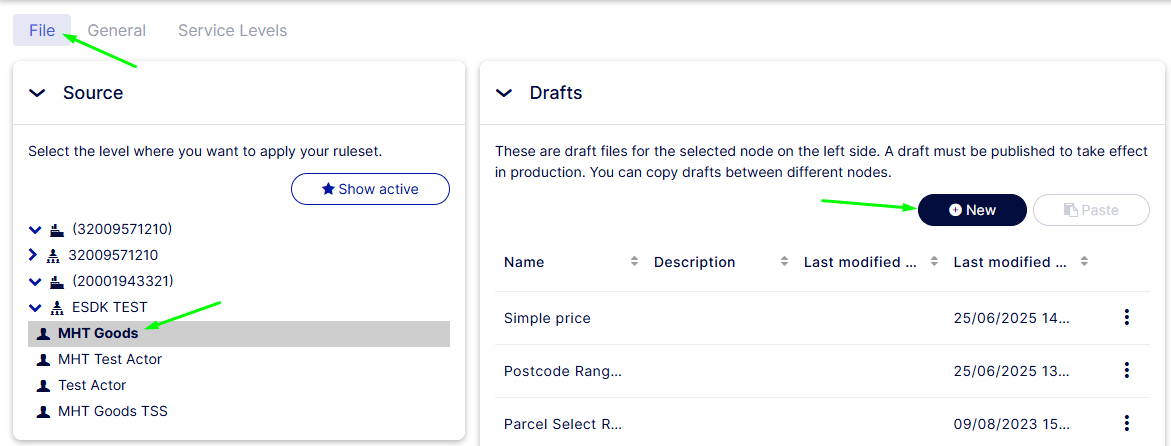
Build the carrier decision into the picking flow. Printing the label as the order is picked allows the parcel to go straight to the right collection area, without a separate booking queue. In nShift Ship, shipping rules select a carrier at booking according to the company's policy, and supported carrier services can be activated without a development project. The delivery time report in nShift Delivery, available as an add-on, shows the number of days from booking to delivery. It can be used to test a later cut-off or investigate longer lead times.
Small changes at the pack bench add up quickly. DTK combined the shipping label and packing slip in one printout. Processing time fell from two and a half minutes per order to 15 seconds, saving 35 printing hours a day. Its project manager described the effect: "We are doing more orders in the same time with less people, less stress, reducing energy, and reducing plastic waste."
15 seconds
per order at the pack bench, down from two and a half minutes
DTK, shipping label and packing slip on one printout
35 hours
of printing time saved every day
DTK, nShift Ship
JYSK integrated nShift Ship with its warehouse management system and reduced its picking process by 40%. The company also uses the connection with SAP to check whether shipments arrive in time. Its Head of Logistics IT said this "allows us to see if shipments are delivered in time in order for us to fulfil our delivery promise to our customers."
Warehouse and operations should measure the interval from order confirmation to first carrier scan, split by day and order type. Starting the clock at collection conceals time already lost in fulfillment. The improvement you want is shorter lead time with cut-offs that still hold on busy days.
Lever 3:
Evaluate carriers on service fit first and cost last
Most carrier reviews I see begin with the rate card. I would assess service fit first: can the carrier handle the parcel types, markets and time windows you sell? Then check operational fit with your systems and geography, followed by observed reliability on your shipments. Price comes after those three - a low rate on a lane is of little use if the service regularly misses what customers were offered.
Use shipment data by region and service instead of relying on a network-wide SLA. Comparable analysis requires event data from each carrier in the same format. Carrier performance measurement on the nShift platform normalizes hundreds of carrier status codes into seven main categories. That helps prevent a carrier with sparse scan data from appearing slower or faster simply because it reports differently.
Bring those results into the tender. A tender run every 12 to 24 months will be better informed by your own on-time rates, failure types and cost variance than by a carrier's network average. It also shows which carrier should receive a lane, region or service during different parts of the year.
Connectivity doesn't need to limit the comparison. The nShift platform connects businesses to 1,000+ carriers across 190+ countries and it should be obvious that no single carrier will lead across an entire European network in every season. Carrier management should therefore monitor on-time delivery against the SLA by carrier and region, exception rates by type and cost variance - those figures support both tender decisions and day-to-day allocation.
Lever 4:
Put allocation rules and failover in the operations team's hands
A multi-carrier setup only becomes resilient when the allocation can change. If a carrier falls below service level in one region next week, how quickly can operations redirect eligible parcels?
If the answer depends on an IT release, the carrier mix is less flexible than it appears.
Maersk surveyed more than 2,000 customers across Europe in 2024. Of those businesses, 76% had experienced operational delays caused by supply chain disruption during the previous 12 months, and 22% had dealt with more than 20 disruptive incidents. Quarterly configuration projects cannot keep pace with that frequency.
76%
of European shippers had operational delays from supply chain disruption in the past 12 months
Maersk survey of more than 2,000 customers across Europe, November 2024. 22% counted more than 20 disruptive incidents.
The shipping rules in nShift Ship I was mentioning before apply the company's policy when each shipment is booked. Service levels can mirror the proposition on the website, such as standard, next day, a time slot or a pickup point. Within each service level, operations controls how volume is distributed among eligible carriers. The split can cover two carriers or seven and will always total 100%. A team can reduce one carrier's share during peak and put the revised allocation into use immediately. Rules can also select the lowest-price or fastest eligible service using the company's contracted rates.
Most performance problems are local, so switching off a carrier everywhere is usually excessive. Eligibility conditions can include weight and receiver postcode, using ranges or uploaded postcode files. If service deteriorates in one area, exclude that area while leaving the rest of the allocation unchanged. Capacity caps can send overflow to another carrier. The rules run again at booking, allowing an order pre-allocated by the website to move to the next eligible carrier when conditions have changed.
Greg and I demonstrated this in June when we changed carriers live, with no IT ticket. We activated a carrier service using existing account credentials, changed a distribution split, excluded a postcode range and rerouted a pre-allocated order at booking.
The questions from logistics managers were reassuringly specific:
-
Does the service list show only contracted services? It shows all services offered by the carrier, including those available to activate.
-
Can the team inspect a postcode file after upload? Yes.
-
Is configuration fully self-service? Once a carrier is enabled, yes. Adding a new carrier to an account is self-service for some carriers and requires a short activation by nShift for others.
Operations should own these rules and track how much volume it can reallocate without a ticket, along with the time between a performance warning and a rule change.
Lever 5:
Raise first-attempt delivery with data and pickup share
Every failed attempt should leave more than a support ticket. Record the reason and feed it back into address capture, carrier selection and the options shown at checkout. A failed home delivery brings another delivery run, more depot handling and often a customer contact. Those costs are easily missed when teams review only the price of the original shipment.
The reasons tend to recur: an incomplete address, no access to the property, damage, or a time window that never suited the customer. A customer experience report can show first-attempt success by carrier and separate exceptions such as carded, failed attempt, refused at the door, no property access, insufficient address, misrouted, damaged, lost and network delay.
Let's break this down: a high rate of damage may indicate a poor match between the product range and the selected carrier or service; a rise in insufficient-address exceptions calls for a review of checkout capture and, often, address validation before the carrier conversation begins.
Pickup points and lockers remove the need for the recipient to be at home when the carrier arrives. DHL's 2026 research found that almost three in ten shoppers already send deliveries directly to out-of-home locations. The operational work is to offer the relevant pickup networks in each market and pass the customer's choice correctly through to booking and labeling. Our guide to last mile delivery challenges covers the main failure types in more detail.
Operations should monitor first-attempt success by carrier and delivery option, along with the monthly exception mix. Ecommerce owns any correction to checkout capture or the delivery offer. Together, the teams should see fewer repeat attempts, depot re-handlings and support contacts per delivered order.
Lever 6:
Tell the customer - before the customer asks
Customers expect an accurate date and useful updates after dispatch. When those are missing, support receives the question. The same shipment events should alert the operational team to exceptions and keep the customer informed, before either side has to search a carrier portal.
nShift Track sends branded email and SMS notifications for selected events, with templates localized by market. Normalized carrier statuses give customers consistent milestones across carriers. When a carrier supplies an estimated time of arrival, it can appear on the tracking page; estimated delivery rules can also be set by destination area within a carrier service.
Teams can create their own events for milestones that fail to occur. No scan within the expected window or no delivery on the promised day can trigger both a customer notification and an exception for the team. This is especially useful when the carrier has not produced a new status to trigger an alert.
ICANIWILL, which ships more than 400,000 orders a year, saw a 50% reduction in delivery-related customer questions after taking control of its communications with nShift Track. Its Chief Operating Officer described the process: "The customer event function means that if something should have happened but didn’t, a notification is triggered so we can proactively keep the customer informed of delays or, even better, solve the issue before the customer knows about it."
Each exception also needs an owner. Depot delays and damaged parcels usually go to the carrier. A failed home delivery or an uncollected locker parcel may need the receiver. Missing booking data belongs with the sender. An unassigned exception can sit on a dashboard until the customer reports it. Our guide to how to ensure timely and accurate deliveries covers the practical work around options and pre-delivery communication.
Customer service and operations should review WISMO contacts per hundred shipments alongside the exception rate. Also record how many exceptions the team acted on before the first customer contact. Support volume should fall as that second figure rises.
Lever 7:
See the cost of every shipment, and check the invoice against it
Before reopening the rate card, find out what each shipment was expected to cost and what the carrier billed. New surcharge schedules can cancel out an attractive rate reduction. Shipment-level cost data exposes variance across every existing carrier and gives logistics and finance a common reference.
Freight rate calculation in nShift Ship uses the company's carrier agreements, including distance, weight, zones and index prices, to calculate an expected cost before the invoice arrives. Actual cost variance can then inform allocation. If charges for a carrier or lane repeatedly exceed the agreed rate, the team can review why it continues to receive that volume.
Checking the invoice against what actually shipped
Freight invoices are difficult for accounts payable to validate because there is no purchase order to match against them. A shipment may also carry five to ten surcharges, priced differently by carrier and country. Finance has the invoice; logistics has the shipment record. The manual cost of checking an individual line can exceed the amount in question, which is why discrepancies are often paid without investigation.
Published freight audit benchmarks put recoverable overcharges at 3 to 7% of freight spend. nShift Audit reads invoices in the formats supplied by carriers and checks each line against the contracted tariff and the shipment data in the platform. This three-way match covers seven checks and carries deviations through dispute to recovery.
Two checks, delivery status and SLA, use delivery events collected by nShift Track. The same event history used to measure whether a parcel arrived on time can therefore verify whether the billed service was delivered. Billing errors can run in either direction; a line-level record gives the business and carrier evidence with which to resolve them.
Logistics and finance should monitor cost to serve per delivered order and invoice deviations by carrier and type. This brings leakage into the regular shipment review and allows the carrier mix to reflect the cost invoiced alongside the rate negotiated.
How to improve delivery efficiency without touching the promise
Delivery efficiency measures how much work and cost each order consumes on its way to the customer. Improving it means reducing warehouse touches, repeat delivery attempts and support contacts while maintaining or improving on-time delivery.
Each of the seven levers removes work somewhere:
-
A label printed during picking eliminates a separate booking step.
-
An allocation rule prevents the packer from choosing a carrier parcel by parcel.
-
A pickup option reduces second attempts.
-
An event-based notification answers a question before it becomes a ticket.
-
Expected shipment cost also removes some of the spreadsheet work from invoice reconciliation.
The largest operational gains I see usually come from automating booking and labels, then maintaining one integration to the carrier network. When a carrier changes its API, the update is handled in the platform instead of entering the ERP development queue. Centralized measurement also shortens the weekly review because the person looking at the result can change the relevant rule.
Measure touches per order from confirmation to dispatch, re-deliveries and support contacts per hundred shipments, and the warehouse hours allocated to shipping. Read those figures alongside on-time delivery against the checkout promise - efficiency without that service measure can reward a cheaper process that leaves more customers waiting.
Most delivery reviews find the first break before the carrier is involved.
The delivery control gap guide sets out the six characteristics of operations that keep their promise consistently, with the carrier evaluation sequence and the allocation model behind this article.
Get the field guideWhat doesn't improve delivery performance
I see the following approaches create activity without correcting the service problem:
- Starting with rates. A cheaper carrier assigned to unsuitable lanes can lose the saving through failed attempts and customer contacts. Check service and operational fit before price.
- Adding carriers without allocation rules. A fourth connection adds resilience only when the system knows which parcels it should receive and when it should take over. Otherwise it adds another portal to monitor.
- Chasing the carrier's SLA alone. The carrier's clock starts at collection; the customer's starts at order confirmation. A carrier can meet its SLA while the order still misses the date shown at checkout.
- Resolving every ticket separately. Closing a WISMO contact does not prevent the next one. Use the volume and reasons to correct notifications, exception ownership or the promise itself.
- Building a dashboard that nobody can act on. A carrier report is useful when the person reading it can change the allocation rule while the problem is still current.
Baseline, change one lever, re-measure. Run it as a loop.
Baseline the eight delivery KPIs over a complete trading cycle that includes peak. Segment them by market, carrier and delivery option; a network average can conceal the routes and services producing the greatest cost or delay. Change one lever, then re-measure the same segments so you can connect the result to the intervention.
Operations needs a weekly view, while the board line can be monthly. In the weekly meeting, open the late-delivery band and ask whether the team could move volume away from the weakest performer before the next meeting, without raising an IT ticket. If it cannot, allocation control deserves attention before another carrier review.
Peak provides a useful check because the same rules have to work at much higher volume. Elgiganten sends 5 million shipments a year through the platform and reports being able to meet delivery promises even under high seasonal pressure.
The seven levers at a glance
| Lever | Mechanism | Expected effect | KPI to watch | Owner |
|---|---|---|---|---|
| 1. Fix the promise | Service-led options, postcode-based delivery dates, conditions per option, A/B tests on order and price | Fewer abandoned carts and fewer unworkable promises | On-time vs promise, checkout conversion, option mix | Ecommerce with operations |
| 2. Align cut-offs and fulfillment | One clock from order confirmation to collection, label at pick, delivery time report | Later cut-offs held and shorter lead times | Order confirmation to first scan | Warehouse and operations |
| 3. Evaluate service fit first | Scorecards on your own parcels, normalized statuses, tenders informed by reliability and cost variance | Better carrier fit by lane and season | On-time vs SLA by carrier and region, exception rate | Carrier management |
| 4. Control allocation and failover | Service levels, distribution splits, eligibility conditions, capacity caps and reassignment at booking | Faster reallocation and less dependence on one carrier | Reallocations without a ticket, time from signal to change | Operations |
| 5. Improve first-attempt delivery | Failure reasons fed back into checkout, address and carrier settings; pickup points and lockers | Fewer re-deliveries and support contacts | First-attempt success by option and carrier | Operations with ecommerce |
| 6. Communicate proactively | Notifications on carrier and custom events, consistent tracking and exception ownership | Fewer WISMO contacts and earlier action on exceptions | WISMO per hundred shipments, exceptions actioned before contact | Customer service with operations |
| 7. Validate shipment cost | Expected cost from contracted rates, variance used in allocation, invoice checked against tariff and shipment record | More accurate cost data and recoverable discrepancies identified | Cost to serve per delivered order, invoice deviations by carrier | Logistics with finance |
Where to start
Start with the four diagnostic questions. In many reviews, the first failure appears in the checkout promise or warehouse cut-off, which explains why a carrier scorecard alone cannot account for the complaints. Make one change and measure it against the original promise over a complete trading cycle before moving to the next.
My field guide, The delivery control gap, describes six characteristics shared by operations that keep their delivery promises consistently. The ROI of nShift provides a measurement checklist by product area and a conservative model for the cost side. To review your own carrier setup, speak to your nShift contact.