This article is part of our “Scale your ecommerce operation without limits” series, where we break down five practical strategies for building resilient, scalable delivery operations.
- Diversify to deliver – eliminating carrier bottlenecks for scalable shipping
- Automate for resilience – real-time delivery automation to eliminate manual strain
- Optimize with data – using delivery analytics for smarter shipping decisions
- Orchestrate without overwhelming – simplifying multi-option delivery experience
- Govern for growth – turning delivery operations into a scalable, repeatable machine
Prefer the full story in one place? Download the guide: Scale your ecommerce operation without limits
Growing an e-commerce business brings both exciting opportunities and serious challenges in delivery and logistics. Every day, your shipping network is tested by carrier delays, weather disruptions, surges in order volume, and technology hiccups. If your delivery operation can’t adapt and scale, customers will feel the pain.
One delayed package or missed update can turn loyal buyers away for good: 17% of consumers would stop buying from a beloved brand after just one bad delivery experience, and 85% of online shoppers hesitate to reorder after a poor delivery. In tight-margin retail, no one can afford to “bleed customers” due to shipping slip-ups.
The good news? Retailers that treat delivery as a strategic priority are turning logistics into a competitive advantage. Fast-growing e-commerce brands are using delivery excellence to drive higher conversion, customer loyalty, and repeat revenue. They know the sale isn’t over when the checkout button is clicked, it’s only just beginning.
To scale your ecommerce operation without limits, you need a resilient delivery strategy focused on efficiency, reliability, and customer satisfaction. This overview will introduce five key strategies drawn from our in-depth guide to help you build a scalable, “future-proof” delivery network that keeps orders moving and customers happy.
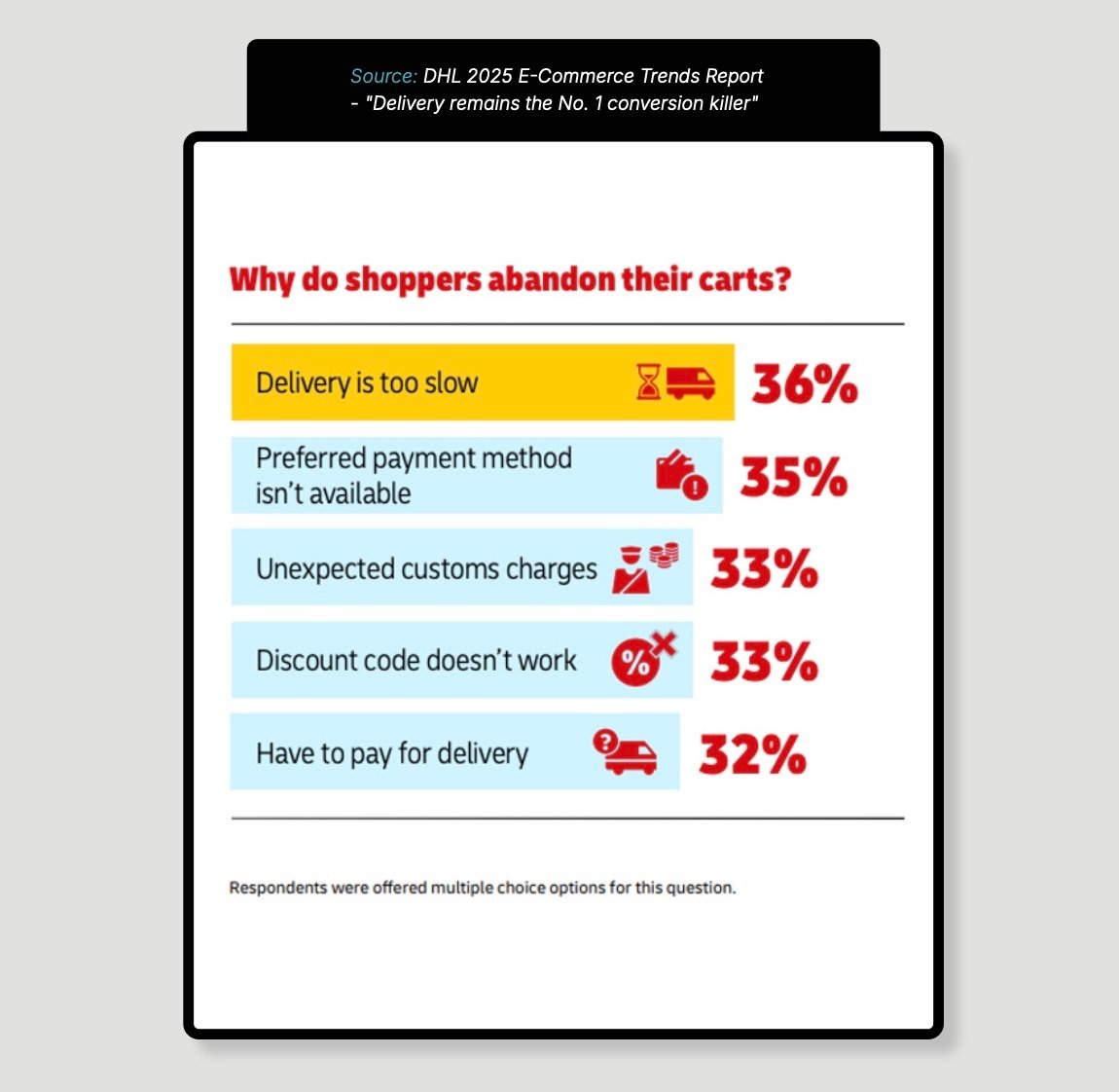
Why focus on scalable delivery? Because more than 40% of total supply chain cost comes from the last-mile delivery alone, and fragile shipping processes can directly hurt sales. When delivery options are inconvenient or unclear, customers abandon their carts. If you rely on a single carrier or manual workflows, one disruption can grind operations to a halt.
In contrast, a scalable approach (diversifying carriers, automating tasks, leveraging data, offering great delivery experiences, and governing processes) will keep your operations stable under pressure, even during peak seasons or unexpected events. The result is time saved, costs cut, promises kept, and a delivery experience that sets you apart.
Below, we outline five proven strategies to scale up your e-commerce delivery operation without limits. Each strategy addresses a critical aspect of growth, from preventing bottlenecks to delighting customers. Let’s dive in:
1. Diversify to deliver:
Eliminate carrier bottlenecks and unlock choice
Relying on a single shipping carrier is a recipe for trouble. Single-carrier setups create fragile points of failure: if that carrier has an outage, strike, or capacity crunch, your orders can’t go out.
The first strategy is to adopt a multi-carrier shipping approach. By diversifying your carrier mix, you ensure no single disruption can stop your fulfillment. If one carrier faces delays, an alternative can pick up the slack, keeping your promise dates intact and customers satisfied.
Multi-carrier management isn’t just about backups; it’s about unlocking choice and flexibility for both your business and your buyers. Different carriers excel in different regions and service types. Having access to multiple delivery partners lets you allocate each package to the best-performing carrier based on cost, speed, destination, or service level. This optimization drives down costs and prevents avoidable delays.
For instance Hairlust, a Danish e-commerce brand leveraged multi-carrier shipping to support 615% growth in orders during rapid international expansion. The ability to quickly route shipments through the ideal carrier in each market made such explosive growth manageable.
Critically, offering multiple carriers also means offering customers more delivery options at checkout. Shoppers today expect choices: standard home delivery, express shipping, pick-up points, locker delivery, greener shipping methods, etc.
By diversifying carriers, you can present the delivery options that each customer values. This has a direct impact on sales: when Flying Tiger Copenhagen added more pickup/drop-off options via nShift’s multi-carrier checkout, their conversion rate jumped by 20%.
In short, more delivery options = more happy customers. Diversification gives you the capacity and flexibility to handle growth without missing a beat, improving both resilience and customer experience.
2. Automate for resilience:
Use real-time controls to minimize manual firefighting
Scaling up is tough when your team is stuck putting out fires. Many e-commerce operations rely on manual processes: copy-pasting order info, comparing carrier rates by hand, or frantically rebooking shipments when something goes wrong. This doesn’t scale. The second strategy is to embrace automation throughout your delivery workflow to boost resilience and efficiency.
Automation means letting technology handle the heavy lifting of shipping: automatically selecting the optimal carrier for each order (based on rules you set), printing labels and customs documents in a click, and even triggering backup solutions when issues arise.
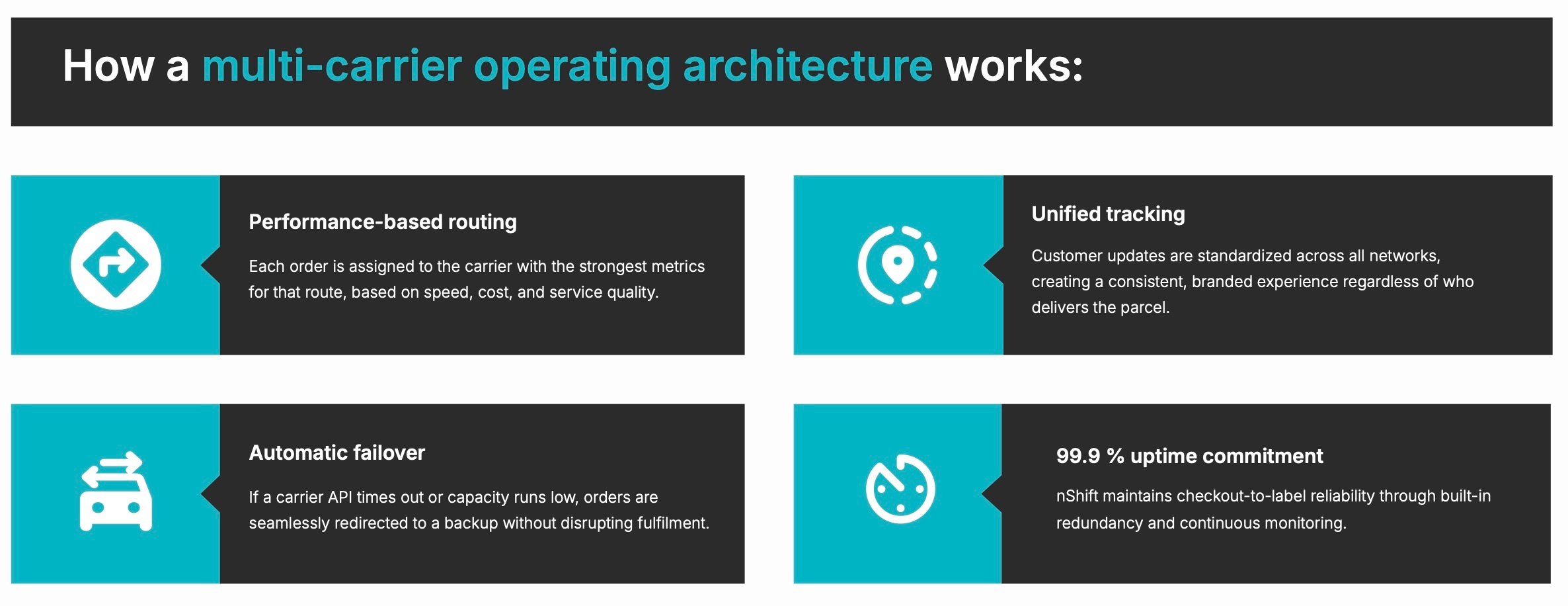
By implementing smart shipping software or rules engines, retailers can achieve near 99% uptime through automated carrier failover: meaning even if one carrier’s system goes down, orders are rerouted in real time to another carrier so nothing stalls. Essentially, automation acts like an insurance policy against downtime, ensuring you can keep promises “no matter the conditions”.
The efficiency gains are massive. Tasks that took employees hours are done in seconds, freeing your team to focus on growth and exception handling. Consider warehouse operations: JYSK, a global retailer, made their picking and packing 40% more efficient by automating the pick-pack-ship flow. Another nShift user cut new carrier onboarding from 40 hours of IT work to just 5 minutes by using pre-built integrations. These kinds of improvements translate to lower labor costs and faster throughput – effectively scaling output without scaling headcount.
Automation also reduces human error and late shipments. For example, instead of a staff member noticing at 5 PM that Carrier X has an outage, an automated system will have already switched those labels to Carrier Y at 5 AM. Fewer shipping mistakes and delays mean fewer support tickets and refunds.
In short, automation is about working smarter, not harder: you fulfill orders faster, with less manual effort and greater reliability.
3. Optimize with data:
Leverage analytics for smarter decision-making
Data is the fuel that powers continuous improvement. To scale effectively, you need clear visibility into your delivery performance and costs. The third strategy focuses on harnessing delivery data and analytics to drive better decisions. By measuring the right metrics and analyzing trends, you can pinpoint inefficiencies and proactively fix them to boost profitability and service levels.
Start by consolidating your delivery data across all carriers and channels into a single source of truth. This unified view lets you monitor key performance indicators in real time: on-time delivery rates per carrier, average transit times by region, percentage of orders hitting promised dates, shipping cost per package, frequency of “Where Is My Order?” inquiries, return rates, and more.
With these insights, patterns emerge. You might discover Carrier A consistently misses SLAs to a certain region, prompting you to shift those shipments to a more reliable partner. Or data could reveal that an express shipping option isn’t often chosen, suggesting you could remove it to cut costs or replace it with something customers prefer.
Crucially, data empowers you to hold carriers accountable and negotiate better terms. When you can compare performance across carriers with hard numbers, you’re in control. Businesses using multi-carrier strategies report that having comparative delivery stats enables them to negotiate better rates and service agreements. You can also identify opportunities to refine your delivery promise: for instance, if 95% of orders are arriving before the quoted 5-day timeframe, you might confidently tighten your promise to 4 days to delight customers without extra cost.
One concrete example: sportswear brand ICIW unified their tracking and customer service data, and discovered they could cut WISMO (Where Is My Order) calls by 50% by improving proactive tracking notifications. They implemented branded tracking through nShift, and indeed saw WISMO inquiries drop by half, freeing their team and improving customer satisfaction. This is the power of data: when you measure it, you can improve it.
From carrier scorecards and delivery dashboards to AI-driven predictions (like anticipating peak season bottlenecks), data tools will guide your scaling journey.
4. Orchestrate without overwhelming:
Keep delivery choices simple, fast, and reliable
As you expand your delivery capabilities with new carriers, new shipping options, or new markets, complexity can balloon. The fourth strategy is about orchestrating your delivery offerings in a way that remains simple and convenient for customers (and your team). In other words, you want to offer rich choices and seamless service, without overwhelming anyone.
From the shopper’s perspective, choice is great, but too much choice or a confusing checkout can backfire. Orchestrating the delivery experience means curating the options and information presented to customers to maximize satisfaction and conversion.
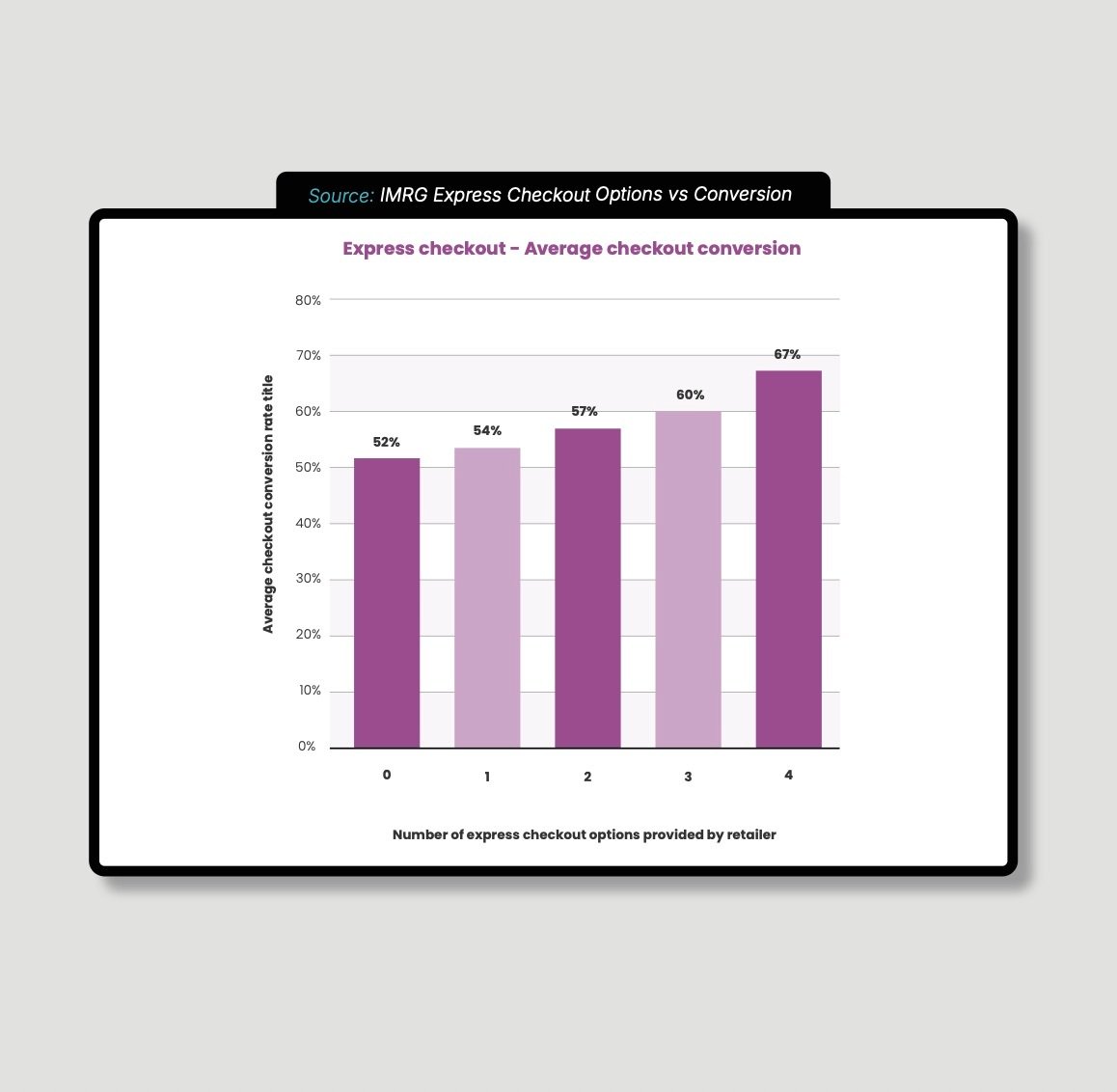
For example, offering a pickup-point delivery (out-of-home delivery) can be a win-win: it’s often cheaper for you and convenient for many customers. However, you should present it smartly. Leading retailers use tools (like nShift Checkout) to A/B test and determine the optimal mix of delivery options for conversion. Often, they find that surfacing a convenient option like out-of-home delivery as the default can dramatically increase its usage – in fact, when one retailer made pick-up points the default choice, 35% of customers chose it, reducing home delivery costs and failures.
Orchestration also covers how you manage the delivery journey post-checkout. Customers want speed and transparency, but they don’t need to know every internal detail of your multi-carrier setup. A well-orchestrated operation might use five different carriers behind the scenes, but to the buyer it feels simple: they get accurate delivery dates, regular updates, and easy returns all in one place. Achieving this might involve a centralized delivery management platform that harmonizes tracking and notifications across carriers, so you can present a single branded experience. The goal is to prevent customers from feeling any complexity even as you scale up your logistics network.
On the back end, orchestrating effectively prevents your team from getting overwhelmed as well. Clear workflows (e.g. automatically assign certain order types to certain carriers, unified dashboards for all shipments) mean your operations staff aren’t juggling 10 different carrier portals or processes. They have one “command center” to handle everything. This leads to faster issue resolution and maintains consistency in service quality.
Bottom line: keep the delivery experience streamlined even as you add more capabilities. This strategy ties together the previous ones: using automation and data to manage complexity behind the curtain, while delivering a smooth, reliable experience up front.
5. Govern for growth:
Turn delivery operations into repeatable, scalable processes
The final piece of the puzzle is governance: implementing the right processes, policies, and tools to sustain growth for the long haul. Scaling isn’t a one-time project, it’s an ongoing discipline. By governing your delivery operations with clear, repeatable processes, you ensure that improvements stick and success can be replicated as order volumes climb or as you expand to new markets.
Governance for growth starts with treating shipping and fulfillment as a core business function with KPIs and continuous improvement cycles. Define standard operating procedures (SOPs) for critical workflows (packing, carrier selection, exception handling, returns) and train your team on them. When everyone follows best practices, you get more predictable outcomes and can onboard new staff or third-party partners faster without quality slipping.
Another aspect is compliance and risk management. As you scale, you may encounter new regulations (customs, data privacy in tracking communications, carrier insurance requirements, etc.). A governed approach ensures you have checks in place so nothing is overlooked. For example, setting up automated compliance rules (like product restrictions by country or required data for cross-border shipments) will save headaches and keep expansion plans on track.
Critically, governance relies on measurement and feedback loops. This ties back to strategy #3 (data): you should regularly review performance dashboards and customer feedback, then refine processes accordingly. Maybe you institute a weekly “delivery ops standup” to review key metrics and identify root causes for any late deliveries or cost overruns, driving corrective actions. Over time, these iterations make your operations incredibly robust and efficient. You turn ad-hoc fixes into standard process if they work well (i.e. “scale what works”), and you eliminate practices that don’t add value.
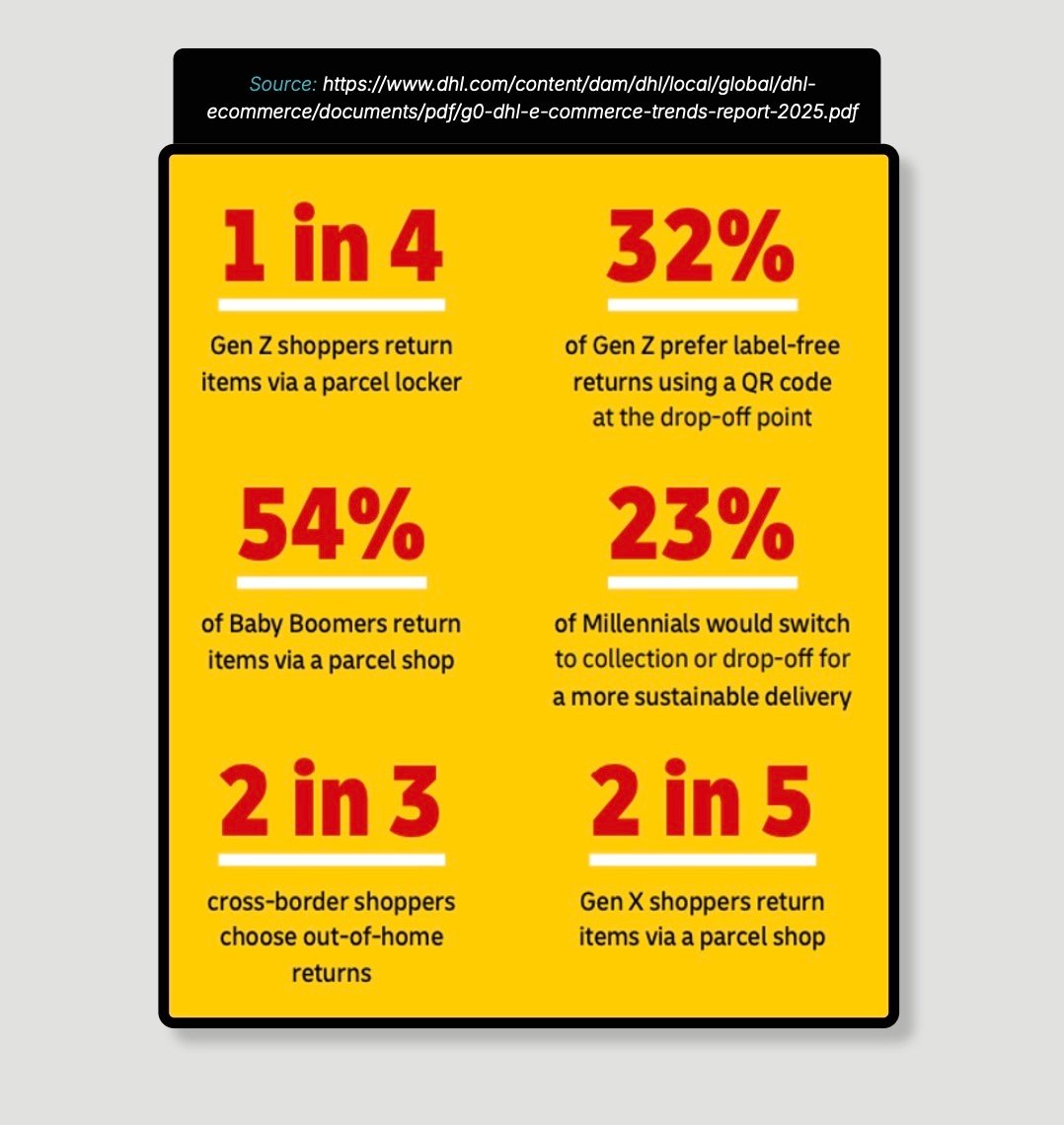
Finally, ensure your technology stack can support your growth. A lot of growing retailers hit a wall because their initial shipping software or warehouse system can’t handle higher volume or lacks features like multi-carrier support. Part of governing for growth is choosing scalable tools (like an enterprise-grade delivery management platform) that won’t constrain you.
For instance, nShift connects to 1,000+ carriers and supports hundreds of integrations, so it can grow with you as you add carriers or enter new markets without custom development. Having such a future-proof foundation means you won’t need a major overhaul down the line – your delivery capabilities can keep expanding alongside your sales.
By formalizing processes and investing in scalable infrastructure, you create a delivery operation that’s repeatable, measurable, and endlessly scalable. This gives you a competitive edge: you can handle spikes in demand or launch in a new country with confidence that your delivery promise will hold up.
As proof, many nShift customers have transformed delivery from a cost center into a growth driver. They report achievements like 20% higher conversion rates, 50% fewer support calls, and triple-digit order growth after strengthening these pillars. With governance and continuous improvement, these gains aren’t one-offs... they’re the new normal.
If you’d like to go deeper or share this framework with your team, explore the rest of the “Scale your ecommerce operation without limits” series:
- Diversify to deliver
- Automate for resilience
- Optimize with data
- Orchestrate without overwhelming
- Govern for growth
Ready to put it all into practice? Get the full guide: Scale your ecommerce operation without limits

Author
Thomas Bailey
Product Innovation Lead, nShift
Thomas plays a key role in shaping how new features and platform improvements deliver real value to customers. With a background spanning product, tech, and go-to-market strategy, he brings a pragmatic view of what innovation looks like in practice and how to make delivery experiences work harder for your business.