Changing not only how consumers shop online, but also how ecommerce retailers compete for visibility and sales.
As AI is becoming increasingly important in shaping consumer buying habits, the traditional retail customer journey is being reshaped. In the UK alone, AI now influences £31.4 billion in online sales, more than 20%. AI now looks at all elements of the buying process, including those most humans would not consider until they've reached the online checkout.
That means the checkout, delivery choices, returns policies and other post-purchase experiences are even more important in getting AI to recommend a product to a potential customer.
“We're entering a new era where AI doesn't just answer questions, it helps consumers decide what to buy. Retailers will need to ensure their delivery capabilities are as intelligent and dynamic as the AI experiences guiding those purchasing decisions.”
Jurgen Leijdekker, CEO, nShift
This change reflects the speed of change with AI, as shoppers increasingly delegate product discovery and purchasing to AI agents. This is known as “agentic commerce”.
nShift describes this trend as an “agentic inversion”. AI now performs the discovery and comparison stages of shopping, while retailers still own the transaction, checkout and delivery promise.
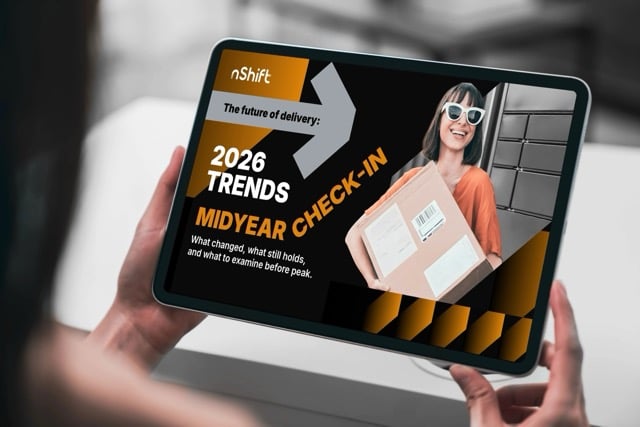
The growth of AI agents is the fastest-moving of the ten trends explored in nShift's latest report, “The Future of Delivery: 2026 Trends Midyear Check-in”. The report notes: “If your delivery options cannot be read by a machine, they are starting to be invisible to one.”
Salesforce estimates AI and autonomous agents influenced 20% of retail sales during the 2025 holiday season, equating to around $262 billion in revenues.
“The ten trends we identified remain firmly on track, and the market is moving faster than expected. Retailers that can adapt carriers, delivery options and customer promises together will be best placed to protect both conversion and margin.”
Jurgen Leijdekker, CEO, nShift
Other trends in online retail identified in the report include:
- Companies are starting to use AI in real operations. Most supply chain businesses are not rebuilding everything around AI. Instead, they are using it to solve specific problems where it can deliver measurable improvements, such as giving customers more accurate delivery times.
- Parcel lockers and collection points have become a normal part of delivery. Their use is growing rapidly across Europe, with major delivery companies expanding their locker networks and even sharing them with competitors. They have become especially important for returns, with most returns now being dropped off at lockers, parcel shops or other collection points.
- Businesses now expect delivery networks to cope with disruption. Recent tariff changes forced companies to rethink their supply chains much faster than expected. To be truly resilient, businesses need to be able to switch carriers, update customs paperwork and change delivery promises to customers quickly and in a coordinated way.
- Keeping up with regulations now depends on good data. While some environmental reporting rules have been delayed or scaled back, businesses still face growing requirements around customs, online marketplaces, AI and consumer rights. Having one accurate, well-organised shipment record that can support all these requirements is more valuable than creating a separate data system for each new regulation.
The full report, The Future of Delivery: 2026 Trends Midyear Check-in, is available to download now.
About nShift
nShift is the global leader in multi-carrier shipping and delivery experience. The nShift platform connects retailers, brands, manufacturers, distributors and logistics providers to over 1,000 carriers worldwide, helping businesses manage checkout, shipping, tracking and returns in one place. With over one billion shipments supported annually across 190 countries, nShift enables companies to deliver efficiency, transparency and exceptional customer experiences.
For more information on press releases, please contact
Denise Oakley: denise.oakley@nshift.com