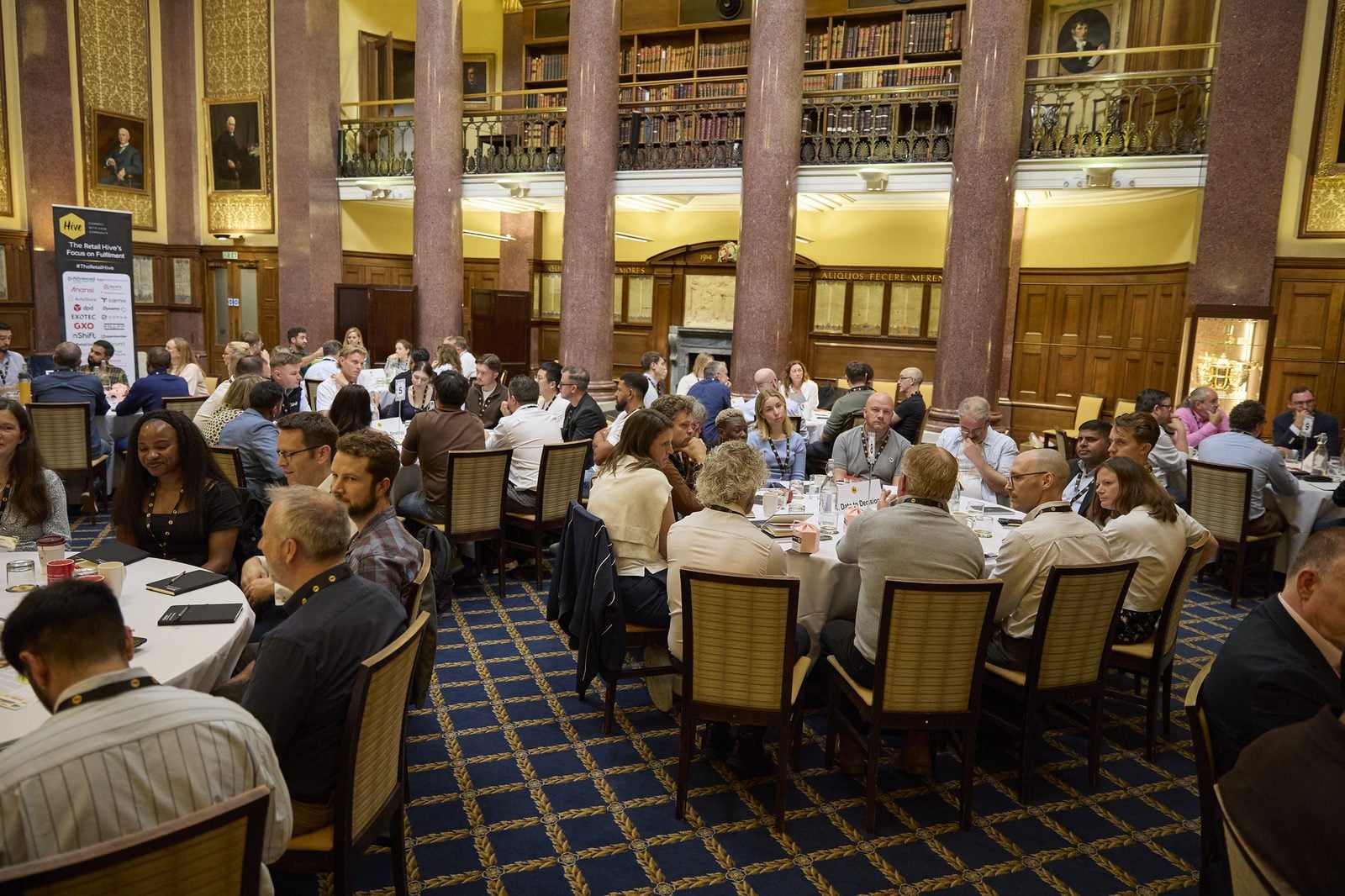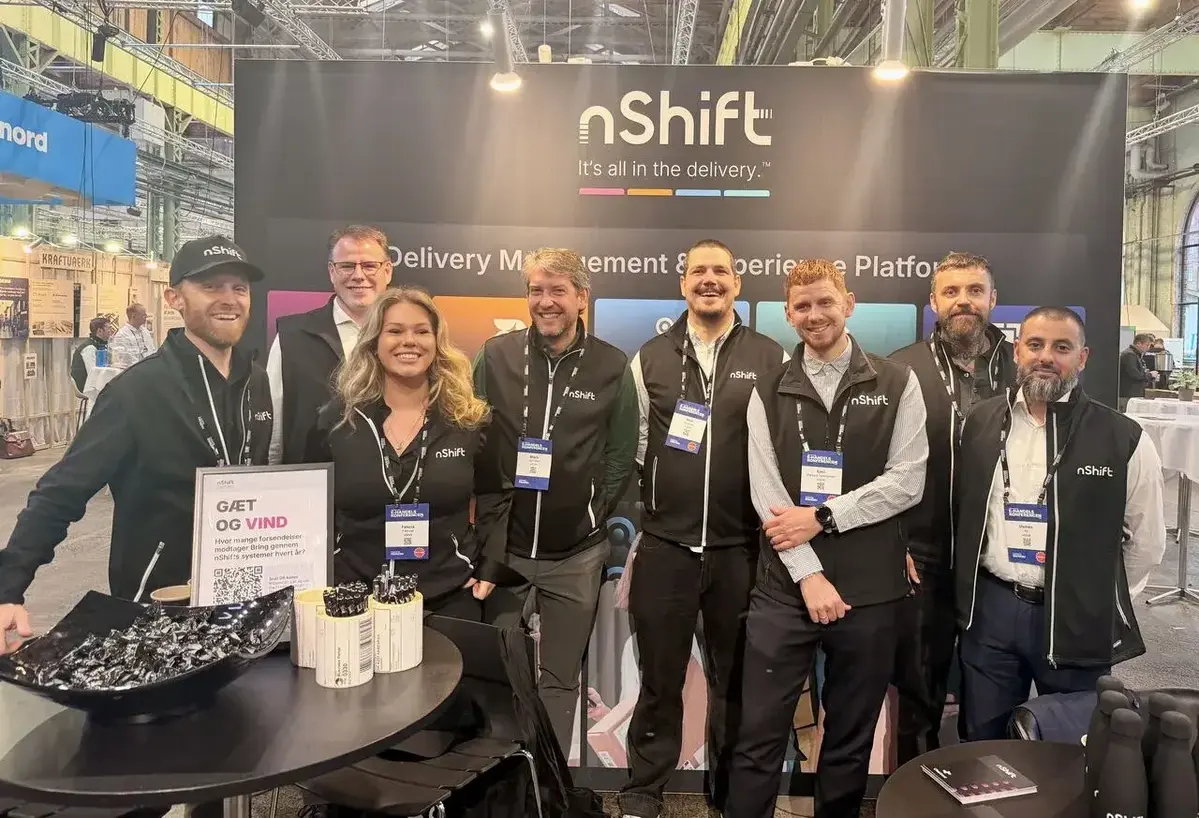
Denmark's largest ecommerce exhibition filled Lokomotivværkstedet in Copenhagen on 8 October for E-handelskonferencen 2026, hosted by Dansk Erhverv. Between the stages and the stands, a question kept coming back: what happens to your operation when order volumes suddenly take off?
At the nShift stand, teams wanted fewer manual steps, fewer errors and an operation that keeps up at peak. We took the same question onstage with a customer and a partner.
How System Transport scaled from simple to complex
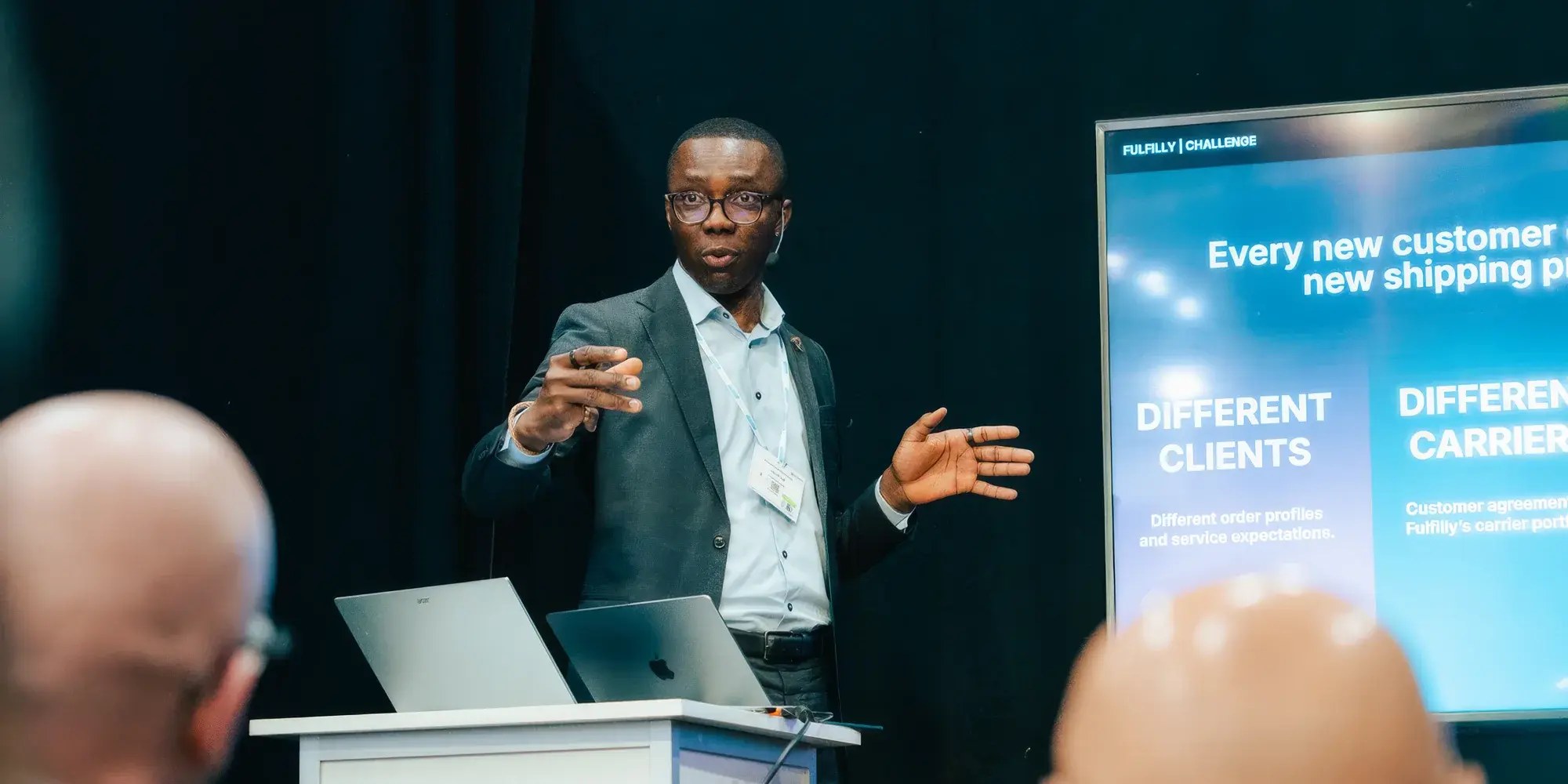
Our session, "Can your warehouse and deliveries keep up when orders explode?", brought three perspectives on one scaling journey. nShift's Usman Ali, Customer Manager, was joined by our customer System Transport, represented by Andreas Næsh Dennung, Business Development Manager, and our partner Element Logic, represented by Nikolaj Bjørn Eriksen, Vice President Scandinavia.
System Transport, a Danish-owned logistics and fulfillment company with more than 40 years of experience across warehousing, ecommerce, retail and transport, opened with its own growth story. In its early years, a handful of systems and short decision paths kept things manageable. As the company took on more customers, sales channels and processes, each new system (ERP, WMS, TMS, CRM, BI, webshop) added another integration, and with it the risk of silos, duplicate data and missing real-time information.
A business can hit this complexity long before it ships large volumes. New products, markets, carriers or delivery options can strain a business that still sends a modest number of parcels.
In the before-and-after picture shown during the session, manual workflows, siloed processes and double data entry gave way to one connected flow: orders from ERP and webshops move into the warehouse system, through picking and packing, then on to transport, tracking and delivery. System Transport set out to cut manual work and bottlenecks with a setup that works today and keeps up as the business grows.
Automation has to fit the business
Element Logic brought the warehouse perspective. As an AutoStore partner, it designs automated storage and picking systems for warehouses of very different sizes. In the figures Element Logic showed, the smallest AutoStore installations run around 1,500 bins and three robots, a typical one around 40,000 bins and 40 robots, and the largest global installation 1,245,000 bins and 1,243 robots, all built from the same modules. Which size fits depends on the business, its order volumes and how sharp its peaks are.
Danish retailer Imerco ships delicate and high-volume home goods across 165 stores and to consumers nationwide, with peak-season orders rising by as much as 240%. With nShift Ship integrated into its AutoStore-powered warehouse, Imerco handles those seasonal spikes and has increased annual outbound shipments by 14%.
A faster warehouse moves the bottleneck to shipping
An efficient warehouse is only one part of the order flow. When picking and packing get faster, carrier booking, labels and dispatch have to keep pace, or you have only moved the bottleneck downstream.
Once a parcel is packed, delivery management automates the shipping decisions that follow:
- Carrier: choosing the carrier for each shipment and switching when needed
- Service: matching each order to the right delivery service
- Label: producing the correct label and documents automatically
- Markets: adding new countries without adding manual touchpoints
Each handoff between systems is a place where an order can stall while someone keys in data. The session's closing slide asked the audience to automate the whole flow, from order through warehouse to shipping.
Our article on the missing integration in your digital supply chain covers how ERP, WMS, ecommerce and transport systems connect from order to delivery.
Three questions to take home
The session closed with three questions growing businesses can ask themselves:
- What would you want to know before automating your warehouse and shipping?
- What matters most when you decide to automate the warehouse?
- When should you start thinking about delivery management?
Our answer to the third: before shipping becomes the bottleneck, at whatever volume that happens. If manual processes, carrier management or shipping start taking unnecessary time, creating errors or limiting your options, it is time to look at your setup.
What we heard at the stand
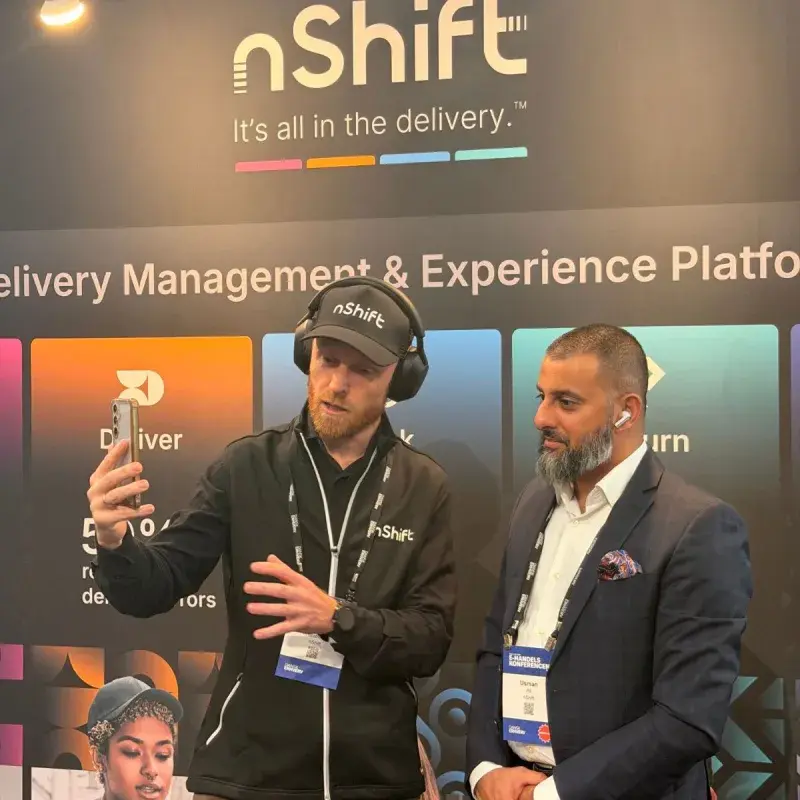
At our stand, teams talked about automation as a way to free their staff from repetitive tasks, manual errors and operational bottlenecks.
AI took up less of the day than we expected. Some teams use it here and there, and agentic commerce came up in a few talks, but most conversations stayed with getting orders out the door reliably as volumes grow.
Many visitors already knew nShift for booking shipments and printing labels. We enjoyed showing them the rest of the delivery journey: Checkout for delivery options that convert, Track for branded tracking, Returns for self-service returns, and our newly launched nShift Audit, which checks carrier invoices against agreed tariffs and shipment data.
Guess the number: our stand competition with Bring
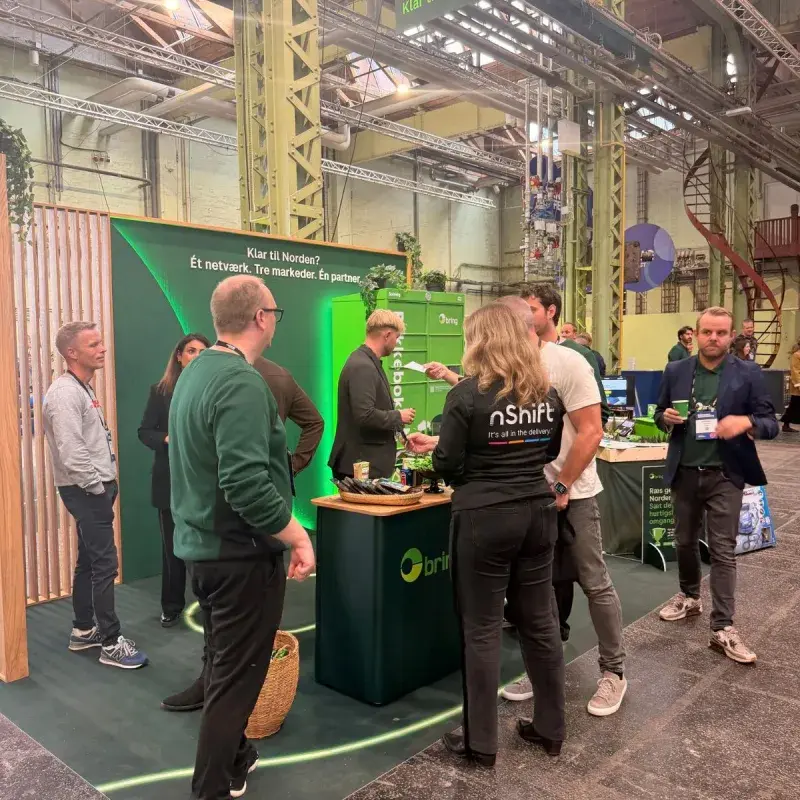
Our stand sat right next to our carrier partner Bring, so we teamed up for a competition. Visitors started at the nShift stand with one question: how many shipments does Bring receive through nShift's platforms each year?
After scanning a QR code and submitting a guess, they collected a Bring label, took it next door and picked up Bring or nShift merch. Every entry went into a draw for a snack basket for the winner's whole office.
The correct answer? 37 million shipments a year.
Thank you, Copenhagen
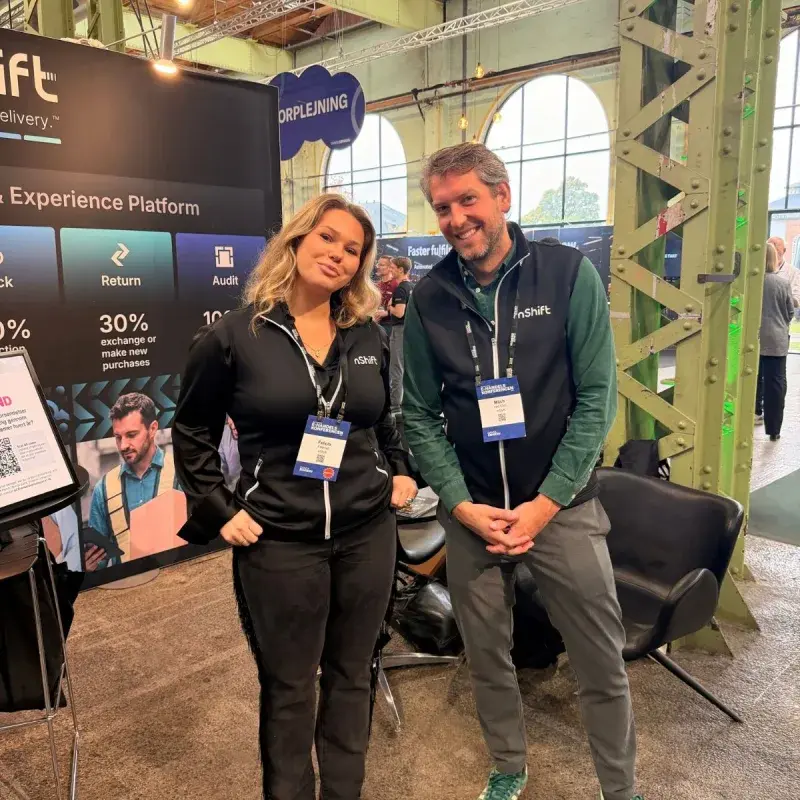
A big thank you to System Transport and Element Logic for joining us onstage, to Bring for a competition that kept both stands busy, and to Dansk Erhverv for a great event. Thanks also to everyone who stopped by and spoke with our team.
Getting ready for peak season? Join our next Solved session, Peak on your terms, on 5 November to see the no-code delivery and returns rules that save time and margin.