When a business customer clicks the buy button, the transaction is complete, but the delivery promise made during the purchase still has to be kept. In B2B, a late delivery can hold up a production schedule, a store's replenishment or an installation on site.
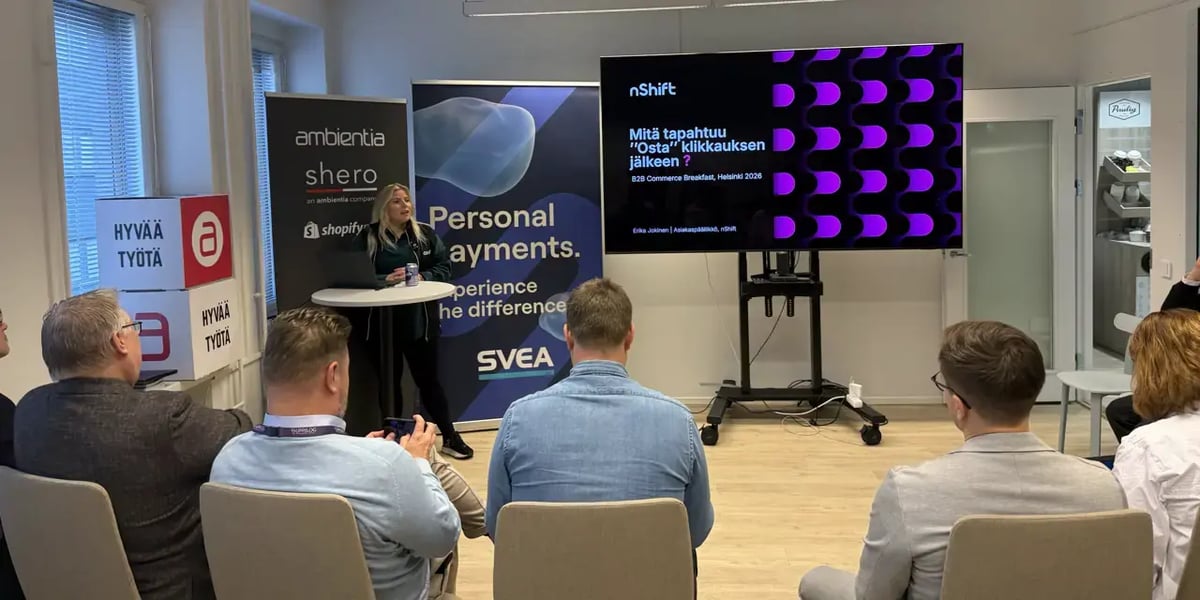
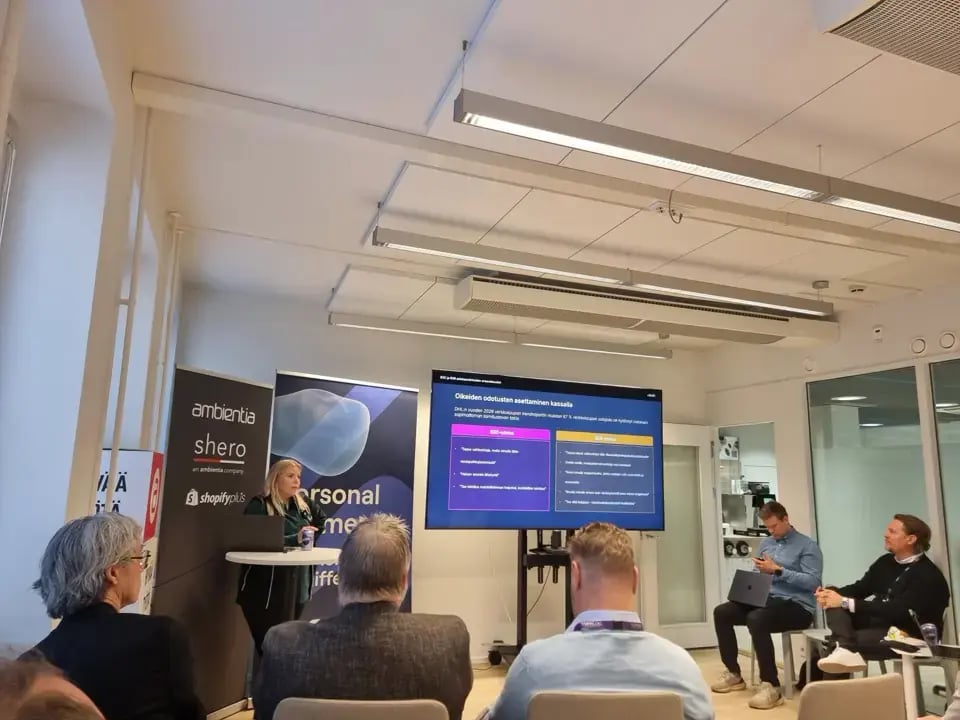
I spoke about this at B2B Commerce Breakfast on 22 October, an event nShift co-hosted with payments and financing provider Svea and technology and design company Ambientia. If you are reviewing delivery for your own business customers, connect with me on LinkedIn to discuss your delivery operation.
B2B delivery is the shipment of goods from one business to another, such as pallets to a retailer's warehouse, components to a factory or equipment to a construction site. It succeeds when the shipment arrives complete, inside the agreed time window, with information the receiving business can plan around.
How B2B delivery differs from B2C
In DHL's 2026 E-Commerce Trends Report, which surveyed 29,000 shoppers across 29 countries, 67% said they had abandoned a purchase because of the delivery offering. Business buyers often bring those expectations to work.
In B2C, a delivery usually completes a personal purchase. In B2B, it often starts the next step in another company's operation, so each expectation takes an operational form:
| A consumer asks | A business customer asks |
|---|---|
| "Give me choices" | "Give me the right options for this order, site and customer" |
| "Tell me when it arrives" | "Give me an arrival time (ETA) I can plan my operation around" |
| "Keep me updated" | "Alert me before a delay becomes my problem" |
| "Make it easy" | "Make it easy, despite my complexity" |
B2B delivery also fails in different ways:
- Shipments are often fewer and bigger. A failed pallet delivery hits one customer and one large order at once.
- Goods usually go to named receivers with set hours. A missed dock window can stop a production line, so the receiver needs to know that the complete shipment will arrive when the site can take it.
- The promise is often written into a contract. Delivery commitments can be part of a service-level agreement (SLA) tied to the contract's renewal.
- Several businesses wait on one shipment. The manufacturer, the distributor, the installer and the end customer may all be following it.
Our guide to evidence-grade delivery for B2B shipping looks at the delivery records B2B shippers rely on, and gives six questions to ask your next delivery software vendor.
The B2B delivery promise starts at checkout
Many delivery failures begin before a shipment leaves the warehouse. A customer who orders at 4:40 pm and is offered next-day delivery, when the carrier collects at 4 pm, has been given a promise the operation cannot keep.
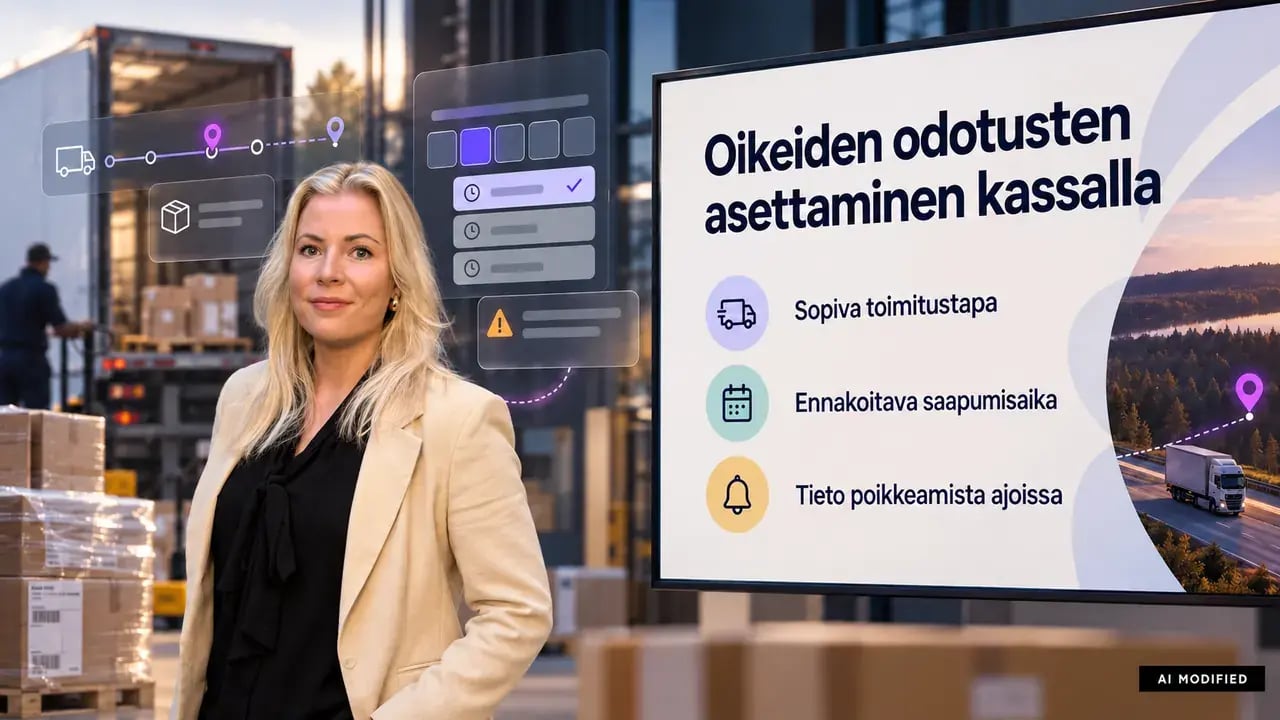
Our field guide, The delivery control gap, lists checkout promises that carriers cannot fulfill among the places where delivery operations lose control. To keep the promise, checkout, warehouse cut-offs, carrier capacity and delivery rules have to work from the same information.
Danish paint manufacturer Flügger sells to professional painters through five B2B webshops with nShift Checkout. Its team sets delivery rules by cart value, weight and postal code. Express delivery is switched off automatically for rural areas, and shipping prices recalculate as customers add heavy items. Read Flügger's story.
The systems behind a B2B delivery promise
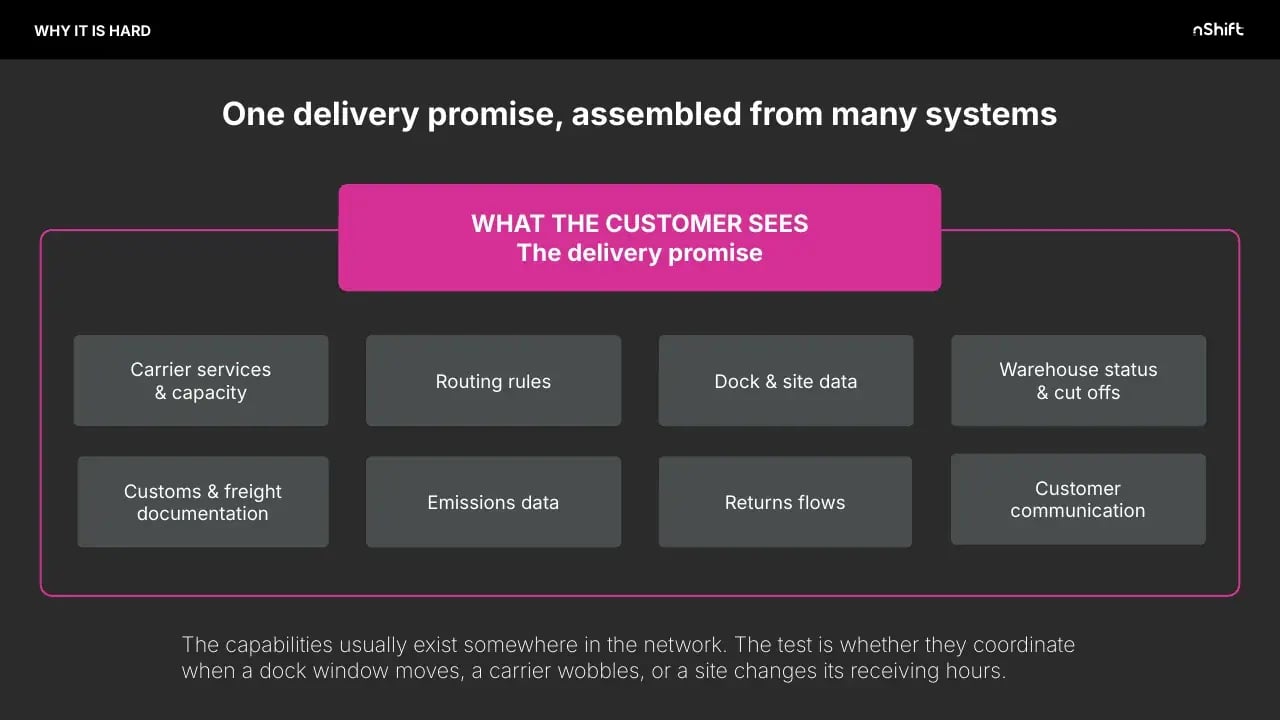
To the customer, a delivery promise is one date. To keep it, the enterprise resource planning (ERP) system, the warehouse management system (WMS), the ecommerce platform, the carriers and the delivery rules all have to share information. Carrier services, routing rules and cut-off times are usually held in separate systems. Problems start when a dock window moves, a carrier is delayed or a site changes its receiving hours, and the systems do not pass that change on.
Without connected systems, someone checks each customer's requirements, re-keys data from one system into another and chases exceptions by hand.
Companies that sell to both businesses and consumers carry both sets of requirements. B2C brings parcels, home delivery, lockers and pickup points, and consumer choice. B2B brings pallets, business addresses, scheduled deliveries and negotiated carrier services.
Our article on expanding from B2B into B2C covers the delivery questions to settle first, from carrier strategy to returns and visibility.
How a 3PL keeps shipping consistent across clients
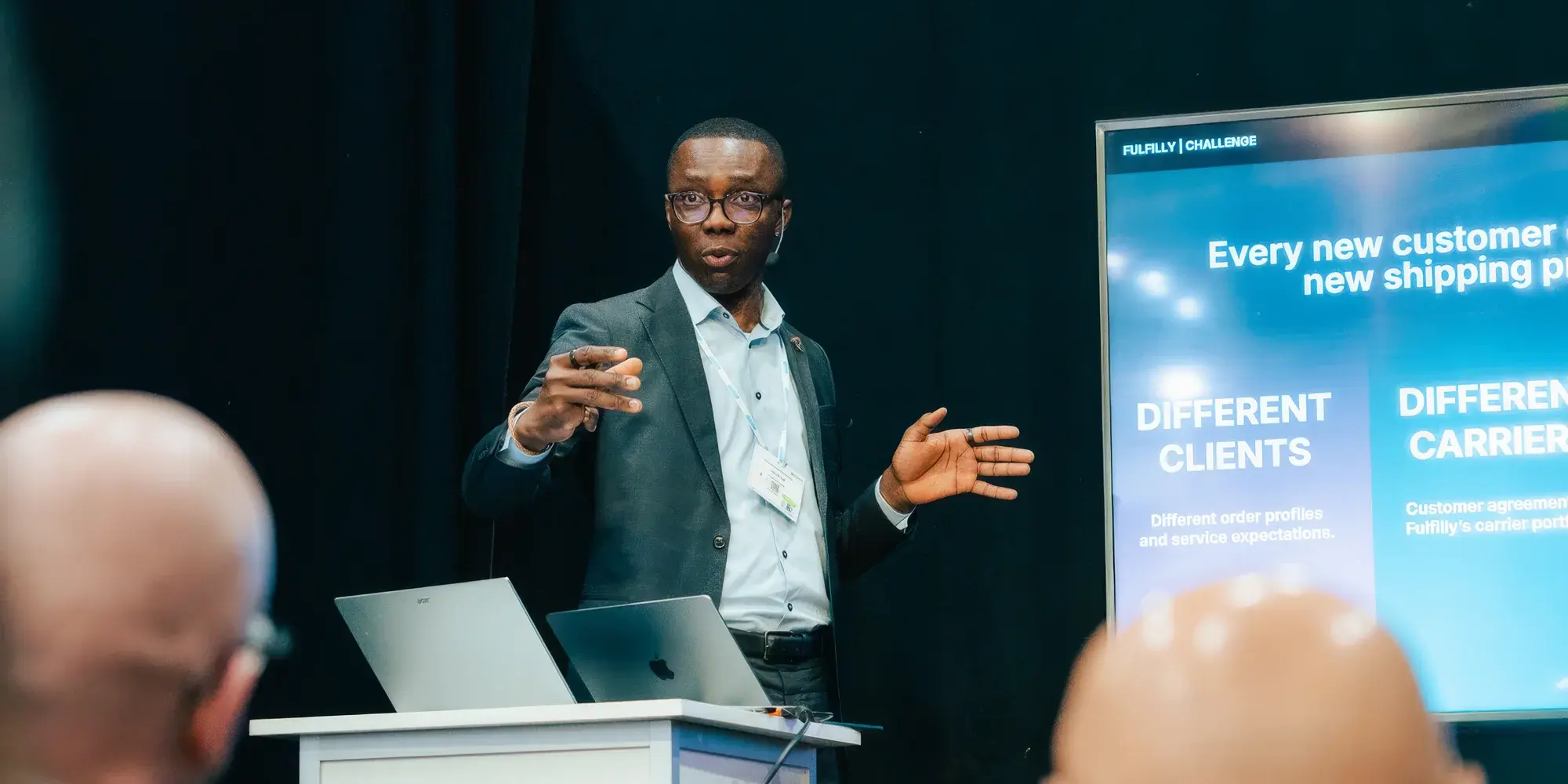
The clients of Fulfilly, an Estonian third-party logistics (3PL) provider, arrive with different order profiles, carrier preferences and delivery requirements. Helen Vaaks, Sales & Account Manager at Fulfilly, described the risk:
"One of the main challenges for us as a 3PL is keeping shipping standardized across very different clients, carriers, and order profiles. Without the right setup, things quickly become fragmented due to different rules, manual decisions, and too much dependency on people instead of systems."
Fulfilly uses nShift Delivery, integrated with its Ongoing WMS, to apply consistent shipping rules across customers and carriers. Clients can use Fulfilly's carrier portfolio or keep their own carrier agreements and pricing, and new clients and carriers are added without rebuilding the warehouse process each time. Read Fulfilly's story.
When the delivery window is 30 minutes
Unilever Sweden ships around 800 pallets a day from its Helsingborg warehouse to retailers such as ICA and COOP, with delivery windows as narrow as 30 minutes. A truck that misses its slot goes back to the warehouse.
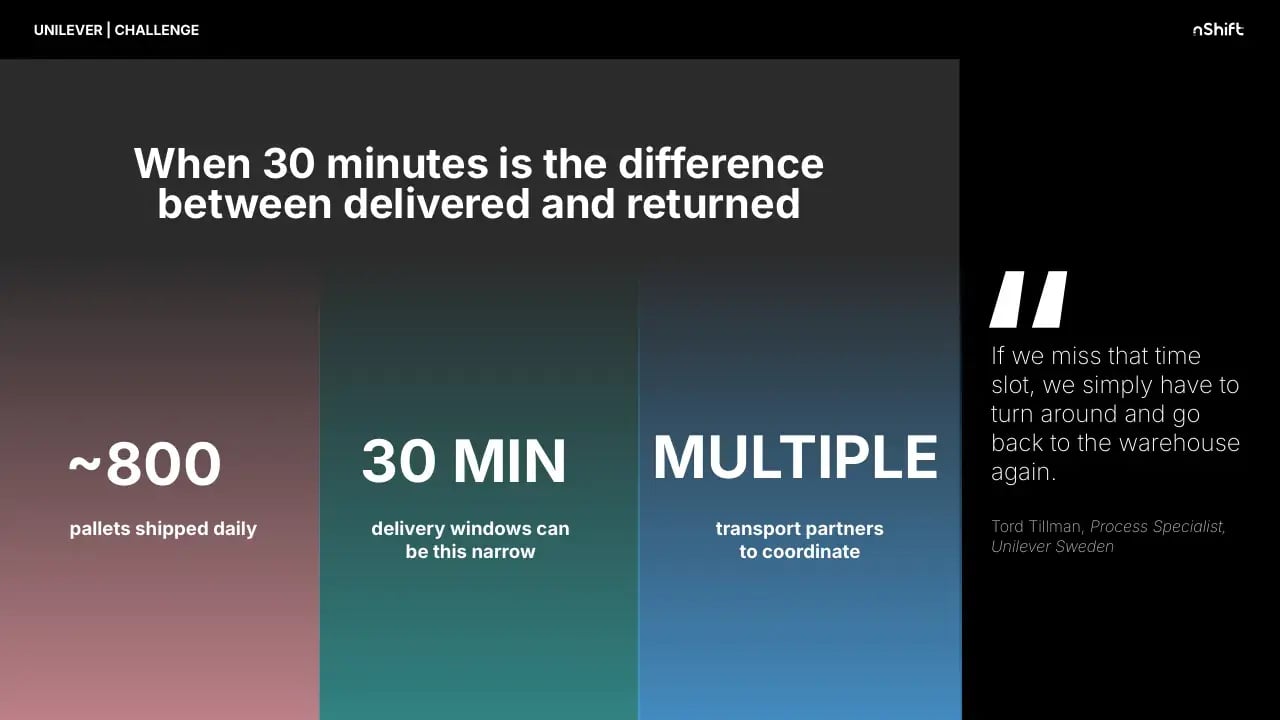
Unilever uses nShift TMS, our transport management system, to automate shipment tracking and reporting into its SAP system. Each night, nShift provides a file summarizing the previous day's deliveries, so the team can check timing, status and carrier performance without manual data entry. When promised delivery times are being missed, the team can respond, for example by changing carriers or agreeing a different time slot with the customer. Read Unilever's story.
Spot the problem before your customer does
Each of these four checks on delivery data compares what happened with what you promised or planned:
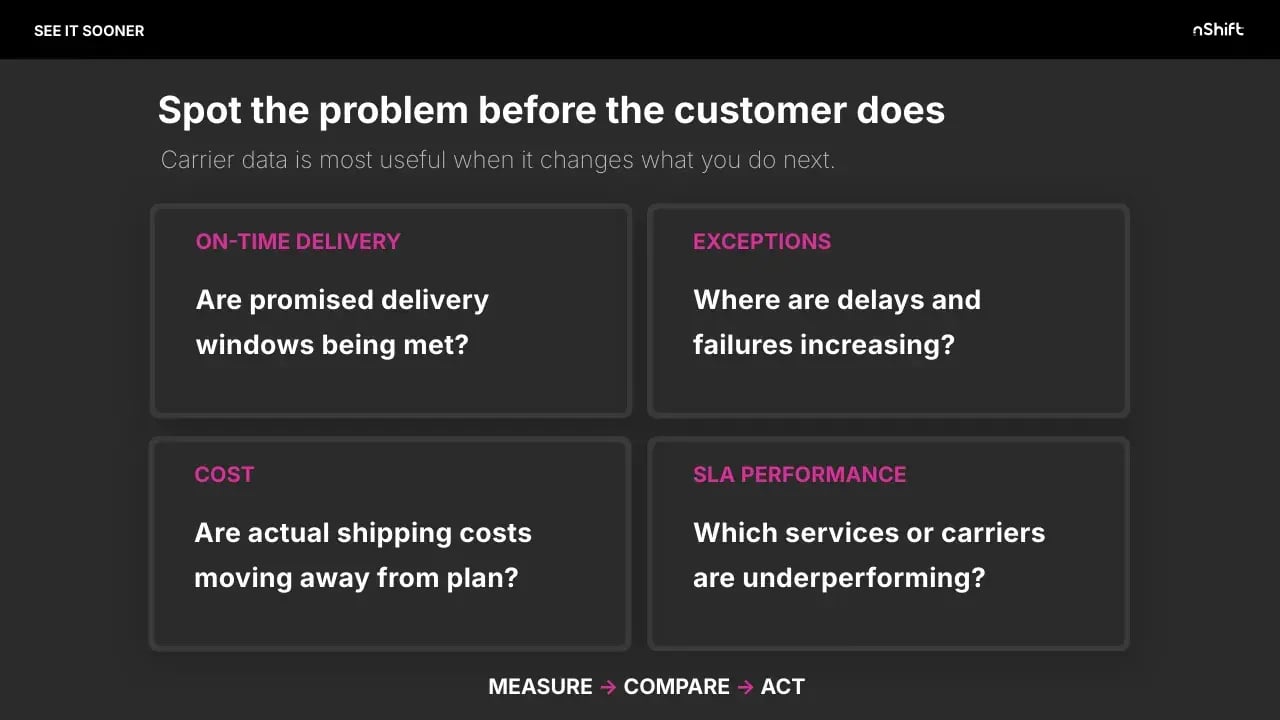
- On-time delivery: check arrivals against the windows you promised customers.
- Exceptions: track delays and failures by region and carrier to see where they are rising.
- Cost: set actual shipping costs against your plan.
- SLA performance: hold each carrier and service to the service levels in your contract.
Warn customers early when a delivery is delayed
When a shipment's tracking status has not changed in three days, a consumer usually calls customer service. A business customer may have a warehouse team waiting for the goods, an installation postponed or a production plan rebuilt at short notice.
Business customers can usually manage a delay if they hear about it early enough. To make that possible, identify the issue early, see which customers and shipments are affected, and tell them before they have to ask.
Swedish activewear brand ICANIWILL replaced basic warehouse emails with branded notifications from nShift Track, and has seen a 50% reduction in delivery-related questions from its customers since going live. The same early-warning approach applies to B2B shipments. Pontus Eriksson, Chief Operating Officer at ICANIWILL, explains how the notifications work:
"The customer event function means that if something should have happened but didn't, a notification is triggered so we can proactively keep the customer informed of delays or, even better, solve the issue before the customer knows about it."
Finnish HVAC wholesaler Dahl Suomi, part of Saint-Gobain, handles more than 700,000 parcels a year across 18 sites. "Lots of customers call us asking when their packages are likely to arrive. Now, all we have to do is go into the nShift portal and we can immediately see which carrier has taken it for delivery and where it is in the process," says Vaino Pokki, Training and Development Specialist. Read Dahl Suomi's story.
Give B2B returns the same visibility
In B2B, a return can involve large quantities, damaged goods, inventory adjustments, credit notes and several people on each side, so each return changes stock levels and invoicing. With nShift Returns, customers can register returns themselves, so the business knows what is coming back before the goods arrive and can prepare stock updates and credit notes.
What business and consumer customers need from delivery
Consumers look for choice, convenience, tracking and proactive updates. Business customers need reliability, accurate promises, visibility, exception management and integration with their own systems. Both depend on the same foundation: control of the delivery operation, clear promises and timely communication when plans change.
Catch up on the full session
Download the slides (in English) or watch the session recording below (in Finnish). Ambientia has also published its own write-up of the session (in Finnish).
Selling to businesses, or to businesses and consumers? Talk to our team about the delivery setup behind your promises.