Most ecommerce teams can tell you the rates in their carrier contracts. Fewer can tell you whether last month's invoices charged those rates on every line, for the right weight, with only the surcharges the agreement allows.
How many of you know what you're paying your carriers? I asked that at Stora Ehandelsdagen on 21 October, where the Swedish media company Ehandel.se brought together 600 ecommerce founders, executives and investors at Filadelfia Convention Center in Stockholm. If you want to compare notes on your own shipping invoices, connect with me on LinkedIn.
A parcel audit checks each line of a parcel carrier's invoice against the rate in your contract and the record of the shipment it bills for, before the invoice is paid. It finds lines where the charge and the shipment disagree, such as a wrong weight, a surcharge that does not apply or a parcel billed twice.
Why parcel invoices get paid without a full check
A webshop that sends a few thousand parcels a month receives a few thousand invoice lines. Each carrier sends them in its own layout, as a PDF, a CSV file or an Excel sheet. Most lines are small amounts, but a single shipment can carry 5 to 10 surcharges, each calculated differently by carrier and country, so even a small line takes real work to check.
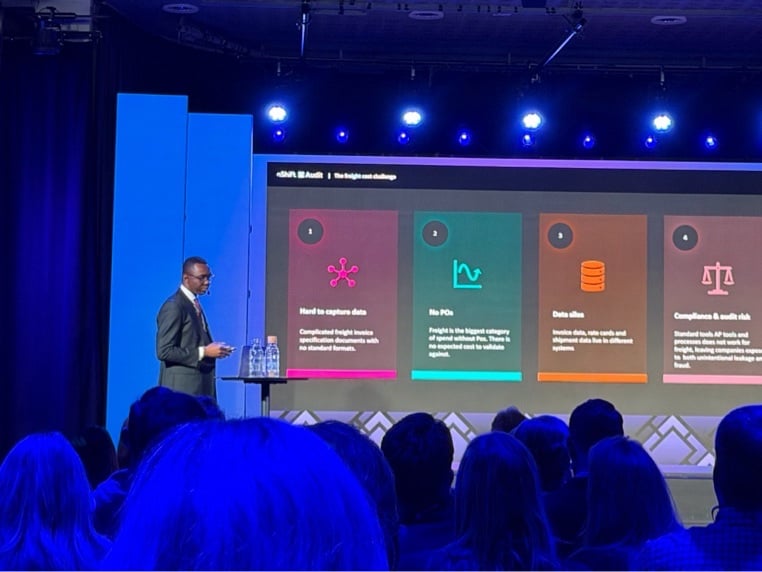
The information needed to check a line is held in three places. Whoever negotiated the carrier agreement has the rates, and the shipping platform or warehouse system has the shipment data. Finance has the invoice, and the person approving it rarely has the other two in front of them.
Freight also comes without a purchase order. When you buy stock, you know what you ordered and what it should cost before the invoice arrives. With parcels, the final charge depends on each shipment's weight, size, service, destination and surcharges.
The rate in your contract can be correct while the charge on the invoice is wrong.
So teams check what the month-end close leaves time for: a sample, or the largest lines. The people approving these invoices are doing their jobs well, but the process gives them no realistic way to check every line before the payment date.
When a parcel invoice discrepancy costs more to chase than it recovers
Say you spot a line on a parcel invoice that looks wrong. To challenge it, you find the shipment record, find the contract terms that apply, work out what the charge should have been, gather the evidence and send it to the carrier, all before the window for disputing that charge closes.
Then you decide whether an hour of that work is worth it for the amount on the line. For a single parcel, it often is not, so you accept the charge and move on.
On the demo invoice in our Solved session, one line was predicted at EUR 120 and invoiced at EUR 150. All the surcharges were mapped correctly, so settling that EUR 30 difference meant someone opening the contract to check which price was right.
Accepting one charge is a sensible call. A webshop makes the same call hundreds of times a month, across several carriers and thousands of lines, and each error you accept stays in your freight cost.
Before we built nShift Audit, our Chief Product Officer Johan Hellman heard one line in almost every customer interview: "It is easier to absorb the cost than to fight it." He explains what the team learned from those conversations in Why we built nShift Audit.
Parcel shippers feel this more than most, because their errors come in small amounts spread across thousands of lines. Even when an error is there to be found, challenging it can take more effort than the amount recovers.
In that Solved session, Pieter Schalk and Luc Altorf audited a 312-line carrier invoice live, from the raw file to a dispute with the evidence attached. Read the session recap or watch the recording.
What recovering 3 to 7% of freight spend means for a webshop
Published freight audit benchmarks put recoverable overcharges at 3 to 7% of freight spend (DataIntelo and MarketIntelo, 2026). For a webshop spending SEK 5 million a year on freight, that would be SEK 150,000 to 350,000 a year, recoverable under the agreements you already have, without renegotiating a single rate.
The benchmark is an average across many companies. Your own figure depends on your carriers, your contracts and how complete your shipment data is, and your invoices are where you find it.
The 2020 Journal of Commerce Freight Benchmark Study of 77 shippers found an average invoice inaccuracy rate of 20.8%, about one invoice in five. In nShift's own 2026 research, 74% of the shippers we spoke to had no freight invoice audit solution in place.
What a parcel audit checks on every line
nShift Audit, our carrier invoice audit and recovery product, accepts each invoice in the format it arrives in and uses AI to structure the lines so they can be checked. A person on your team validates the first invoice in each new format, and later invoices in that format are processed automatically. In pre-launch validation on around 200 invoices from nine carriers, invoice lines were extracted with more than 99.5% accuracy.
Every line then goes through seven checks:
- The shipment exists in your shipping data.
- It was not already billed on an earlier invoice.
- Tracking shows it as delivered.
- It met the agreed service level, where your agreement includes one.
- The billed weight and volume match what you shipped.
- The price matches your contracted rate, within the price tolerance you set.
- Each surcharge is one your agreement allows.
A check against your rates alone would miss several of these. A parcel can be billed at the correct rate for the wrong weight, billed twice, or charged a surcharge that does not apply to it, and catching those errors takes the invoice, the agreement and the shipment record side by side.
Flagged lines are ranked by amount, so your team starts with the largest discrepancies. Some differences will be legitimate or within an agreed tolerance, and your team decides which ones to challenge.
Our guide to freight invoice audit walks through the seven ways a carrier invoice can go wrong and what to check for each one.
Dispute one invoice line and pay the rest
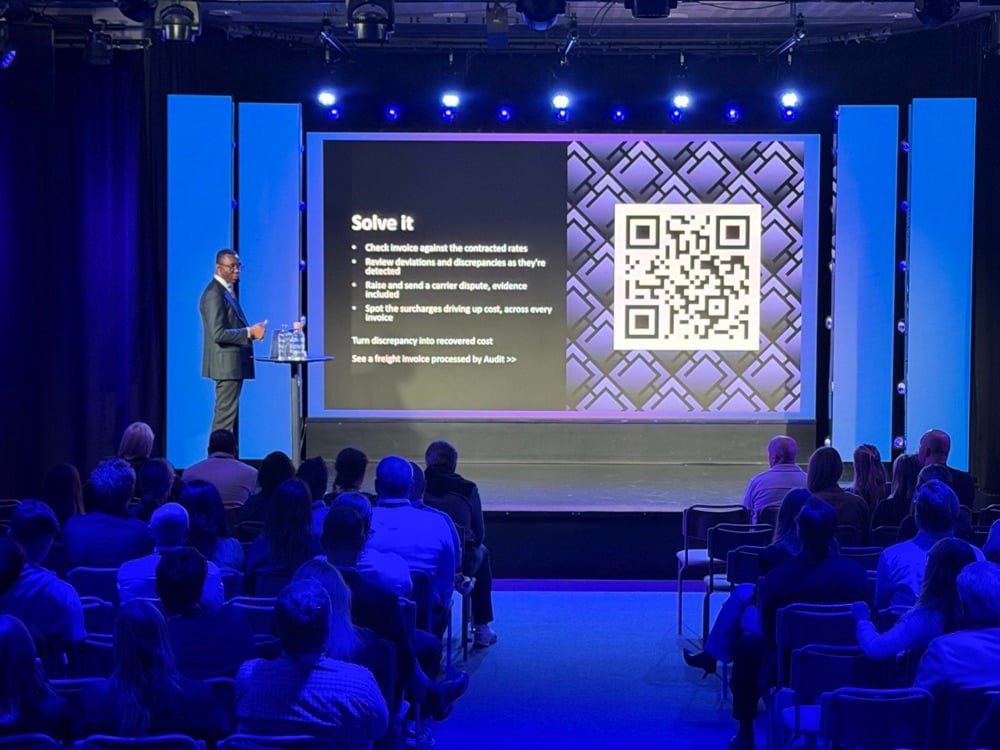
When a parcel audit flags a line worth challenging, the dispute includes the evidence: what was charged, what your agreement says and what the shipment record shows. The carrier gets a specific line to review, with the facts attached. Disputing one charge does not have to hold up payment of the whole invoice.
Over the months, the same data shows patterns: the surcharges that appear most often, the services that keep coming in above the expected price, the discrepancies that recur. You can take those patterns into your next carrier negotiation as figures from your own invoices.
What you need before auditing your first parcel invoice
A parcel audit can only check a charge against information it has: your rates and carrier agreements, your shipment records and the delivery events from tracking.
You can audit invoices without booking every shipment through nShift. Shipment data from other systems can be connected through the nShift API. Without your contracted prices, you still get five of the seven checks, and the price and surcharge checks start once your rates are loaded. Our article on what a freight invoice audit needs from you goes through each item.
What else visitors asked at the nShift stand
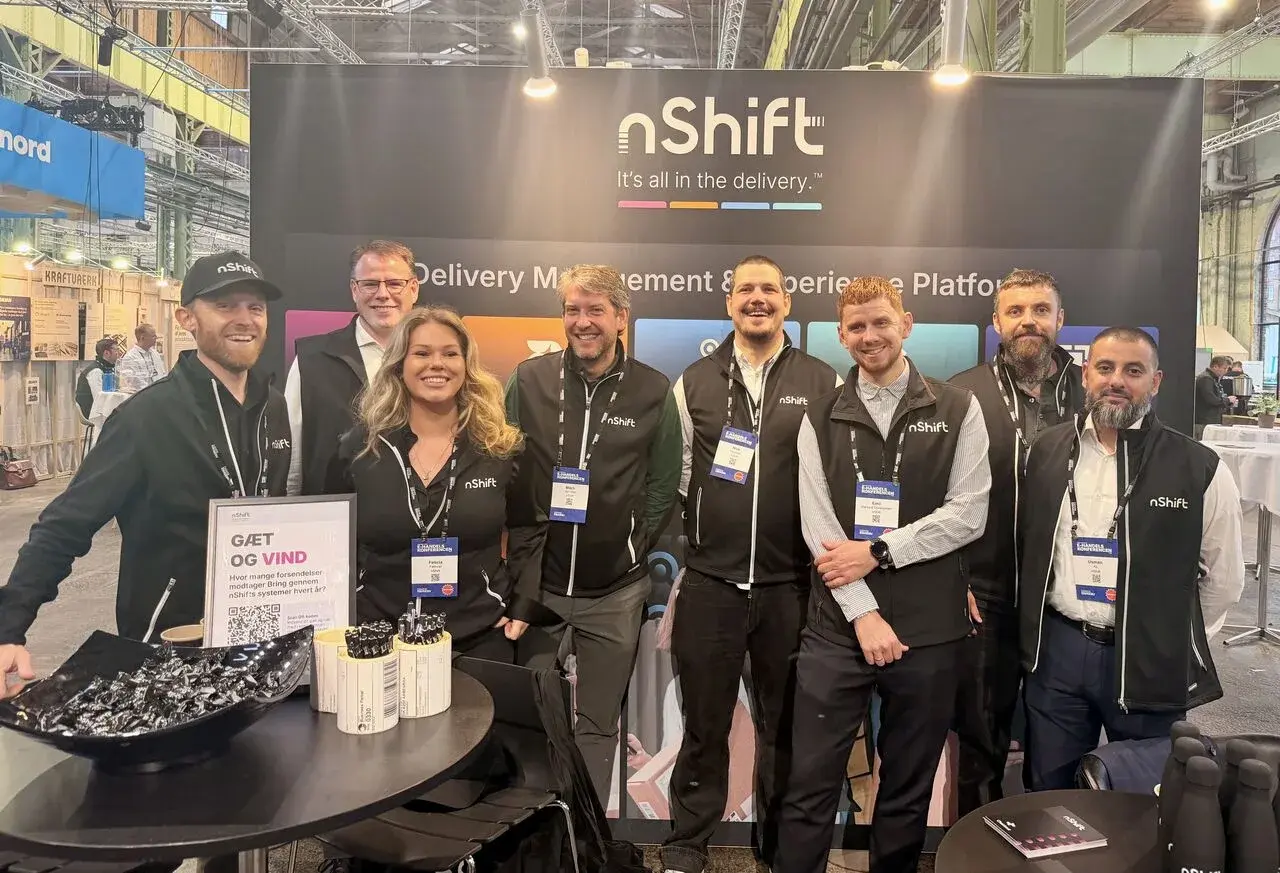
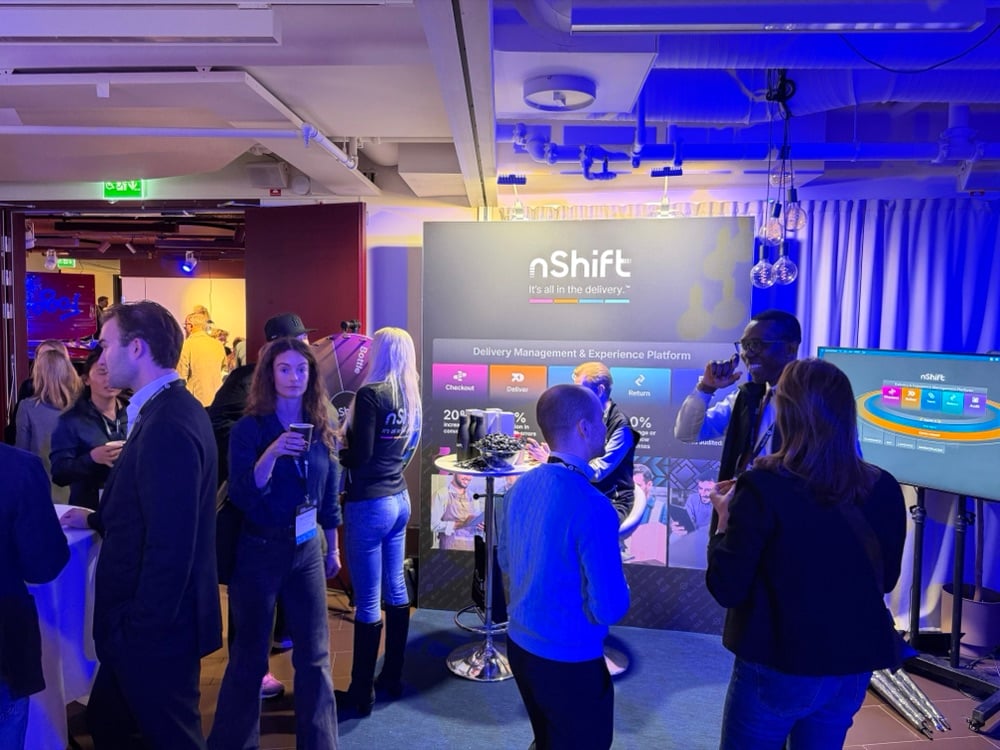
Many visitors at the nShift stand at Stora Ehandelsdagen asked about invoices too. Visitors also asked about connecting several carriers through one platform, about our integration with Centra, and about Checkout, which some had not yet seen alongside the booking and label printing they knew nShift for.
Start with your next parcel invoice
Before you approve next month's invoices, pick a few lines and check each one against both your agreement and the shipment record.
Then see how nShift Audit checks every line for you: upload your first invoice and get structured results within minutes.