Last update: 29.07.2025
In this blog:
- Updating customers
- More convenient home deliveries
- Delivery updates
- Pre-delivery alerts
- Conclusion
- Further reading: Updating customers on delivery status FAQs
Updating customers
Once customers have placed an order, and their items are on their way, they’re becoming increasingly keen to keep in contact and receive updates about their order. Good communication when it comes to delivery updates is key for keeping the customer happy. We looked into how retailers can provide the best experience for their customers. What’s the best way to update customers on their delivery status?
More convenient home deliveries
In the IMRG and nShift annual home delivery survey, we asked 1,000 UK consumers what would make their home deliveries more convenient. Interestingly, access to online order tracking has consistently come out as one of the most popular answers, from 2018 to 2021. This answer is followed closely by variations of being able to choose a specific time for the delivery to arrive, suggesting that control is crucial. Order tracking, and control of delivery ranks higher than being able to choose ‘Click and Collect’, so with this in mind, what makes good delivery service?
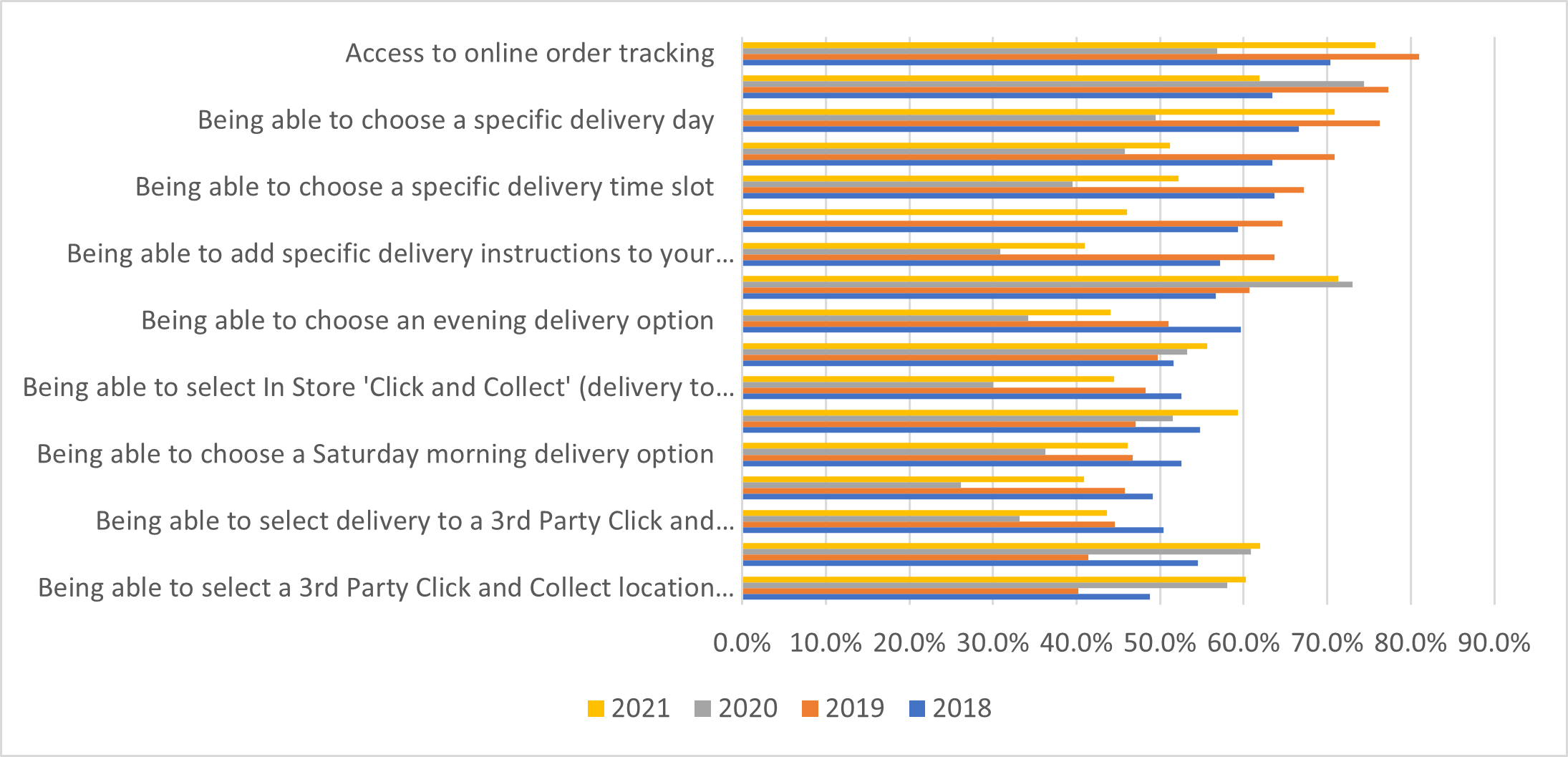
What would make receiving online orders more convenient?
(Source: Maru, nShift and IMRG Home Delivery Report)
Delivery updates
We then found out how consumers would like to receive their delivery updates. Perhaps unsurprisingly—as it’s what many retailers usually opt for—SMS was the most popular means of communication at 45%, followed closely by email at 39% (as of 2021). Consumers were less keen to choose ‘purpose built tracking apps’ or ‘going to the retailer’s/carrier’s website’ reflecting the aforementioned idea that customers want easy communication, with effortless updates on their part.
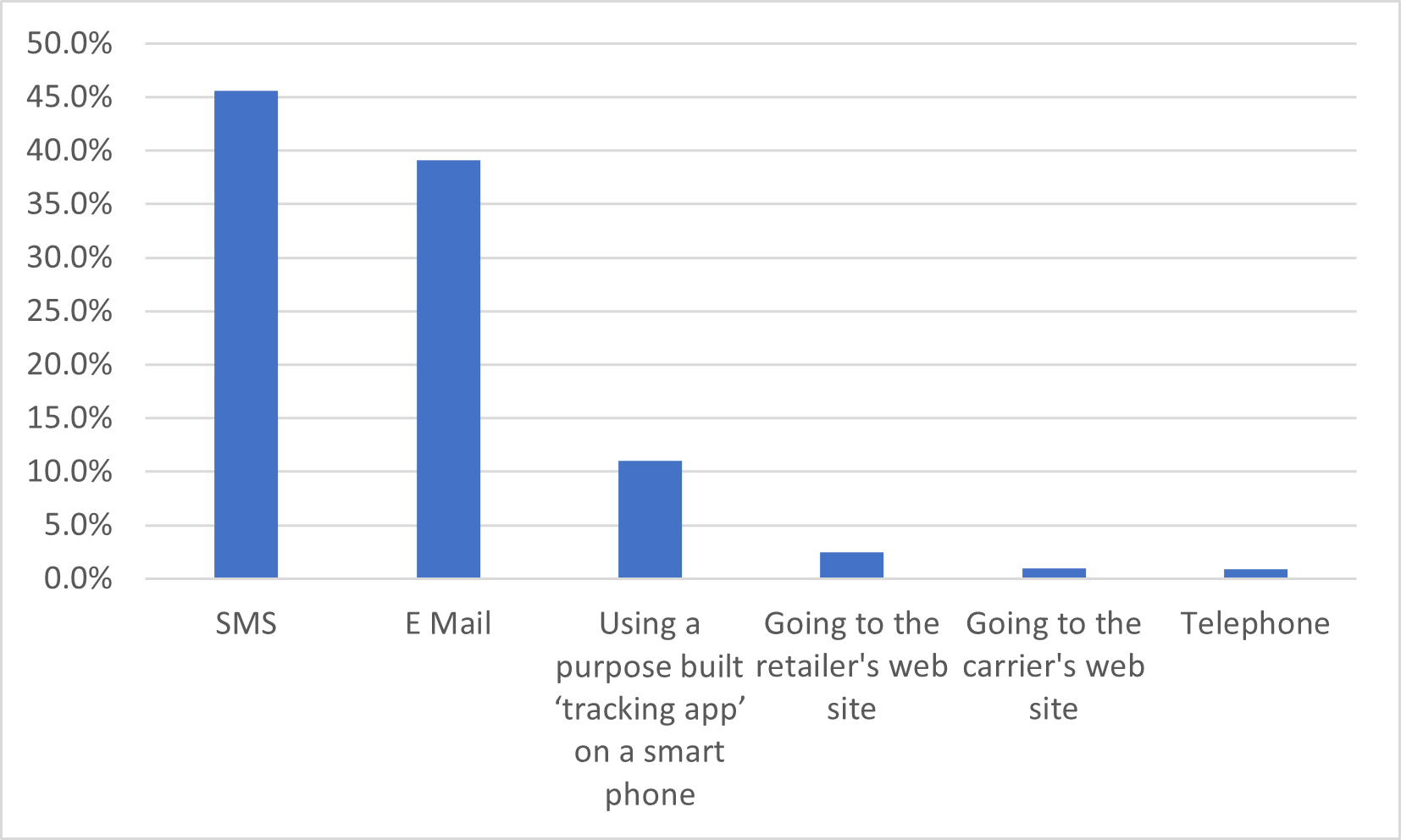
How would you prefer to receive information about the progress of your delivery? (2021)
(Source: Maru, nShift and IMRG Home Delivery Report)
Pre-delivery alerts
Next, we investigated pre-delivery alerts, with the aim of finding out the best timing for retailers to alert their customers of an upcoming delivery. Since 2014, we’ve been monitoring the most popular answers, which revealed some clear trend lines. ‘On the morning of the delivery’ is currently the most popular options, but for a few years in the 2010s it was competing with ‘the day before delivery’, which has since decreased in popularity. This could reflect the most popular methods used by retailers at the time, as consumers become accustomed to the options they’re given, or choose, at the time. Therefore, the most popular method of communication is likely SMS messages and emails from retailers, on the morning of delivery; this is reflected in our answers.
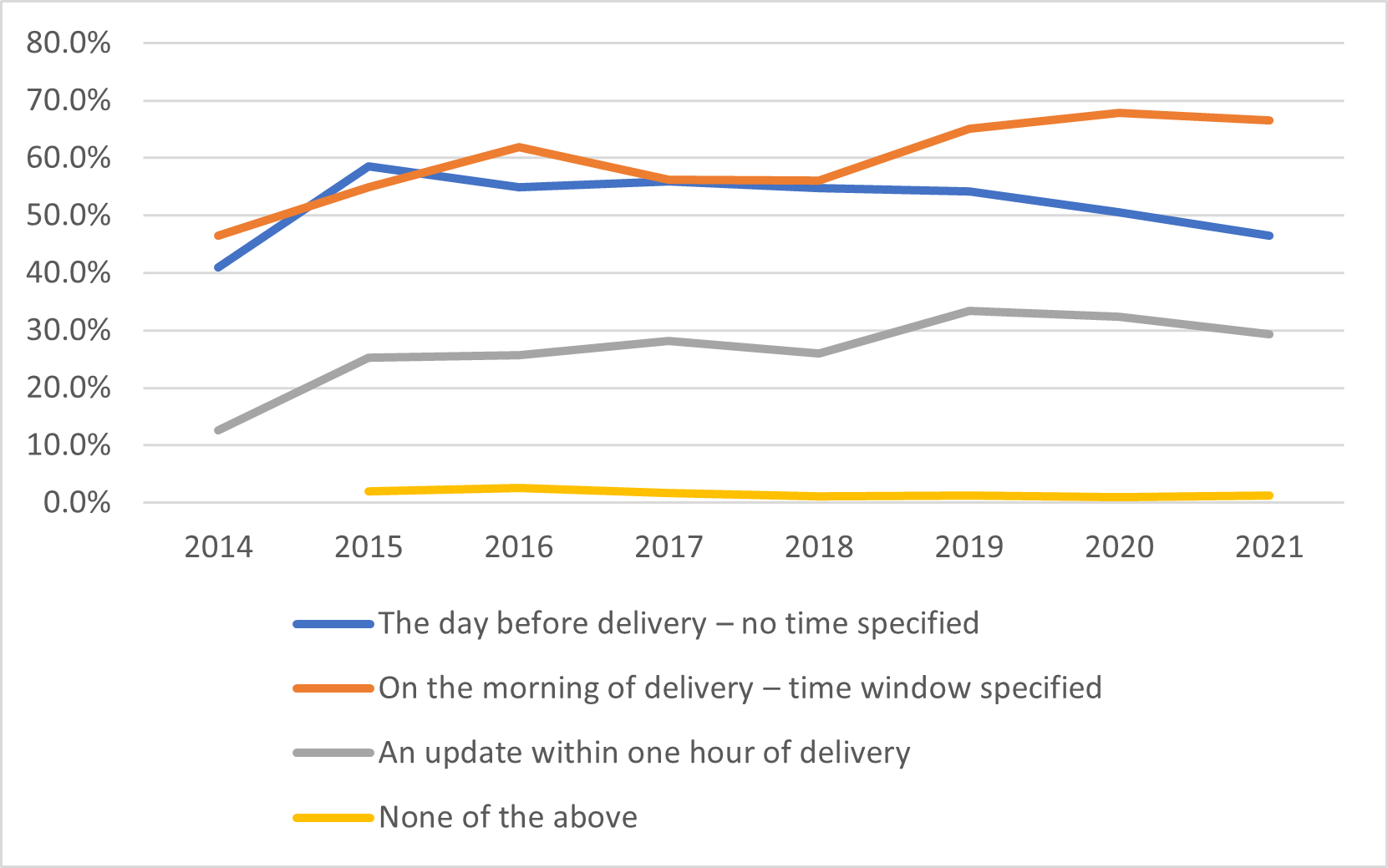
When receiving pre-delivery alerts, of the following options, which would be the most convenient for you? Please tick all that apply
(Source: Maru, nShift and IMRG Home Delivery Report)
Conclusion
Overall, we’ve learnt from our respondents that communications ahead of delivery are vital for consumers to feel confident and in control during the wait for their goods. The ideal format for such alerts would be SMS and/or email, preferably on the day of the delivery. Our 1,000 consumer respondents have spoken, and it seems as if this could be the ideal combination when it comes to customer satisfaction.
Turn tracking into engagement, not support tickets
nShift Track replaces “Where is my order?” with proactive, branded, multi-channel updates that reassure customers and outperform traditional marketing emails by up to 5x.
Learn more